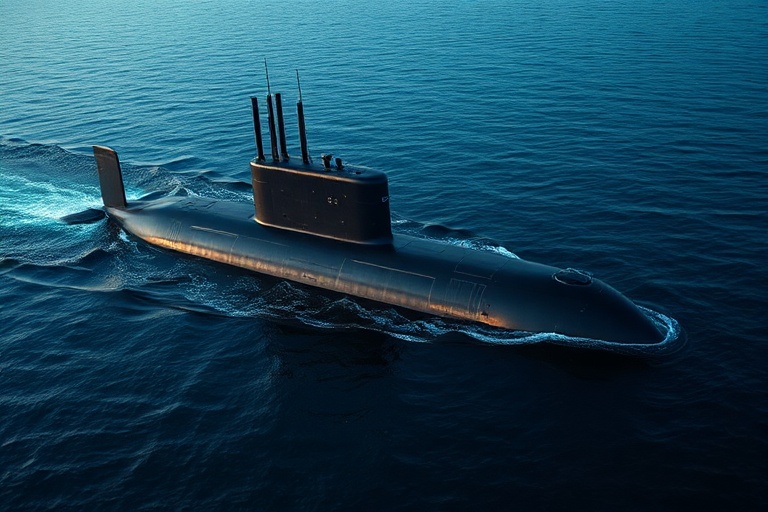
Ohio-Class Submarine: America’s Silent Nuclear Deterrent
The Ohio-class submarine remains one of the most formidable assets in the United States Navy, representing the backbone of America’s nuclear triad. These submarines are not just vessels; they are mobile, stealthy platforms capable of delivering unprecedented destructive power while remaining virtually undetectable. With a service history spanning over four decades, the Ohio-class has evolved to meet modern challenges, ensuring that the U.S. maintains a strategic advantage in an increasingly complex global security environment.
The Origins and Design Philosophy of the Ohio-Class
Developed during the Cold War, the Ohio-class was conceived as a response to the Soviet Union’s expanding submarine fleet. The U.S. Navy needed a platform that could evade detection while carrying a substantial nuclear arsenal. The lead ship, USS Ohio, was commissioned in 1981, marking the beginning of a new era in submarine warfare. The class was designed with a focus on stealth, endurance, and firepower, incorporating advanced noise reduction technologies and a streamlined hull to minimize detection.
The submarine’s design includes a 560-foot length and a submerged displacement of 18,750 tons, making it one of the largest submarines ever built. Its nuclear-powered propulsion system allows it to operate submerged for up to 70 days without surfacing, a capability that underscores its operational flexibility. The Ohio-class also features a unique “turtleback” hull design, which enhances its hydrodynamic performance and reduces the risk of detection by enemy sonar.
Key Features of the Ohio-Class Submarine
- Stealth Technology: The Ohio-class submarines are equipped with advanced anechoic tiles that absorb sonar waves, making them extremely difficult to detect. Their quiet propulsion systems further enhance their stealth capabilities.
- Ballistic Missile Arsenal: Each Ohio-class submarine can carry up to 24 Trident II D5 ballistic missiles, each capable of delivering multiple independently targetable warheads. This makes the submarine a critical component of America’s nuclear deterrent strategy.
- Endurance and Range: Powered by a single S8G nuclear reactor, the Ohio-class can travel over 1 million nautical miles before requiring refueling. This endurance allows for extended patrols in distant waters without the need for resupply.
- Crew and Living Conditions: The submarines are designed to accommodate a crew of 155 personnel, with living spaces that include recreational areas, a library, and even a small gym. The long duration of patrols requires careful attention to crew morale and well-being.
The Role of Ohio-Class Submarines in Nuclear Deterrence
The Ohio-class submarines play a pivotal role in America’s nuclear deterrence strategy. Unlike land-based ICBMs or strategic bombers, submarines are mobile and difficult to track, making them a credible second-strike capability. This “boomer” role ensures that even if the U.S. were to suffer a surprise nuclear attack, the Ohio-class submarines could retaliate, effectively deterring potential adversaries.
The Trident II D5 missiles carried by the Ohio-class are among the most advanced in the world. With a range of over 7,000 nautical miles and the ability to strike targets with pinpoint accuracy, these missiles provide the U.S. with a flexible and responsive nuclear capability. The missiles are also MIRV-capable (Multiple Independently Targetable Reentry Vehicles), allowing a single missile to strike multiple targets simultaneously.
The Ohio-class submarines are strategically dispersed across the globe, with patrols typically lasting around 70 days. These patrols are conducted in a manner that minimizes predictability, ensuring that potential adversaries cannot easily locate or target the submarines. This unpredictability is a key element of their deterrent value.
Modernization and the Future of the Ohio-Class
While the Ohio-class submarines have served the U.S. Navy admirably, the need for modernization has become increasingly apparent. The submarines are aging, and the Trident II D5 missiles, though still effective, will eventually require replacement. To address these challenges, the Navy has undertaken several initiatives to extend the service life of the Ohio-class and develop next-generation capabilities.
The Ohio-class submarines are currently undergoing a technology refresh known as the “Ohio Replacement Program.” This program aims to replace the aging submarines with a new class of ballistic missile submarines, known as the Columbia-class. The Columbia-class is expected to enter service in the 2030s and will incorporate advanced technologies to ensure continued U.S. dominance in submarine warfare.
In the meantime, the existing Ohio-class submarines are being upgraded to extend their operational lives. These upgrades include improvements to the submarines’ sensors, communication systems, and missile launch capabilities. The Navy is also exploring the possibility of converting some Ohio-class submarines to carry conventional cruise missiles, enhancing their versatility in non-nuclear missions.
Challenges and Controversies Surrounding the Ohio-Class
Despite their critical role, the Ohio-class submarines have not been without controversy. One of the most significant challenges is the cost of maintaining and operating these submarines. The Trident II D5 missile alone costs millions of dollars per unit, and the submarines require extensive maintenance to keep their nuclear reactors operational. Critics argue that the high cost of the Ohio-class program could be better spent on other defense priorities or social programs.
Another challenge is the environmental impact of nuclear-powered submarines. While the U.S. Navy has taken steps to minimize the risk of nuclear accidents, the potential for environmental contamination remains a concern. The disposal of nuclear waste from submarine reactors is a complex and costly process, and there have been instances of environmental violations in the past.
The Ohio-class submarines have also been the subject of international scrutiny, particularly from countries that view them as a threat to regional stability. For example, Russia and China have expressed concerns about the submarines’ ballistic missile capabilities, which they argue could destabilize the global balance of power. These concerns have led to diplomatic tensions and calls for arms control measures.
Conclusion: The Enduring Legacy of the Ohio-Class
The Ohio-class submarine stands as a testament to American ingenuity and strategic foresight. For over four decades, these submarines have served as a cornerstone of America’s nuclear deterrent, providing a level of stealth and mobility that no other platform can match. As the U.S. Navy looks to the future, the Ohio-class will continue to play a vital role in maintaining global security, even as newer technologies and platforms emerge.
The transition to the Columbia-class will mark a new chapter in submarine warfare, but the legacy of the Ohio-class will endure. Their contributions to deterrence, their technological advancements, and their unwavering service to the nation ensure that they will be remembered as one of the most successful submarine classes in history. For now, the Ohio-class remains a silent guardian, patrolling the depths of the world’s oceans and ensuring the peace and stability of the United States and its allies.