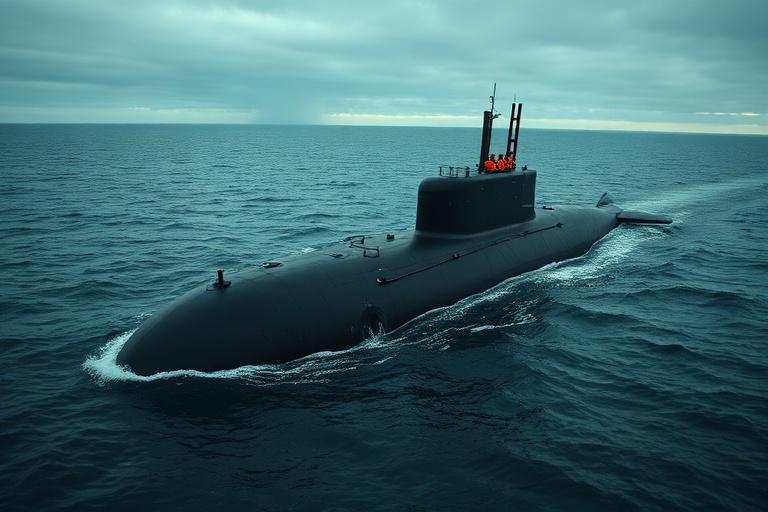
Ohio-Class Submarines: America’s Silent Guardians of the Deep
The Silent Guardians: Ohio-Class Submarines and Their Global Role
The Ohio-class submarine remains one of the most formidable and technologically advanced assets in modern naval warfare. Designed during the Cold War but continuously upgraded, these submarines represent the pinnacle of underwater stealth, strategic deterrence, and technological innovation. While often associated with the United States, their influence extends far beyond American waters, shaping global security dynamics and serving as a symbol of technological dominance.
The Ohio-class fleet, first commissioned in 1981, was conceived as a response to the Soviet Union’s expanding submarine capabilities. With the capacity to carry up to 24 Trident ballistic missiles, these submarines became the backbone of America’s nuclear triad—ground, air, and sea-based deterrents. Their endurance, stealth, and firepower redefined strategic naval operations, ensuring that the U.S. could project power silently beneath the ocean’s surface.
A Legacy of Stealth and Endurance
The Ohio-class submarines, often referred to as “boomers,” were engineered for one primary purpose: to remain undetected while carrying out their mission. Their nuclear-powered propulsion systems allow them to operate submerged for up to 70 days without surfacing, making them nearly impossible to track. This endurance is complemented by advanced sound-dampening technologies, including anechoic coatings and reduced acoustic signatures, which minimize their detectability by enemy sonar.
Their design also incorporates a unique feature: the ability to launch nuclear missiles while submerged, ensuring a second-strike capability that deters aggression. This combination of stealth and firepower has made the Ohio-class a cornerstone of global nuclear strategy, influencing how nations perceive and respond to underwater threats.
The Modernization Imperative
As geopolitical tensions evolve, so too does the role of the Ohio-class submarines. The U.S. Navy has invested heavily in modernizing these vessels to meet new challenges. The Ohio-class replacement program, which will introduce the Columbia-class submarines in the 2030s, reflects a commitment to maintaining technological superiority. However, the existing Ohio-class fleet remains operational, undergoing upgrades to extend their service life well into the mid-21st century.
These upgrades include enhanced missile systems, improved cybersecurity measures, and advanced communication technologies. The integration of these systems ensures that the Ohio-class submarines can adapt to emerging threats, from cyber warfare to hypersonic missile defense. Their continued relevance underscores the importance of incremental innovation in military technology.
Global Impact and Strategic Influence
The Ohio-class submarines are not just American assets; they are a global concern. Their deployment in regions like the Pacific and the North Atlantic has prompted other nations to invest in similar technologies. China, Russia, and even smaller naval powers are developing advanced submarines to counterbalance U.S. dominance. This technological arms race highlights the Ohio-class’s role in shaping international security policies.
Their presence also serves as a deterrent against aggression, particularly in contested waters. For example, the U.S. has deployed Ohio-class submarines near the Korean Peninsula and the South China Sea, signaling resolve in the face of regional tensions. The strategic ambiguity created by their silent patrols complicates adversaries’ calculations, reinforcing the idea that any conflict could escalate unpredictably.
The cultural impact of these submarines is equally significant. They have become symbols of national power, featured in films, documentaries, and military simulations. Their mystique—rooted in secrecy and lethality—fuels public fascination with naval warfare and technological prowess. This cultural footprint extends beyond military circles, influencing how nations and citizens perceive modern defense strategies.
Challenges and Future Considerations
Despite their strengths, Ohio-class submarines face challenges. The cost of maintenance, the need for continuous technological upgrades, and the ethical implications of nuclear deterrence are ongoing debates. Additionally, the rise of autonomous underwater vehicles and advanced detection systems could threaten their stealth advantage in the future.
The U.S. Navy must navigate these complexities while ensuring that the Ohio-class remains a viable asset. This requires balancing investment in new technologies with the preservation of existing capabilities. The transition to the Columbia-class will be critical, as any gap in submarine readiness could have global repercussions.
For those interested in the broader implications of naval technology, Technology and News sections on Dave’s Locker provide further insights into how military innovations intersect with global security.
Conclusion: The Indispensable Silent Force
The Ohio-class submarine stands as a testament to human ingenuity and the relentless pursuit of strategic advantage. From its Cold War origins to its modern-day deployments, it has redefined the parameters of naval warfare and global security. As geopolitical landscapes shift and new threats emerge, the Ohio-class will likely remain a silent guardian, ensuring stability in an uncertain world.
Its legacy is not just one of firepower and stealth but of adaptability and foresight. The challenges ahead are significant, but the Ohio-class submarines have already proven their worth as indispensable tools of deterrence and power projection. In an era where technological superiority defines global influence, the Ohio-class remains a benchmark for what is possible beneath the waves.