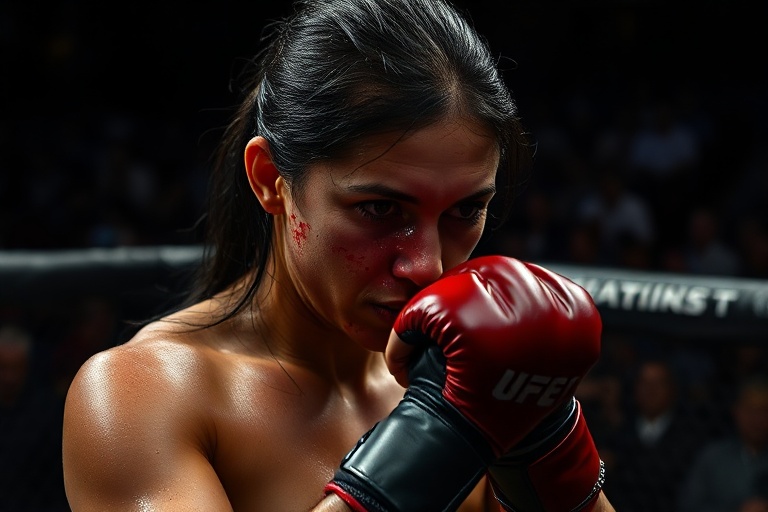
Gina Carano: From Hollywood Star to Free Speech Icon
Gina Carano emerged as one of Hollywood’s most polarizing figures long before her high-profile disputes with Lucasfilm and Disney. Once celebrated as a rising action star, her career trajectory shifted dramatically following her public criticism of COVID-19 policies, gender ideology debates, and perceived political commentary. The daughter of a former football player and a former beauty queen, Carano built her early reputation in the mixed martial arts (MMA) world before transitioning to film. Her appearances in Haywire (2011) and Deadpool (2016) established her as a formidable presence in action cinema, but it was her off-screen persona that ultimately defined her legacy.
Carano’s evolution from athlete to actress to public commentator reflects broader cultural tensions in entertainment. While some admire her willingness to challenge industry norms, others view her statements as inflammatory or misaligned with corporate values. This duality has made her a magnet for both loyal supporters and vocal critics. To understand her current standing, it’s essential to examine the key moments that shaped her controversial reputation.
The Rise of Gina Carano: From MMA to Hollywood
Born in 1982 in Dallas, Texas, Gina Carano grew up in a competitive environment. Her father, Glenn Carano, played in the NFL, and her mother, Dana, was Miss Nevada USA. This background instilled in her a drive for excellence, though her path diverged from traditional athletics when she turned to MMA in the late 2000s. With a record of 7-1 as a professional fighter, she gained attention for her striking ability and charismatic personality. Her success in the ring caught the eye of Hollywood producers, leading to her casting in Haywire, a 2011 action film directed by Steven Soderbergh.
The movie, while not a box-office juggernaut, showcased Carano’s raw physicality and screen presence. Though her acting was raw, critics acknowledged her potential. This role paved the way for her appearance in Fast & Furious 6 (2013) and later Deadpool (2016), where she played Angel Dust, a fan-favorite mutant. Her performance in Deadpool solidified her as a recognizable name in genre films. However, her transition from action star to cultural commentator began long before her eventual departure from major studio projects.
Carano’s early public statements often centered on fitness, discipline, and self-reliance—values she associated with her MMA background. These themes resonated with segments of her audience, particularly those disillusioned with Hollywood’s perceived elitism. Yet, as her platform grew, so did scrutiny of her rhetoric, especially when it intersected with politically charged issues.
The Turning Point: Social Media and Public Backlash
Carano’s relationship with social media has been both a strength and a liability. Platforms like Twitter and Instagram allowed her to connect directly with fans, bypassing traditional media gatekeepers. She frequently posted about her workouts, film projects, and personal beliefs. However, some of her comments sparked controversy, including statements about gender roles, government mandates, and free speech. In 2020, as the COVID-19 pandemic reshaped public discourse, Carano became increasingly vocal about lockdowns and vaccine policies.
Her most contentious remarks came in early 2021. In a since-deleted Instagram post, she compared being a woman to being Jewish during the Holocaust, drawing immediate backlash. Critics accused her of trivializing historical atrocities. Around the same time, she shared a meme suggesting that being a conservative in Hollywood was akin to being in the “Third Reich.” These posts triggered widespread condemnation, with advocacy groups and celebrities calling for accountability.
Lucasfilm, the studio behind The Mandalorian where Carano played Cara Dune, faced pressure to respond. In February 2021, Disney and Lucasfilm terminated her contract. The official statement cited her social media activity as violating company standards. Carano, however, framed her dismissal as an attack on free speech, suing Disney and Lucasfilm for wrongful termination and discrimination in March 2021.
The lawsuit became a rallying cry for conservatives and free speech advocates. Carano’s legal team argued that her termination was politically motivated, pointing to a pattern of conservative voices being silenced in Hollywood. Meanwhile, critics countered that her posts violated workplace conduct policies and endangered marginalized communities. The case remains ongoing, with hearings and depositions drawing media attention.
Key Moments in the Public Backlash
- February 2021: Carano posts controversial comparison on Instagram, sparking outrage.
- March 2021: Lucasfilm and Disney terminate her contract.
- March 2021: Carano files wrongful termination lawsuit against Disney and Lucasfilm.
- 2022–2024: Legal proceedings continue, with both sides filing motions and counterclaims.
Carano’s Post-Hollywood Trajectory: New Projects and Political Identity
Despite her exclusion from major studio films, Carano has not disappeared from the public eye. Instead, she has redirected her career toward independent projects and direct-to-consumer content. In 2022, she starred in Terror on the Prairie, a Western film produced by an affiliate of the conservative media company The Daily Wire. The movie was marketed as a family-friendly Western with pro-gun and pro-freedom themes, aligning with Carano’s public persona.
She has also expanded into podcasting and public speaking, where she addresses topics like individualism, censorship, and the challenges of being a conservative in Hollywood. Her appearances on programs like The Rubin Report and The Joe Rogan Experience have drawn millions of views, reinforcing her connection with a politically engaged audience. These ventures have allowed her to monetize her brand outside traditional Hollywood structures.
In 2023, Carano launched a fitness apparel line called The Carano Collection, emphasizing strength training and mental resilience. The brand’s messaging mirrors her personal philosophy: discipline, self-reliance, and defiance of perceived oppression. While her business ventures have found niche success, they have also drawn criticism from progressives who argue that she profits from divisive rhetoric.
Carano’s political identity has evolved into a cornerstone of her public image. She has spoken at conservative conferences and expressed support for figures like Donald Trump. In 2024, she announced plans to run for Congress in Nevada, positioning herself as an outsider candidate challenging the political establishment. Whether this foray into politics will translate into electoral success remains uncertain, but it underscores her commitment to reshaping her career beyond acting.
Cultural Impact: A Symbol of Free Speech or a Divisive Figure?
The debate surrounding Gina Carano transcends entertainment. For some, she represents a courageous voice against Hollywood censorship and progressive orthodoxy. Her supporters praise her for speaking her mind despite professional consequences. For others, she embodies the dangers of weaponizing free speech to spread harmful rhetoric. This divide reflects broader societal fractures over identity, authority, and the limits of expression.
Her story intersects with several pressing cultural conversations. First is the role of social media in shaping public perception. Platforms that once democratized fame now amplify controversies at unprecedented speed. Second is the evolving relationship between celebrities and their audiences. Fans increasingly expect stars to align with their values, and deviations can lead to swift backlash. Third is the question of whether corporations should police political speech, especially when it occurs outside professional contexts.
Carano’s case also raises ethical questions about accountability. While companies have the right to enforce codes of conduct, critics argue that her termination was disproportionate or politically motivated. Conversely, supporters of her dismissal contend that platforms and studios must consider the broader impact of their employees’ public statements. This tension between personal belief and corporate responsibility continues to play out across industries.
Regardless of one’s stance, Carano’s influence is undeniable. She has become a barometer for cultural attitudes toward free expression, political affiliation, and the responsibilities of public figures. Whether viewed as a martyr, a provocateur, or an opportunist, her career trajectory offers a case study in the consequences of speaking out in a polarized era.
Conclusion: What’s Next for Gina Carano?
Gina Carano’s journey from action star to cultural lightning rod illustrates the unpredictable nature of modern fame. Once poised for a long career in Hollywood, she now navigates a landscape where traditional pathways to success are increasingly contested. Her legal battle with Disney, entrepreneurial ventures, and political ambitions suggest she is far from finished. Whether she ultimately succeeds in reinventing herself or becomes a cautionary tale depends largely on public reception and industry dynamics.
One thing is certain: her story is not merely about an actress who lost a role. It reflects deeper conflicts over free speech, corporate power, and personal identity in the digital age. As Carano continues to challenge norms—both on and off screen—her legacy will be defined by how society chooses to remember her: as a rebel, a cautionary figure, or something in between.
For now, audiences can expect her to remain a polarizing presence, continuing to spark debate long after her final scene in The Mandalorian.
For more on entertainment and cultural analysis, visit Dave’s Locker Entertainment or Trending sections.