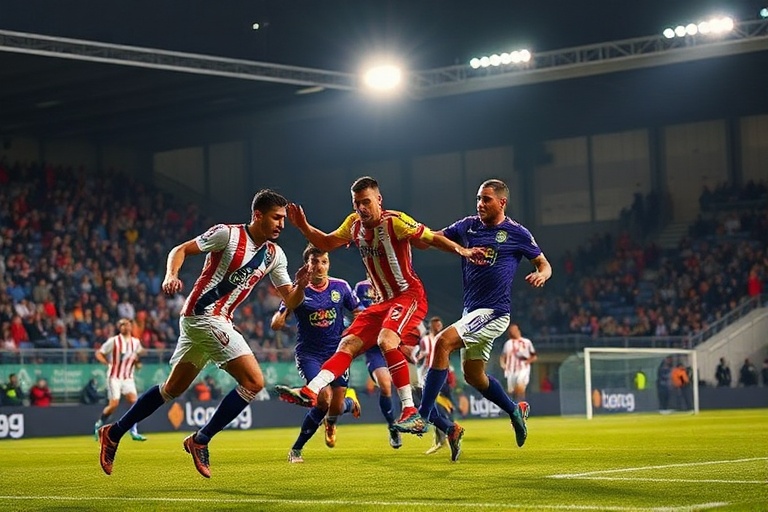
union saint-gilloise vs anderlecht
Union Saint-Gilloise vs Anderlecht: A Belgian Classic with Worldwide Echoes
Few fixtures in European football carry the weight and tradition of the Brussels derby between Union Saint-Gilloise and Anderlecht. Played out in the shadow of the Atomium and the grandeur of the King Baudouin Stadium, this match transcends local pride. It reflects broader themes of identity, class, and the shifting dynamics of modern football. For over a century, these two clubs have embodied different facets of Belgian society—Union as the working-class underdog, Anderlecht as the establishment powerhouse. Their rivalry is more than a game; it’s a cultural artifact.
The 2023–24 season saw both clubs competing in the UEFA Europa League, reigniting global interest. Fans from Tokyo to Toronto logged on to watch, drawn not just by the football, but by the storylines: Union’s rise from Belgium’s second tier to European contention, and Anderlecht’s struggle to reclaim its former dominance. The match isn’t just followed in Belgium—it’s dissected in sports bars from Buenos Aires to Berlin. This is football as cultural export, a narrative about ambition, tradition, and the changing face of the game.
The Historical Divide: Class, Identity, and Football
Founded in 1897, Union Saint-Gilloise began as a club of workers from the Saint-Gilles municipality, a working-class area of Brussels. Its early years were marked by modesty and resilience. For decades, it competed in the shadows of Belgium’s top flight, often overshadowed by the polished academies of Anderlecht, which was founded in 1908 and became a symbol of Belgian football’s golden age in the 1970s and 80s.
Anderlecht, with its gleaming stadium and European pedigree—seven European Cup Winners’ Cup finals, five league titles in a row from 1964–68—represented the establishment. Union, meanwhile, became a folk hero, a club that refused to die despite financial struggles and relegation. It wasn’t until 2021 that Union returned to the Belgian Pro League, sparking a cultural revival. The club’s fanbase grew from local supporters to a global online community, with supporters’ groups forming in cities like London, New York, and Sydney.
This historical divide is more than nostalgia. It mirrors broader societal shifts. In an era where football is increasingly dominated by wealthy owners and global brands, Union stands as a rare example of a club rooted in community values. Its rise reflects a growing appetite among fans for authenticity over spectacle. Anderlecht, though still one of Belgium’s most successful clubs, now faces the challenge of reconciling its elite status with the demands of modern supporters who crave both success and soul.
Recent Form and Tactical Trends: What to Watch
The most recent Brussels derby, played on October 29, 2023, ended in a 1–1 draw at the Lotto Park, Anderlecht’s home ground. The match was tight, tactical, and full of tension—hallmarks of this fixture. Union controlled possession but struggled to break down Anderlecht’s deep defense, while Anderlecht relied on quick transitions and set-pieces to threaten Union’s goal. Both teams showed signs of fatigue following European campaigns, yet the intensity never wavered.
Union’s style under head coach Alexander Blessin has been pragmatic and pressing, with an emphasis on high-intensity football. The club’s recruitment has been astute, focusing on young, hungry players with something to prove. Anderlecht, under Robin Veldman, has experimented with a 3-4-3 formation, aiming to regain control in midfield and exploit width. Both teams have integrated academy graduates, a nod to their commitment to long-term development.
Key players to watch in recent derbies include:
- Union Saint-Gilloise: Cameron Puertas (midfield maestro), Deniz Undav (clinical striker), and Bart Verbruggen (young goalkeeper)
- Anderlecht: Johan Bakayoko (pacey winger), Mario Vrančić (experienced playmaker), and Hendrik Van Crombruggen (defensive anchor)
Tactically, the derby often becomes a battle of systems. Union’s 3-4-3 or 3-5-2 formation clashes with Anderlecht’s fluid 4-3-3 or 3-4-3. Set-pieces are crucial, with both teams having tall defenders and aerial threats. The midfield battle—between Puertas and Vrančić—often decides the rhythm of the game. Given the narrow pitch at Lotto Park, wing play is less effective, forcing teams to build through the center.
Cultural Impact: From Local Pride to Global Fandom
The Brussels derby is more than a sporting event; it’s a cultural moment. In Belgium, it’s covered by major outlets like Het Nieuwsblad and La Dernière Heure, but its reach extends far beyond. On social media, Union’s rise has been chronicled in documentaries by channels like ESPN FC and The Athletic. Memes, fan art, and trivia threads circulate globally, turning obscure Belgian clubs into household names in football circles.
Union’s fan culture is particularly vibrant. The club’s supporters’ group, Union 60, organizes away trips across Europe, with thousands traveling to watch the team in the Europa League. Their chants, often sung in French or Flemish, blend tradition with modern creativity. The club’s motto, “Liberté, Égalité, Union,” reflects its inclusive ethos, resonating with fans who feel excluded from the glamour of Europe’s elite clubs.
Anderlecht, though less revolutionary in its branding, remains a cultural institution. Its museum, the Anderlecht Experience, attracts tourists, and its youth academy has produced stars like Romelu Lukaku and Vincent Kompany. The club’s global alumni network ensures its legacy endures, even as it navigates financial challenges and changing fan expectations.
This cultural duality is what makes the derby so compelling. It’s a microcosm of football’s evolution: tradition versus modernity, community versus capital, underdog versus aristocrat. For neutrals, it offers drama and authenticity. For analysts, it provides a case study in club identity and fan engagement.
A Look Ahead: The Derby’s Future in a Global Game
The Brussels derby’s future is shaped by several key factors. First, the rise of Union Saint-Gilloise has forced Anderlecht to rethink its strategy. No longer can Anderlecht take its fanbase for granted. The club has invested in its academy and infrastructure, aiming to return to the top of Belgian football while competing in Europe. Its partnership with the Aspire Academy in Qatar offers a glimpse into the globalized future of football, where talent pipelines stretch from Brussels to Doha.
For Union, the challenge is sustainability. Can the club maintain its European ambitions without losing its identity? Its recent financial fair play issues and reliance on loans have raised eyebrows. Yet, the club’s transparency and fan involvement offer a model for others. The question remains: Can Union become a permanent fixture in European football while staying true to its roots?
The derby also reflects broader trends in football fandom. Younger supporters, especially those outside Belgium, are drawn to clubs with compelling narratives. Union’s story—of struggle, revival, and identity—resonates in an era where many fans feel alienated by corporate football. Anderlecht’s challenge is to balance its rich history with the demands of a new generation that values authenticity over tradition alone.
As the two clubs look ahead, the Brussels derby will continue to be a stage for more than just football. It’s a celebration of culture, a testament to the power of community, and a reminder that the beautiful game is about more than trophies and transfers. It’s about people, places, and stories that endure across generations.
For now, the rivalry burns bright. Whether in the rain-soaked stands of the Joseph Marien Stadium or the sleek modernity of Lotto Park, the spirit of the derby lives on. It’s a match that invites the world to watch, to debate, and to care—not just about who wins, but about what it means to belong to a club that represents something greater than itself.
Dave’s Locker brings you in-depth analysis and cultural perspectives on the stories shaping sports and entertainment. Explore more football insights in our Sports section.