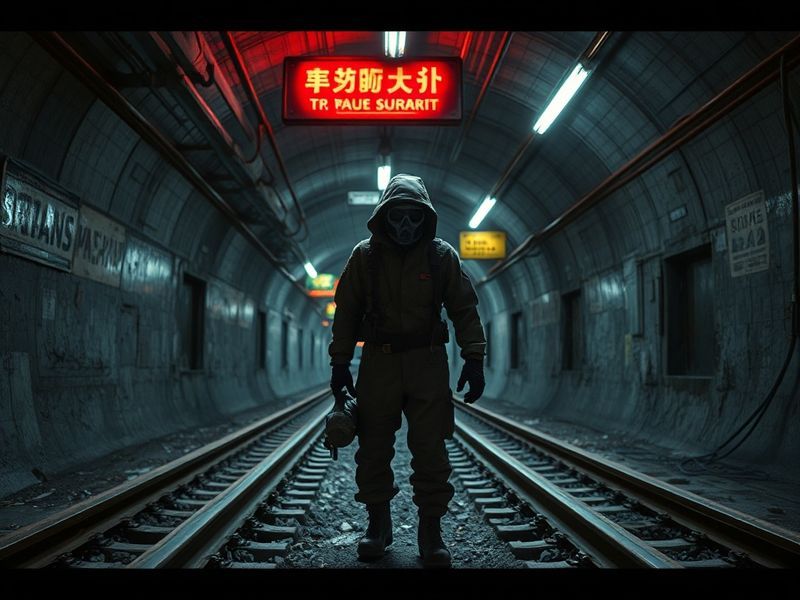
Fourteen years after the release of Metro 2033, the survival-horror franchise returns with Metro 2039, a game that doesn’t simply continue a story—it deepens a vision. Set in the ruins of post-apocalyptic Moscow, the title expands the scope of the original while sharpening its psychological and moral dilemmas. This isn’t just another open-world shooter; it’s a narrative-driven experience where every decision reverberates through the tunnels and toxic wastelands of a world still reeling from nuclear war.
The game builds on the foundation laid by its predecessors, drawing from Dmitry Glukhovsky’s novels but evolving into its own entity. With enhanced AI, more immersive environments, and a darker tone, Metro 2039 challenges players not just to survive, but to confront what it means to be human when civilization has collapsed.
The Evolution of Survival in the Metro
Survival in Metro 2039 is more than a mechanic—it’s a philosophy. The game introduces a dynamic weather system, deeper crafting mechanics, and a reputation system that affects how factions and characters interact with you. Unlike many post-apocalyptic titles that rely on combat as the primary driver, this game emphasizes stealth, dialogue, and resource management as equally vital tools for survival.
One of the most notable improvements is the AI of both allies and enemies. Non-player characters now exhibit more realistic behaviors: they remember past encounters, adapt strategies, and even form shifting alliances. This creates a world that feels alive, where trust is fragile and betrayal is always a possibility.
The wasteland outside the metro tunnels is more than a backdrop—it’s a character in its own right. Toxic storms force players to seek shelter, while mutated creatures roam freely, creating unpredictable encounters. The game forces players to weigh risk against reward at every turn, reinforcing that survival isn’t just about firepower, but foresight and adaptability.
Key Features of Metro 2039
- Dynamic Atmosphere: Weather, lighting, and sound design create an immersive, oppressive environment that heightens tension.
- Moral Complexity: Choices affect faction standing, leading to multiple endings and replayability.
- Enhanced Crafting: Scavenge, repair, and upgrade gear with increased depth and consequence.
- Improved AI: Enemies and allies now react intelligently to player actions, creating emergent storytelling.
- Expanded Lore: New factions, factions, and territories deepen the lore of the Metro universe.
From Novel to Game: A Franchise Transformed
While Metro 2033 and Last Light faithfully adapted Glukhovsky’s novels, Metro 2039 marks a significant departure. The game diverges from the source material, creating a new storyline set years after the events of the books. This decision has sparked debate among fans—some appreciate the bold creative choice, while others mourn the loss of familiar characters and settings.
Yet this evolution reflects a broader trend in video game adaptations: the need to stand on its own. Metro 2039 succeeds in doing so by focusing on mature themes—isolation, corruption, and the cost of hope. The game doesn’t shy away from depicting the psychological toll of survival. Characters suffer from trauma, hallucinations, and moral decay, making the player’s journey as much internal as external.
The result is a narrative that feels raw and unfiltered, unburdened by the need to stay true to a beloved book. It’s a risk that pays off, offering a fresh perspective on a world already known to fans. The Metro series has always been about more than shooting mutants—it’s about what happens when humanity is pushed to its limits, and 2039 carries that torch forward with conviction.
Why Metro 2039 Matters Beyond the Screen
The significance of Metro 2039 extends beyond its gameplay. In an era where post-apocalyptic media often glorifies destruction or offers simplistic hero narratives, this game presents a bleak yet nuanced vision of survival. It forces players to ask: What would you do to stay alive? Would you compromise your morals? Betray others? Sacrifice the few for the many?
The game’s themes resonate in real-world contexts. As climate change, political instability, and global pandemics loom large, stories of resilience and moral ambiguity feel increasingly relevant. Metro 2039 doesn’t offer easy answers, but it does demand that players engage with difficult questions—something increasingly rare in mainstream entertainment.
The franchise has also become a benchmark for atmospheric storytelling in games. Its use of sound design, environmental storytelling, and slow-burn tension has influenced a generation of developers. Games like S.T.A.L.K.E.R. and Chernobylite owe a debt to the Metro series’ commitment to immersion and mood.
Moreover, Metro 2039 exemplifies how video games can mature as an artistic medium. It balances blockbuster action with philosophical depth, proving that AAA titles can deliver both spectacle and substance. In doing so, it challenges the industry to aim higher—not just in graphics or scale, but in narrative ambition.
A Look Ahead: The Future of the Metro Universe
With Metro 2039 now part of the franchise’s history, the future of the series remains open. Developer 4A Games has consistently delivered high-quality experiences, and fans can reasonably expect continued innovation. Whether through remasters, spin-offs, or direct sequels, the Metro universe has earned its place in gaming lore.
For newcomers, Metro 2039 serves as both an entry point and a challenge. It demands patience, strategic thinking, and emotional investment. It’s not a game for those seeking quick thrills, but for those who crave depth and consequence, it’s a standout experience.
As the franchise grows, one thing is clear: the Metro isn’t just a series of games. It’s a testament to the power of world-building, the importance of moral complexity, and the enduring appeal of survival in the face of oblivion.
Conclusion: A Metro Worth Riding
Metro 2039 may not be perfect—its pacing occasionally stumbles, and its deviations from the source material may frustrate purists—but its strengths far outweigh its flaws. It’s a game that respects its audience, challenging them to think, adapt, and feel. In a genre often dominated by repetition, it offers something rare: a world that feels lived-in, a story that lingers, and choices that matter.
For those willing to take the journey, the tunnels of Moscow await—not just as a setting, but as a crucible for the human spirit. And in the end, that’s what makes Metro 2039 more than a game. It’s an experience.
If you’re looking for more survival-horror titles with rich narratives, explore the Gaming section on Dave’s Locker. For deeper analysis on post-apocalyptic media, check out our Culture category, where we dissect themes and trends shaping modern storytelling.