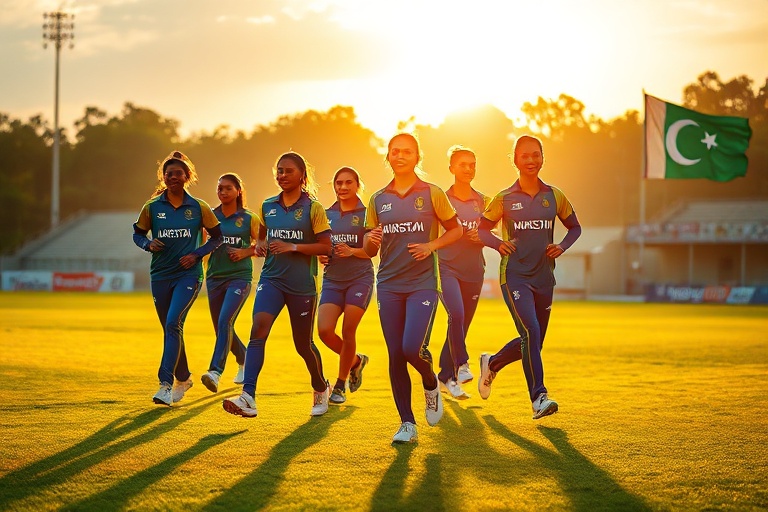
Pakistan vs Zimbabwe Women’s Cricket: A Rivalry Shaping the Future of the Sport
Pakistan Women vs Zimbabwe Women: A Growing Rivalry in Global Cricket
Cricket has long been a sport dominated by men, but the rise of women’s cricket in recent years has brought fresh energy to the international stage. One of the most intriguing matchups in this space is between the Pakistan Women’s Cricket Team and the Zimbabwe Women’s Cricket Team. While not as widely covered as some other rivalries, their encounters carry significant weight in the development of women’s cricket in Africa and Asia.
The growth of women’s cricket in Zimbabwe has been particularly noteworthy. The team, once considered an underdog, has made steady progress since gaining One Day International (ODI) status in 2019. Their performances against higher-ranked teams like Pakistan have provided valuable experience, even if results have not always gone their way. For Pakistan, these matches serve as both a benchmark and an opportunity to refine their strategies against emerging opponents.
The Evolution of Women’s Cricket in Pakistan and Zimbabwe
Pakistan’s women’s cricket team has been a consistent presence on the international stage since the 1990s, though it has often struggled for visibility compared to its men’s counterpart. The team has produced standout players like Bismah Maroof and Nida Dar, who have become icons in domestic and regional cricket. Despite limited resources, Pakistan has managed to field competitive sides, particularly in T20 formats.
Zimbabwe’s journey has been more recent but equally inspiring. Women’s cricket in Zimbabwe has faced financial and logistical challenges, yet the team has shown resilience. Players like Chipo Mugeri and Sharne Mayers have become key figures, embodying the determination of a nation rebuilding its cricketing infrastructure. Their encounters with Pakistan have highlighted the disparities in resources while underscoring the potential for growth in African cricket.
The contrast between the two teams reflects broader trends in global women’s cricket. While Pakistan benefits from a larger cricketing culture and more structured domestic leagues, Zimbabwe’s progress is a testament to grassroots development and the increasing investment in women’s sports across the continent.
Key Matches and Turning Points
The rivalry between Pakistan and Zimbabwe has produced several memorable encounters, particularly in T20 and ODI formats. One of the most significant series took place in 2021, when Zimbabwe hosted Pakistan for a five-match T20I series. Though Pakistan won the series 3-2, Zimbabwe’s performances were a clear sign of improvement. Their bowlers, including Precious Marange, troubled the Pakistani batters, while their fielding displayed a newfound confidence.
Another notable match was during the 2022 Commonwealth Games Qualifier, where Zimbabwe secured a historic win over Pakistan in a must-win game. This victory was more than just a result; it was a statement that African cricket was closing the gap. For Pakistan, it was a reminder that complacency could be costly in an era where women’s cricket is becoming increasingly competitive.
The following list highlights some key moments in their head-to-head encounters:
- 2021 T20I Series (Zimbabwe): Pakistan won 3-2, but Zimbabwe’s fightback in the latter matches showed their progress.
- 2022 Commonwealth Games Qualifier: Zimbabwe secured a crucial win, proving they could challenge higher-ranked teams.
- 2023 ICC Women’s T20 World Cup Qualifier: Pakistan dominated, but Zimbabwe’s performances hinted at future potential.
These matches are not just about rankings; they are about the broader narrative of women’s cricket in regions where the sport is still fighting for recognition. Each game between these two teams contributes to a larger story of empowerment, skill development, and the breaking of gender barriers in sports.
Cultural and Regional Significance
The Pakistan vs. Zimbabwe rivalry extends beyond the cricket field, touching on issues of gender equality, economic disparity, and the global expansion of cricket. In Pakistan, women’s cricket struggles with funding and societal perceptions, yet it continues to thrive thanks to the passion of its players. The sport is seen as a vehicle for change, challenging traditional norms in a country where women’s participation in sports has often been met with resistance.
In Zimbabwe, cricket is a unifying force. The national team’s progress has given young girls in rural areas something to aspire to, particularly in a country where female athletes in team sports are rare. The Zimbabwe Cricket Board has begun investing more in women’s cricket, a move that could redefine the sport’s landscape in Southern Africa.
From a global perspective, this rivalry is a microcosm of the challenges and opportunities facing women’s cricket. While teams like Australia, England, and India dominate headlines, the growth of teams like Zimbabwe and Pakistan is crucial for the sport’s long-term health. Their matches serve as a reminder that cricket’s future is not just in the hands of established powerhouses but also in the hands of emerging nations willing to push boundaries.
The Road Ahead
The future of Pakistan vs. Zimbabwe in women’s cricket looks promising. Both teams are on upward trajectories, with more opportunities to play against top-tier opposition. For Zimbabwe, the goal is to secure a spot in the next ICC Women’s T20 World Cup, while Pakistan aims to solidify its position in the top eight of the ODI rankings.
One of the most exciting developments is the increasing number of bilateral series between Associate nations. These matches provide much-needed exposure and help bridge the gap between Full Members and emerging teams. The ICC’s initiatives, such as the Women’s T20I Challenge and regional qualifiers, have also played a role in fostering competition.
For fans of women’s cricket, matches between Pakistan and Zimbabwe offer more than just entertainment. They represent the diversity of the sport and its ability to transcend borders. Whether it’s the tactical battles between bowlers and batters or the cultural exchanges between players, these encounters are a celebration of cricket’s global reach.
The journey of both teams is far from over. As they continue to develop, their rivalry will likely become a defining feature of the women’s game in the coming years. For now, each match is a step forward—a chance to inspire the next generation of cricketers and to prove that women’s cricket in Pakistan and Zimbabwe is here to stay.