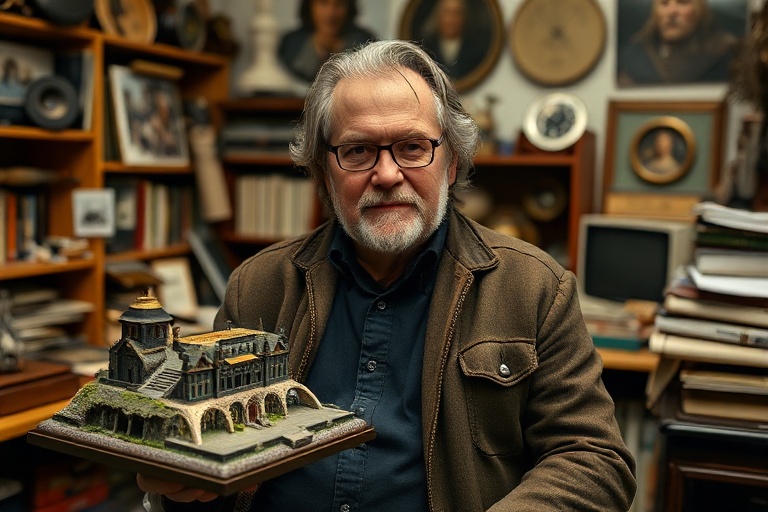
Peter Jackson stands as one of the most influential directors of the modern era, reshaping expectations for both fantasy storytelling and large-scale war dramatizations. With a career spanning over four decades, Jackson has evolved from a self-taught filmmaker working on low-budget horror projects to the visionary behind some of the highest-grossing and most critically acclaimed films of the past 25 years. His work is defined by meticulous craftsmanship, technical innovation, and an unrelenting commitment to immersive world-building.
Jackson’s legacy isn’t confined to box office numbers or awards. He fundamentally altered how studios approach genre cinema, proving that ambitious, effects-driven storytelling could coexist with emotional depth and artistic integrity. From The Lord of the Rings trilogy to The Hobbit films and the harrowing They Shall Not Grow Old, Jackson has repeatedly redefined what it means to adapt literature for the screen, blending documentary realism with mythic grandeur.
From Special Effects Hobbyist to Oscar-Winning Visionary
Jackson’s journey began in Wellington, New Zealand, where as a teenager he became obsessed with filmmaking after discovering the works of Ray Harryhausen. Using a borrowed 8mm camera and a budget of just $250, he produced his first short film, Bad Taste, a gory, absurdist comedy that premiered at Cannes in 1988. The film’s crude but effective stop-motion animation and dark humor caught the attention of critics, establishing Jackson as a bold, unconventional talent.
By the mid-1990s, Jackson had transitioned into feature-length horror with Braindead (1992), a splatter-comedy masterpiece co-written with his longtime partner Fran Walsh. The film’s grotesque practical effects and frenetic pacing cemented his reputation as a master of macabre creativity. But it was The Frighteners (1996), a supernatural thriller starring Michael J. Fox, that caught the eye of Hollywood executives and set the stage for his next monumental leap.
That leap came in 1999 when Jackson, along with Walsh and Philippa Boyens, began adapting J.R.R. Tolkien’s The Lord of the Rings. At the time, the idea of a live-action fantasy trilogy with a $270 million budget was considered commercially suicidal. Yet Jackson’s meticulous planning, use of New Zealand’s breathtaking landscapes, and groundbreaking digital effects changed the industry forever. The trilogy earned 17 Academy Awards, including Best Picture for The Return of the King (2003), making Jackson the first director to sweep the Oscars in a single year.
A New Standard for Fantasy Cinema
Jackson didn’t just adapt The Lord of the Rings—he reimagined it. He insisted on shooting in real locations rather than relying solely on soundstages, a decision that gave Middle-earth an unparalleled sense of authenticity. The films also pioneered the use of motion-capture technology for Gollum, a character who became a benchmark for digital performance in cinema.
More importantly, Jackson treated the source material with reverence and ambition. He expanded Tolkien’s world without betraying its spirit, weaving in deep character arcs and political intrigue that resonated with both longtime fans and newcomers. The trilogy’s success proved that fantasy wasn’t just escapism—it could be a vehicle for profound storytelling, emotional resonance, and cinematic artistry.
Jackson’s influence extended beyond storytelling. He pushed for the development of Wētā Workshop and Wētā Digital, companies that became global leaders in visual effects and prosthetics. These innovations didn’t just benefit The Lord of the Rings; they redefined the entire industry, enabling future filmmakers to realize increasingly complex visions.
From Middle-earth to the Trenches: A Shift in Tone and Purpose
After concluding The Lord of the Rings, Jackson returned to Middle-earth in 2012 with The Hobbit trilogy, a prequel that expanded the lore but also sparked debate among fans and critics. While the films were visually stunning, their extended runtime and lighter tone drew criticism for deviating from the leaner pacing of Tolkien’s novel. Jackson’s insistence on splitting the book into three films—despite its simpler narrative—highlighted both his strengths and limitations as a filmmaker.
Yet Jackson’s most transformative work in recent years came not from fantasy, but from history. They Shall Not Grow Old (2018) represented a radical departure from his earlier style. Commissioned by the Imperial War Museum, the documentary used archival footage from World War I, meticulously colorized, stabilized, and enhanced with audio from veterans’ testimonies. The result was a hauntingly immersive experience that felt immediate and visceral, as if viewers were standing in the trenches themselves.
Jackson didn’t just restore old film—he reanimated it. By slowing down footage and adding sound design that recreated the chaos of battle, he shattered the illusion of historical distance. The film wasn’t just a documentary; it was an emotional time machine. It reminded audiences that war isn’t just about dates and statistics—it’s about human beings, their fear, their courage, and their sacrifice.
Why They Shall Not Grow Old Matters
Jackson’s approach to They Shall Not Grow Old underscored a deeper philosophy: cinema should not just entertain, but also illuminate and humanize. In an era of digital overload and diminishing attention spans, the film’s success proved that audiences still crave authenticity and emotional truth. It also demonstrated Jackson’s versatility—from fantasy epic to documentary realism—showing that his talents weren’t confined to one genre or style.
The film’s broader implications are significant. It challenged traditional notions of documentary filmmaking, proving that archival material could be transformed into something cinematic and urgent. It also sparked renewed interest in World War I, a conflict often overshadowed by World War II in public memory. Jackson’s work ensured that the stories of those who fought—and died—would not be forgotten.
Legacy, Influence, and the Future of Filmmaking
Peter Jackson’s impact on cinema is impossible to overstate. He didn’t just direct films—he redefined what was possible in visual storytelling. His innovations in digital effects, motion capture, and immersive sound design have influenced countless filmmakers, from James Cameron to Denis Villeneuve. His commitment to practical effects and real-world authenticity has also served as a counterbalance to the growing dominance of CGI in modern blockbusters.
Jackson’s career also offers a lesson in perseverance and adaptability. He started as a self-taught filmmaker working in a garage and ended up directing some of the most expensive and ambitious projects in history. Yet even in failure—such as The Hobbit’s mixed reception—he demonstrated the ability to pivot and explore new forms, as seen in They Shall Not Grow Old.
Looking ahead, Jackson remains active, with projects like The Beatles: Get Back, a documentary about the band’s 1969 recording sessions, further showcasing his range. He continues to push boundaries, whether through new technologies or unconventional storytelling methods.
Key Takeaways from Peter Jackson’s Career
Jackson’s journey offers several insights into the art and business of filmmaking:
- Innovation through collaboration: Jackson’s success was built on partnerships with artists, technicians, and writers. Wētā Workshop, for example, became a hub for creative experimentation.
- Respect for source material: Whether adapting Tolkien or documenting war veterans, Jackson approached his subjects with deep respect, balancing fidelity with creative interpretation.
- Technical mastery as a storytelling tool: His use of motion capture, colorization, and practical effects wasn’t just about spectacle—it was about deepening emotional engagement.
- Versatility across genres: From horror to fantasy to documentary, Jackson has shown that great filmmakers are not bound by a single style or subject.
- The power of persistence: Jackson’s early work was met with skepticism, yet he continued refining his craft, eventually earning the trust—and budgets—of major studios.
Jackson’s legacy is not just in the films he’s made, but in the doors he’s opened. He proved that genre cinema could be art. He showed that digital effects could serve storytelling, not overshadow it. And perhaps most importantly, he reminded us that cinema’s greatest power lies in its ability to make us see the world—and ourselves—differently.
A Lasting Impact on Global Cinema
Peter Jackson’s career reflects the evolution of cinema itself. He began in a time when filmmakers had to do everything themselves, often with limited resources. By the time he concluded The Lord of the Rings, he was part of a new generation of directors who could command budgets in the hundreds of millions and still retain creative control. His work helped shift the industry’s focus from corporate homogenization to artistic ambition.
Beyond his technical achievements, Jackson’s influence is cultural. The Lord of the Rings didn’t just revive the fantasy genre—it redefined it, inspiring countless adaptations and shaping the expectations of an entire generation of filmgoers. His films have been credited with boosting tourism in New Zealand, creating a lasting economic and cultural legacy for the country.
Jackson’s later work, particularly They Shall Not Grow Old, also underscores the role of cinema as a historical document. In an age of misinformation and fleeting digital content, his restoration of World War I footage serves as a reminder of film’s power to preserve memory and educate future generations.
As Jackson continues to work, his legacy is secure. He is more than a filmmaker; he is a pioneer who expanded the language of cinema. His ability to balance spectacle with substance, innovation with tradition, and ambition with humility sets a standard for artists across disciplines. Whether through Middle-earth’s sweeping vistas or the muddy trenches of World War I, Jackson has consistently reminded us that great storytelling begins with a deep respect for the human experience—and the courage to bring it to life on screen.
For aspiring filmmakers, Jackson’s career offers a blueprint: start small, think big, and never stop learning. For audiences, his films remain a testament to the power of cinema to transport, to challenge, and to move us.