Sean Hannity: How One Voice Redefined Modern Media
For nearly three decades, Sean Hannity has been a defining figure in American media, carving out a space that blends commentary, journalism, and entertainment. His influence extends beyond traditional talk radio and cable news, shaping political discourse, cultural narratives, and even the business models of modern media empires. To understand Hannity’s impact, it’s essential to look beyond the headlines and examine how his career reflects broader shifts in media consumption, political polarization, and the evolving role of the commentator in global public life.
The Rise of a Media Mogul
Hannity’s journey to becoming one of the most recognizable voices in conservative media began in the early 1990s. Born in New York City in 1961, he cut his teeth in local radio before landing a national platform on Fox News Channel in 1996. At a time when cable news was still finding its footing, Hannity’s blend of fiery rhetoric and unapologetic partisanship struck a chord with a growing audience hungry for opinion-driven content. His partnership with Alan Colmes—initially framed as a “fair and balanced” counterpoint—quickly evolved into a platform for Hannity’s more strident views, foreshadowing the media landscape’s later fragmentation.
His rise coincided with the consolidation of media power into the hands of a few conglomerates, a trend that has reshaped how news is produced and consumed worldwide. Hannity’s success demonstrated that opinion programming could be as profitable—if not more so—than traditional hard news. This shift has had global implications, inspiring media outlets from London to Sydney to prioritize personality-driven content over impartial reporting. In many ways, Hannity’s career mirrors the broader evolution of media from a public service to a commercial enterprise, where entertainment value often trumps factual rigor.
The Hannity Brand: More Than Just a Commentator
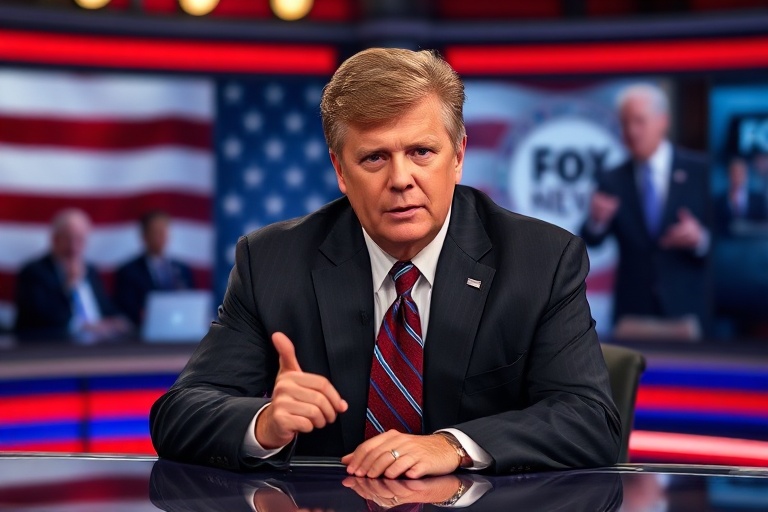
What sets Hannity apart is not just his longevity but the breadth of his influence. He has transcended the role of a mere commentator to become a cultural and political brand. His radio show, Hannity, remains one of the most-listened-to programs in talk radio, while his Fox News program has become a staple of conservative media. But his reach extends into publishing, public speaking, and even advocacy, where he has aligned himself closely with political figures, particularly during the Trump era.
This multifaceted brand is a product of the modern media ecosystem, where individuals cultivate followings that rival those of traditional institutions. Hannity’s ability to monetize his influence—through book deals, endorsements, and speaking fees—reflects a broader trend in which commentators become brands unto themselves. Globally, this model has been replicated by figures like Piers Morgan in the UK or Rush Limbaugh’s international imitators, all of whom leverage their media presence to build empires that operate outside conventional journalistic frameworks.
- Radio & Podcasting: His daily radio show and podcast reach millions, making him a constant presence in the lives of his audience.
- Television: Hannity’s Fox News program is a prime-time fixture, blending news analysis with opinion, often blurring the lines between the two.
- Publishing: His books, including Let Freedom Ring and Live Free or Die, have cemented his status as a thought leader in conservative circles.
- Advocacy: Hannity’s public support for political candidates, particularly during election cycles, has turned him into a kingmaker in Republican politics.
Global Echoes: Hannity’s Influence Beyond U.S. Borders
While Hannity’s primary audience is in the United States, his impact is felt globally, particularly in countries where media landscapes are similarly polarized. In Europe, where right-wing populism has surged, commentators like Nigel Farage in the UK or Éric Zemmour in France have adopted similar strategies—blending media presence with political advocacy to amplify their messages. Hannity’s success has shown that in an era of fragmented media, a strong, consistent voice can cultivate a loyal following that transcends traditional geographic boundaries.
His alignment with the Trump administration also highlighted the international dimension of his influence. Trump’s presidency was a global phenomenon, and Hannity’s unwavering support for Trump’s policies and rhetoric became a focal point for both his supporters and critics worldwide. International media outlets often cited Hannity as a symbol of the media’s role in shaping—and being shaped by—political movements. In countries like Brazil, where figures like Jair Bolsonaro rose to power with media allies, Hannity’s model has been studied and emulated.
Yet, this global influence is not without controversy. Critics argue that Hannity’s brand of commentary contributes to the erosion of trust in media institutions worldwide. In an era where misinformation spreads rapidly, his willingness to amplify conspiracy theories and partisan narratives has drawn sharp criticism. This tension between free speech and responsible journalism is a global debate, one that Hannity’s career embodies.
The Future of Commentary in a Fragmented Media World
As media consumption continues to splinter into niche audiences, Hannity’s career offers a glimpse into the future of commentary. The decline of traditional news networks and the rise of digital platforms have created opportunities for commentators to build direct relationships with their audiences, bypassing gatekeepers. Hannity’s ability to adapt—from radio to television to streaming—demonstrates the resilience of personality-driven media in an ever-changing landscape.
However, this future is not without challenges. The same forces that have elevated Hannity have also fueled polarization, eroded trust in institutions, and blurred the lines between news and opinion. Globally, media scholars are grappling with the consequences of this shift, as societies struggle to reconcile the demand for free expression with the need for factual accuracy. Hannity’s career is a case study in these tensions, offering lessons—and warnings—for media professionals and consumers alike.
For better or worse, Sean Hannity has become a defining voice of his generation. His influence extends beyond politics; it touches on the very nature of media, democracy, and public discourse. As the media landscape continues to evolve, his career will remain a touchstone for understanding the power—and pitfalls—of commentary in the modern world.