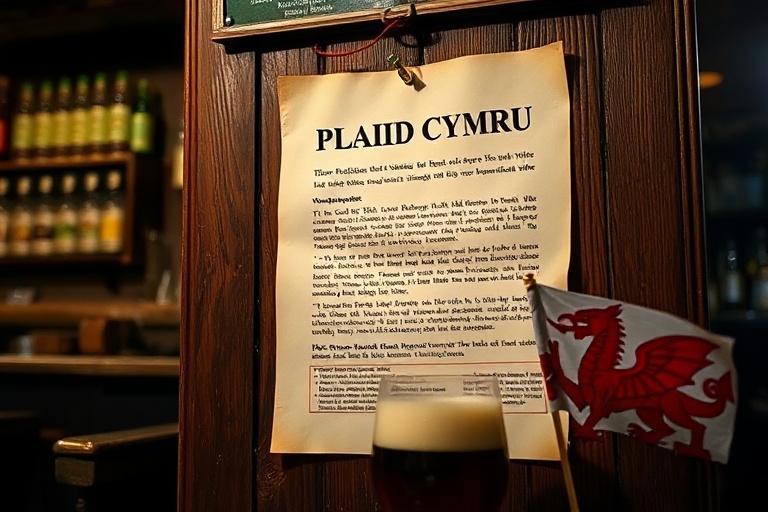
Wales stands at a crossroads where political choices will shape its future identity and economic trajectory. Plaid Cymru’s manifesto arrives not as a radical departure from current policies but as a reassertion of distinct Welsh priorities within the UK. The party’s vision emphasizes self-determination, social justice, and environmental stewardship—principles that have long defined its platform but now face fresh scrutiny in a rapidly changing political landscape.
With the manifesto serving as both a declaration of intent and a practical roadmap, its contents reveal how Plaid Cymru intends to balance devolutionary ambition with the immediate needs of Welsh communities. The document is more than a list of promises; it is a statement of political intent that challenges the status quo while proposing tangible solutions to Wales’ most pressing challenges.
Core Policy Pillars of the Plaid Cymru Manifesto
The manifesto outlines six central pillars that form the backbone of Plaid Cymru’s policy platform. These areas reflect a deliberate attempt to address systemic inequalities while positioning Wales as a leader in sustainable governance.
- Full Fiscal Autonomy: Plaid Cymru calls for the devolution of taxation powers, arguing that financial independence is essential for Wales to address its unique economic challenges. This includes control over income tax bands, corporation tax, and VAT receipts, with the goal of reducing reliance on Westminster.
- Welsh Language and Culture: A commitment to doubling the number of Welsh speakers by 2050 through expanded education programs, media investment, and workplace protections. The manifesto also pledges to enshrine Welsh as an official language in all public institutions.
- Green Industrial Revolution: A £10 billion investment in renewable energy, aiming to make Wales carbon-neutral by 2035. This includes offshore wind farms, hydrogen infrastructure, and retrofitting homes for energy efficiency.
- Housing and Rent Reform: A ban on no-fault evictions, rent controls in high-demand areas, and a £500 million fund to build 20,000 social homes annually. The party argues that housing insecurity is a crisis that demands immediate legislative action.
- Healthcare Expansion: Free social care for the elderly, increased mental health funding, and a focus on community-based medicine to reduce pressure on hospitals. Plaid Cymru also proposes merging health and social care budgets to improve coordination.
- Education Transformation: Universal free school meals for primary pupils, increased teacher pay, and a review of the curriculum to emphasize Welsh history and environmental education. The manifesto also calls for the abolition of university tuition fees.
Each of these pillars is interconnected, reflecting a holistic approach to governance. For instance, the push for fiscal autonomy is framed not just as an economic policy but as a prerequisite for delivering on other manifesto commitments. Similarly, the green industrial strategy is positioned as both an environmental necessity and an economic opportunity, particularly for post-industrial communities.
Welsh Independence: A Pragmatic Path Forward
While independence remains Plaid Cymru’s long-term goal, the manifesto carefully avoids framing it as an immediate demand. Instead, the party proposes a phased approach, starting with enhanced devolution and culminating in a referendum within the next decade. This strategy reflects a pragmatic shift, acknowledging that public opinion remains divided on full independence.
Polling data suggests that while support for Welsh self-determination is growing—particularly among younger voters—most Welsh citizens currently favor greater devolution over outright separation. Plaid Cymru’s manifesto navigates this divide by emphasizing the benefits of independence without alienating those who remain skeptical. The party argues that fiscal autonomy could serve as a stepping stone, allowing Wales to demonstrate its ability to govern effectively before pursuing full sovereignty.
The manifesto positions independence not as a leap into the unknown but as a logical extension of Wales’ existing devolutionary framework. By focusing on tangible deliverables—such as control over taxation and public services—Plaid Cymru seeks to make the case for self-governance more palatable to the broader electorate.
Challenges and Criticisms
Critics argue that Plaid Cymru’s manifesto underestimates the economic risks of fiscal autonomy. The Institute of Welsh Affairs has warned that without careful negotiation, Wales could face a significant budget shortfall, particularly if tax revenues decline. Similarly, the UK government has dismissed the manifesto’s proposals as unrealistic, arguing that fiscal devolution would create administrative chaos.
Another point of contention is the manifesto’s housing policies. While rent controls and social housing investments are popular among tenants, landlord associations and property developers warn that such measures could deter investment in the private rental sector. The debate over housing reflects a broader tension in Welsh politics: balancing social justice with economic growth.
Plaid Cymru’s green policies, while ambitious, also face practical hurdles. Critics point out that Wales lacks the infrastructure to rapidly scale up renewable energy production, and the manifesto’s timeline for carbon neutrality may be overly optimistic. However, supporters argue that the plan’s investment-heavy approach is necessary to avoid the worst impacts of climate change.
What’s Next for Plaid Cymru and Wales?
The manifesto’s release coincides with a period of political realignment in Wales. The Labour Party, which has dominated Welsh politics for over two decades, faces growing pressure from both Plaid Cymru and the Conservatives. The next Senedd election, scheduled for 2026, will serve as a critical test for Plaid Cymru’s vision.
If the party gains significant ground, its policies could influence Labour’s agenda, pushing the dominant party toward more progressive stances on housing, language, and climate. Conversely, if Plaid Cymru fails to make meaningful electoral gains, its manifesto may be dismissed as a well-intentioned but ultimately unrealistic vision.
Regardless of the outcome, the manifesto has already succeeded in shifting the Overton window in Welsh politics. By articulating a clear, comprehensive alternative to the status quo, Plaid Cymru has forced other parties to engage with issues they might otherwise have ignored. This is particularly evident in the growing public debate over fiscal autonomy, which was once a fringe topic but is now firmly on the political agenda.
The manifesto also serves as a reminder that Wales is not merely a passive recipient of UK-wide policies but an active participant in shaping its own future. Whether through independence or enhanced devolution, Plaid Cymru’s vision challenges the assumption that Welsh interests are best served by centralized governance.
As Wales grapples with the dual pressures of economic stagnation and environmental degradation, the choices outlined in the Plaid Cymru manifesto offer a compelling alternative. Whether this alternative gains traction remains to be seen, but one thing is clear: the debate over Wales’ future has only just begun.
For more political analysis, explore our Politics and News sections.