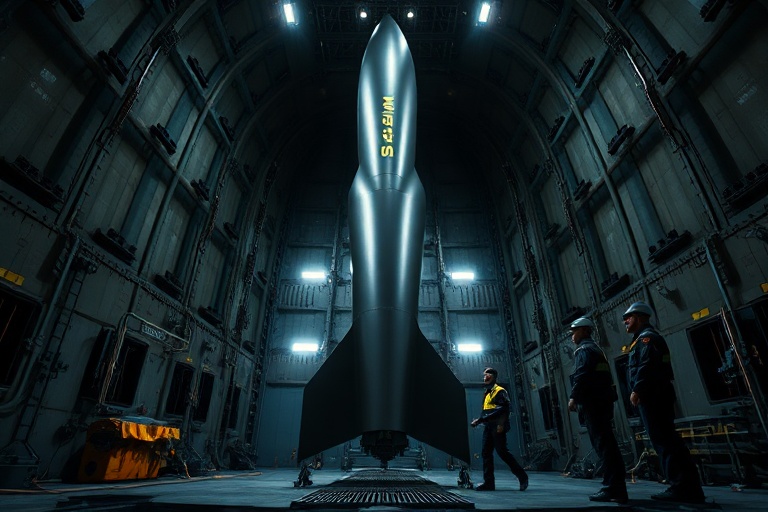
rs-28 sarmat
The RS-28 Sarmat, also known by its NATO reporting name SS-X-30 Satan 2, represents one of Russia’s most advanced intercontinental ballistic missiles (ICBMs). Designed to replace the aging Soviet-era R-36M2 Voevoda (SS-18 Satan), the Sarmat is a cornerstone of Moscow’s nuclear modernization program. With a reported range of up to 18,000 kilometers and the ability to carry multiple warheads, including hypersonic glide vehicles, this missile system is reshaping the strategic calculus of global security.
First tested in 2018, the Sarmat has undergone rigorous development to ensure reliability and lethality. Russian officials have described it as an “ideal weapon” for overcoming modern missile defense systems, particularly those deployed by the United States and its allies. Its introduction comes at a time of heightened geopolitical tensions, making it a focal point in discussions about nuclear deterrence and arms control.
Technical Specifications and Capabilities
The Sarmat is a liquid-fueled, heavy ICBM that stands approximately 35 meters tall and weighs around 208.3 tons at launch. Unlike its predecessor, which relied on outdated technology, the Sarmat incorporates cutting-edge features designed to enhance its combat effectiveness.
- Range: Up to 18,000 kilometers, allowing it to strike targets in North America, Europe, and Asia from Russian launch sites.
- Payload Capacity: Can carry up to 10 heavy or 15 lighter warheads, including the Avangard hypersonic glide vehicle.
- Maneuverability: Equipped with advanced propulsion and guidance systems to evade missile defense interceptors.
- Deployment: Expected to enter service with Russia’s Strategic Missile Forces in the near future, with full operational capability planned for the mid-2020s.
A key innovation is the Sarmat’s ability to deploy countermeasures and decoys, complicating interception efforts by adversarial missile defense systems. Additionally, its rapid launch capability reduces the window for preemptive strikes, further enhancing its deterrent value. Military analysts suggest that the Sarmat’s introduction could render existing missile defense architectures obsolete, prompting a reassessment of global strategic balances.
The missile’s development aligns with Russia’s broader military modernization efforts, which include hypersonic weapons, nuclear-powered cruise missiles, and next-generation submarines. These systems collectively aim to ensure Moscow’s ability to maintain a credible nuclear deterrent in the face of evolving threats.
Strategic Implications for Global Security
The deployment of the Sarmat has significant implications for international security, particularly in the context of U.S.-Russia relations. Since the Cold War, arms control treaties such as New START have sought to limit the proliferation of strategic nuclear weapons. However, the Sarmat’s advanced capabilities challenge the assumptions underlying these agreements.
One of the most pressing concerns is the missile’s potential to overwhelm missile defense systems. The United States has invested heavily in ground-based interceptors in Alaska and California, as well as the Aegis Ashore system in Europe. The Sarmat’s sheer power and payload capacity make it difficult to neutralize, raising questions about the viability of current defense strategies.
“The Sarmat is not just another ICBM; it’s a game-changer in terms of strategic stability. Its ability to penetrate defenses fundamentally alters the calculus of nuclear deterrence.” — Dr. Pavel Podvig, Senior Researcher at the United Nations Institute for Disarmament Research
Another concern is the missile’s reported ability to carry the Avangard hypersonic glide vehicle. Hypersonic weapons travel at speeds exceeding Mach 5, making them nearly impossible to intercept with existing technology. The combination of Sarmat’s range and Avangard’s speed creates a formidable challenge for adversaries seeking to develop effective countermeasures.
Analysts also warn that the Sarmat could exacerbate arms races in other regions. Countries like China and North Korea may accelerate their own ICBM programs in response to Russia’s advancements, leading to a new era of nuclear competition. The risk of miscalculation or accidental escalation grows with each new generation of strategic weapons.
Russia’s Nuclear Modernization: A Broader Perspective
The Sarmat is part of a broader effort by Russia to modernize its nuclear arsenal, which includes upgrades to bombers, submarines, and tactical nuclear weapons. This modernization reflects Moscow’s determination to maintain parity with the United States, despite economic sanctions and diplomatic isolation.
Key components of Russia’s nuclear modernization program include:
- Bulava SLBM: A submarine-launched ballistic missile deployed on the Borei-class nuclear submarines.
- Kinzhal Hypersonic Missile: An air-launched weapon designed to strike both land and sea targets with precision.
- Poseidon Nuclear Torpedo: An autonomous underwater vehicle capable of delivering a nuclear warhead to coastal targets.
- Yars ICBM: A road-mobile, solid-fueled missile already in service with Russia’s Strategic Missile Forces.
These systems collectively demonstrate Russia’s commitment to maintaining a flexible and survivable nuclear deterrent. The Sarmat, in particular, fills a critical gap by replacing the aging R-36M2, which has been in service since the 1980s. Its advanced features ensure that Russia’s nuclear triad—comprising land-based ICBMs, submarine-launched ballistic missiles (SLBMs), and strategic bombers—remains a potent tool of statecraft.
However, the modernization drive also raises concerns about Russia’s long-term intentions. While Moscow insists its nuclear arsenal is purely defensive, critics argue that the sheer scale and sophistication of these weapons could embolden aggressive behavior. The deployment of the Sarmat, for example, coincides with Russia’s increasingly assertive foreign policy, including its actions in Ukraine and Syria.
International Reactions and Future Outlook
The introduction of the Sarmat has elicited varied responses from the international community. Western governments, particularly in the United States, have expressed concern over the missile’s potential to destabilize strategic stability. NATO allies have called for renewed arms control negotiations to address the challenges posed by next-generation nuclear weapons.
China, meanwhile, has downplayed the Sarmat’s significance, emphasizing its own nuclear deterrent capabilities. Beijing’s response reflects its broader strategy of maintaining a minimal yet credible nuclear arsenal. However, the missile’s advanced features may prompt China to reconsider its stance on arms control.
Russia, for its part, has framed the Sarmat as a necessary response to NATO’s expansion and the deployment of missile defense systems. Moscow argues that its nuclear modernization is purely defensive and does not violate existing arms control treaties. Yet, the lack of transparency surrounding the Sarmat’s testing and deployment has fueled skepticism among arms control advocates.
Looking ahead, the Sarmat’s operational deployment will likely accelerate calls for new arms control frameworks. The New START treaty, which expires in 2026, may need to be renegotiated to include limits on hypersonic weapons and next-generation ICBMs. Failure to reach an agreement could result in an unchecked arms race, with unpredictable consequences for global security.
For now, the Sarmat stands as a symbol of Russia’s determination to maintain its status as a great power. Its advanced capabilities ensure that Moscow will remain a key player in shaping the future of nuclear deterrence. Whether this leads to greater stability or increased risk will depend on the responses of other nuclear-armed states—and the willingness of diplomats to adapt to a rapidly changing strategic landscape.
As the world watches the Sarmat’s deployment unfold, one thing is clear: the future of nuclear deterrence is entering a new and uncertain phase. The decisions made in the coming years will determine whether this next-generation missile serves as a tool for peace or a catalyst for conflict.
Explore more about advanced military technology on Dave’s Locker.
Stay updated on global security developments with our news coverage.