San Diego International Airport: A Gateway to the Pacific
San Diego International Airport (SAN) stands as more than just a transit hub—it is a cultural crossroads where global travel meets local identity. Nestled between downtown San Diego and the Pacific Ocean, the airport has evolved from a modest military airstrip in the early 20th century to one of the busiest single-runway airports in the United States. Its compact footprint belies its significance, serving as a vital link between California’s southern border and the wider world.
The airport’s history reflects broader trends in aviation and urban development. Originally known as Lindbergh Field, it was named after Charles Lindbergh, whose 1927 transatlantic flight symbolized the dawn of modern air travel. Today, SAN handles over 25 million passengers annually, connecting the region to major cities across the U.S., Mexico, and beyond. Its efficiency and accessibility have made it a model for urban airports worldwide, particularly in cities where space constraints demand innovation.
The Airport’s Role in Regional and Global Connectivity
SAN’s strategic location on the Pacific Rim positions it as a key player in international trade and tourism. The airport facilitates connections to travel destinations ranging from the bustling streets of Tokyo to the beaches of Cabo San Lucas. Unlike larger airports burdened by congestion, SAN’s streamlined operations allow for quicker turnarounds, benefiting both leisure travelers and business commuters.
One of the airport’s most notable features is its proximity to downtown San Diego. Just three miles northwest of the city center, passengers can transition from terminal gates to urban attractions in under 15 minutes. This convenience has made SAN a preferred choice for conventions and events, as attendees can easily navigate between hotels, cultural sites, and the airport without the logistical challenges of larger hubs.
The airport’s global reach extends beyond passenger travel. SAN serves as a critical node for cargo operations, supporting industries from biotechnology to manufacturing. In 2023, the airport handled over 100,000 tons of freight, underscoring its role in the regional economy. Its partnerships with logistics companies ensure that goods move swiftly between the U.S. and Mexico, reinforcing San Diego’s position as a gateway to Latin America.
Architectural and Cultural Significance
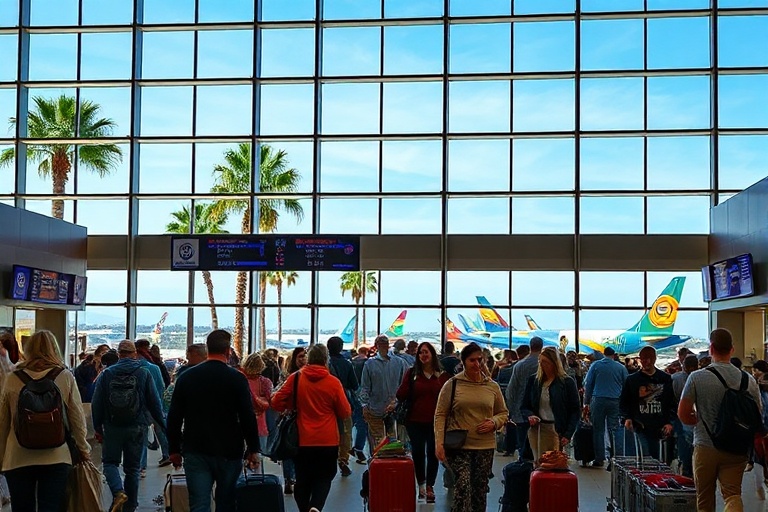
SAN’s Terminal 2, completed in 2013, exemplifies how modern airports can blend functionality with cultural expression. Designed by Gensler, the terminal features expansive windows that flood the interior with natural light, offering travelers panoramic views of the runway and distant mountains. The architecture reflects the region’s commitment to sustainability, with energy-efficient systems and LEED Gold certification.
The airport’s public art installations further enhance its cultural appeal. Pieces like Pacific Flows by artist James Hubbell incorporate local themes, celebrating the region’s maritime heritage and artistic diversity. These elements transform the airport from a mere transit point into a space that invites reflection and inspiration—a subtle reminder of the cultural tapestry that defines San Diego.
SAN also plays a role in the city’s identity as a hub for innovation. The airport’s proximity to research institutions like UC San Diego and the Scripps Institution of Oceanography fosters collaboration between academia and industry. This synergy has positioned San Diego as a leader in fields such as genomics, clean energy, and aerospace, with SAN serving as a vital conduit for ideas and talent.
Challenges and Future Prospects
Despite its successes, SAN faces challenges common to urban airports: capacity constraints and environmental concerns. The single runway, while efficient, limits growth potential, prompting discussions about long-term expansion strategies. Proposals include adding a new terminal or exploring off-site facilities, though these initiatives must balance economic benefits with community impact.
Environmental sustainability remains another priority. SAN has committed to reducing carbon emissions and has adopted electric ground support equipment. These efforts align with California’s broader goals to combat climate change, though the airport must navigate complex regulatory landscapes and stakeholder interests.
Looking ahead, SAN is exploring partnerships with technology firms to enhance passenger experiences. From biometric check-ins to AI-driven customer service, the airport is embracing digital innovation to improve efficiency and comfort. These advancements could set new standards for airports worldwide, particularly in regions grappling with similar challenges.
A Model for Urban Airports Globally
San Diego International Airport’s story is one of adaptability and foresight. In an era where airports often struggle with overcrowding and inefficiency, SAN demonstrates how constrained spaces can foster creativity and resilience. Its blend of cultural expression, economic impact, and operational efficiency offers lessons for cities from London to Singapore, where urban growth and aviation demands collide.
The airport’s success is not merely measured in passenger numbers or economic output. It is reflected in the stories of travelers who pass through its gates—students embarking on study abroad programs, families reuniting, entrepreneurs closing deals, and artists finding inspiration. SAN is more than a transit point; it is a microcosm of global connectivity, where the local and the international intersect.
As San Diego continues to grow, so too will the significance of its airport. Whether through technological innovation, sustainable practices, or cultural enrichment, SAN is poised to remain a vital artery for the region and a model for airports worldwide. Its journey from a modest airstrip to a global gateway underscores the power of vision and adaptability in shaping the future of travel.
Key Takeaways for Travelers and Industry Observers
For travelers, SAN offers a blend of convenience, culture, and connectivity. Its compact size and efficient operations make it a preferred choice for those seeking to minimize stress and maximize time. The airport’s art installations and architectural design provide glimpses into the region’s creative spirit, while its global routes ensure seamless travel to destinations near and far.
For industry observers, SAN serves as a case study in balancing growth with sustainability. Its challenges—capacity constraints, environmental concerns, and technological integration—mirror those faced by airports worldwide. By addressing these issues with innovation and collaboration, SAN offers a blueprint for other urban airports seeking to thrive in an increasingly complex landscape.
The airport’s legacy is still being written, but its impact is already clear. San Diego International Airport is not just a gateway to the Pacific—it is a testament to the enduring power of human ingenuity and the unifying force of travel.