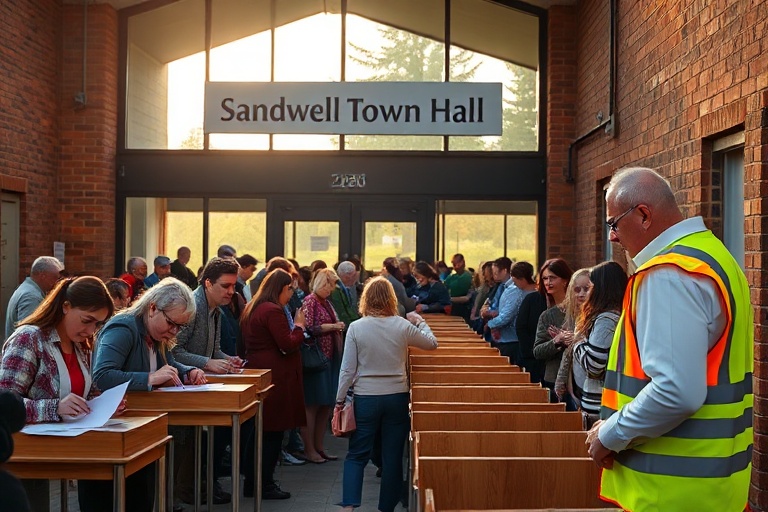
The stage is set for the Sandwell Borough Council elections in 2026, with local politics poised for potential shifts in power and policy. Sandwell, a metropolitan borough in the West Midlands, has long been a Labour stronghold, but demographic changes and shifting voter priorities could create unexpected outcomes. As campaign season approaches, residents and political observers alike are beginning to assess the factors that will shape the race.
With nine years of Labour leadership under its belt, Sandwell has seen gradual policy adjustments but few dramatic overhauls. The 2026 elections may test whether that stability is enough to maintain voter confidence or if challengers can capitalize on local concerns about housing, transport, and economic development. The results will not only determine the borough’s immediate future but could also influence broader regional dynamics ahead of the next general election.
The Current Political Climate in Sandwell
Labour’s dominance in Sandwell has been unbroken since the 1990s, with the party controlling the council with large majorities. However, the 2023 local elections saw a modest but noticeable decline in Labour’s vote share across the West Midlands, raising questions about whether this trend will continue in 2026. The Conservative Party, despite its struggles in urban areas, has been attempting to rebuild its presence through targeted campaigning in key wards.
The Liberal Democrats and Green Party have also been making incremental gains, particularly in areas with younger, more progressive electorates. While neither party is expected to pose an immediate threat to Labour’s majority, their ability to influence the narrative—especially on issues like environmental policy and public transport—could reshape the electoral landscape. Smaller parties and independent candidates may also play a spoiler role in tightly contested wards.
One of the most watched dynamics is the impact of voter turnout. Sandwell’s turnout in recent local elections has hovered around 30-35%, well below the national average. Efforts by community groups and political campaigns to mobilize younger voters and traditionally disengaged communities could prove decisive in 2026. The borough’s diverse population, including significant South Asian and Eastern European communities, adds another layer of complexity to voter mobilization strategies.
Key Issues That Will Shape the Campaign
Several pressing issues are expected to dominate the election discourse in Sandwell. Housing affordability remains a top concern, with waiting lists for social housing growing and private rents rising faster than wages. The council’s approach to planning and development will be a major point of contention, particularly in areas like West Bromwich and Tipton, where regeneration projects have sparked debate over displacement and community benefits.
Transport infrastructure is another flashpoint. The borough faces ongoing challenges with bus service reliability and the need for improved cycling and walking routes. The West Midlands Combined Authority has promised investment, but residents are eager to see tangible improvements before the next election. Candidates will likely be pressed on how they plan to hold authorities accountable for delivery timelines.
Education and public health also loom large. Sandwell has historically underperformed in Ofsted inspections for some schools, and the council has faced criticism for its handling of children’s services. Meanwhile, health inequalities persist, with life expectancy gaps between the most and least deprived areas widening in recent years. These issues could become rallying cries for opposition candidates seeking to challenge Labour’s record.
The following list highlights the most frequently cited concerns among Sandwell residents, based on recent surveys and community meetings:
- Affordable housing shortages – High demand and limited supply continue to push prices upward.
- Public transport reliability – Residents report frustration with inconsistent bus schedules and limited coverage.
- School performance and funding – Calls for better-resourced schools and targeted interventions for struggling institutions.
- Healthcare access – Long wait times for GP appointments and mental health services remain critical issues.
- Local job opportunities – Economic stagnation in certain wards has led to calls for targeted investment.
Demographic Shifts and Their Electoral Impact
Sandwell’s population has undergone subtle but meaningful changes in recent years. The borough has seen an influx of younger professionals drawn by relatively lower property prices compared to Birmingham, as well as an aging population in traditional Labour strongholds. These shifts have the potential to alter voting patterns, particularly if new residents feel underserved by existing council services.
The growth of communities from Eastern Europe and South Asia has also introduced new political priorities. For instance, Polish and Romanian residents, who make up a significant portion of the foreign-born population, have shown increasing engagement in local politics, particularly around language access and cultural representation. Similarly, the South Asian community, which has historically leaned toward Labour, is becoming more vocal about issues like halal food availability and religious accommodation in public spaces.
Another factor is the borough’s changing industrial landscape. Traditional manufacturing jobs have declined, but new sectors like logistics and green energy are emerging. The council’s approach to retraining workers and attracting sustainable industries will be a key differentiator for candidates. Those who can articulate a clear vision for economic renewal may find traction with voters who feel left behind by globalization.
What the Experts Are Saying
Political analysts are divided on whether Sandwell will see a significant shift in 2026. Some argue that Labour’s entrenched support, combined with the fragmented opposition, makes a change in control unlikely. They point to the party’s strong ground game and incumbency advantage as key strengths that could weather any discontent.
Others, however, suggest that the combination of demographic changes and rising living costs could create openings for challengers. A recent report by the West Midlands Policy Forum noted that “even in safe Labour areas, voter dissatisfaction with service delivery is reaching a tipping point.” The report warns that if Labour fails to address bread-and-butter issues like bin collections and pothole repairs, even traditionally loyal voters may stay home or defect.
The role of social media in this election cannot be underestimated. Younger voters, in particular, are increasingly influenced by digital campaigning, with platforms like TikTok and Instagram becoming battlegrounds for political messaging. Candidates who can craft authentic, issue-driven content may gain an edge in mobilizing this demographic. Meanwhile, misinformation and deepfake concerns are prompting calls for tighter regulation of political advertising online.
One thing is certain: the 2026 Sandwell elections will be closely watched as a bellwether for Labour’s strength in urban areas ahead of the next general election. A strong performance could embolden the party nationally, while a poor showing might signal growing disillusionment with its local governance.
Conclusion: Why These Elections Matter
The Sandwell Borough Council elections of 2026 are more than a local contest—they are a referendum on the future direction of one of the West Midlands’ most dynamic boroughs. With Labour’s grip potentially weakening and opposition parties sharpening their strategies, the campaign promises to be one of the most unpredictable in years. Residents will have the chance to weigh in on issues that directly affect their daily lives, from the state of their streets to the quality of their children’s schools.
For political observers, Sandwell offers a microcosm of broader trends in British local politics: the rise of issue-based campaigning, the challenges of incumbency, and the growing influence of demographics on electoral outcomes. As the campaign unfolds, all eyes will be on Sandwell to see whether Labour can defy historical trends or if a new political narrative is about to take shape.
One thing is clear: whoever wins in 2026 will inherit a borough at a crossroads, tasked with balancing economic growth, social equity, and environmental sustainability. The decisions made in the council chamber will ripple through Sandwell for years to come, making these elections as consequential as they are hard-fought.