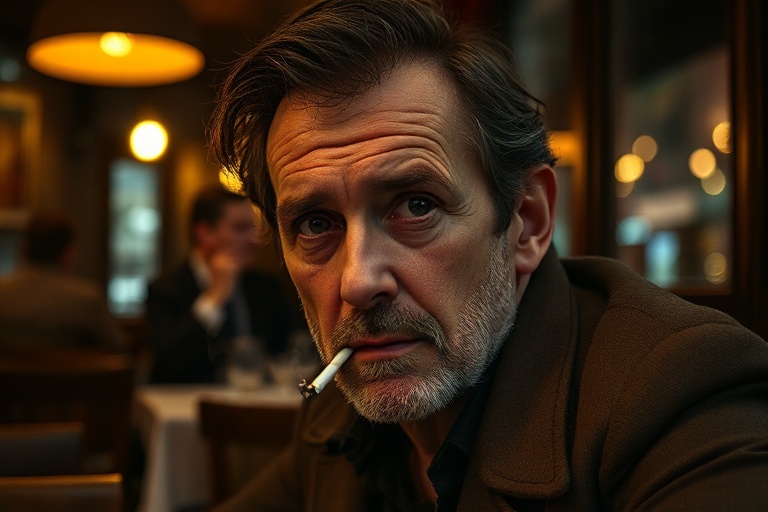
Sebastian Koch stands as one of Germany’s most compelling actors, bridging the gap between European arthouse cinema and mainstream international productions. With a career spanning over three decades, Koch has cultivated a reputation for intense, often cerebral performances that resonate across cultural boundaries. His work in films like The Lives of Others and Bridge of Spies has not only earned him critical acclaim but also positioned him as a cultural ambassador for German cinema.
Born in Karlsruhe, Germany, in 1962, Koch’s journey to becoming a globally recognized actor was neither immediate nor predictable. He initially pursued studies in theology and philosophy before discovering his passion for acting. This intellectual foundation would later inform his approach to roles, which frequently demand deep emotional and psychological engagement. Koch’s ability to embody complex characters—whether historical figures, flawed protagonists, or morally ambiguous figures—has made him a sought-after talent in both European and American productions.
The Breakthrough: From German Stage to International Recognition
Koch’s early career was rooted in the theater, a training ground that honed his stage presence and vocal precision. His transition to film came in the 1990s, but his breakthrough arrived with The Lives of Others (2006), Florian Henckel von Donnersmarck’s Oscar-winning drama set in Cold War-era East Berlin. Koch played Gerd Wiesler, a Stasi officer whose moral awakening through art and human connection became one of cinema’s most unforgettable arcs. The role earned him the European Film Award for Best Actor and cemented his status as a leading figure in European cinema.
The film’s success opened doors to collaborations with some of Hollywood’s most respected directors. Koch’s portrayal of East German lawyer Wolfgang Vogel in Bridge of Spies (2015), directed by Steven Spielberg, showcased his ability to navigate the nuances of historical drama with authenticity. His performance was praised for its restraint and subtlety, qualities that have become hallmarks of his craft. Koch’s presence in such high-profile projects has helped elevate the profile of German actors in the global film industry.
- Notable Early Works: Sperling (1996-2001), a German TV crime series; The Harmonists (1997), a musical drama.
- Key Collaborations: Worked with directors like Oliver Hirschbiegel, Wim Wenders, and Fatih Akin.
- Cultural Impact: Koch’s roles often reflect Germany’s complex 20th-century history, offering international audiences a window into the country’s past.
Style and Approach: The Actor’s Craft
Koch’s acting style is defined by its intellectual rigor and emotional depth. He avoids the trappings of melodrama, favoring instead a quiet intensity that allows the weight of his characters’ choices to resonate. This approach aligns him with the traditions of German expressionist cinema and the principles of method acting, where internal transformation precedes external performance. Koch has spoken about the importance of research in his preparation, often immersing himself in the historical and psychological contexts of his roles.
His collaboration with director Oliver Hirschbiegel on Downfall (2004), which depicted the final days of Adolf Hitler, required Koch to embody one of history’s most reviled figures. The role demanded a balance of psychological precision and moral ambiguity, a challenge Koch met with remarkable discipline. Similarly, his work in The Captain (2017), where he played a war criminal in post-World War II Germany, demonstrated his willingness to take on morally complex roles that provoke reflection rather than easy judgment.
Koch’s versatility extends beyond historical dramas. In Tonio Kröger (2021), based on Thomas Mann’s novella, he explored the life of a writer grappling with loneliness and artistic integrity. The role highlighted his ability to convey introspection and vulnerability, traits that have endeared him to audiences and critics alike. Whether in period pieces or contemporary settings, Koch’s performances are marked by a rare authenticity that transcends language barriers.
A Cultural Bridge: Koch’s Role in Global Cinema
Koch’s international appeal lies in his ability to embody characters that are distinctly German yet universally relatable. His roles often explore themes of identity, morality, and the human condition, which resonate with global audiences. By participating in projects like Bridge of Spies and The King’s Man (2021), where he played a German spy in a World War I-era adventure, Koch has helped dismantle stereotypes about German actors and narratives in mainstream cinema.
Beyond his on-screen work, Koch has been an advocate for cultural exchange in the arts. He has participated in film festivals, workshops, and panel discussions aimed at fostering dialogue between European and American filmmakers. His presence at events like the Berlin International Film Festival has underscored his commitment to promoting German cinema on the world stage. In an industry often dominated by Anglo-American narratives, Koch’s career serves as a testament to the richness and diversity of European storytelling.
Koch’s influence extends to younger generations of German actors, many of whom cite him as an inspiration. His willingness to take risks and choose roles that challenge audiences has set a standard for artistic integrity in the industry. As German cinema continues to gain global recognition, actors like Koch play a pivotal role in shaping its identity and expanding its reach.
Looking Ahead: The Future of Sebastian Koch’s Career
As he enters his sixth decade, Koch shows no signs of slowing down. Recent projects include The Forger (2024), a drama about a counterfeiter in Nazi Germany, and collaborations with emerging directors exploring contemporary social issues. His ability to adapt to evolving storytelling trends while maintaining his artistic principles positions him as a vital force in both European and international cinema.
For fans of Koch’s work, his filmography offers a masterclass in acting, history, and cultural storytelling. Whether through his collaborations with esteemed directors or his dedication to nuanced character work, Koch continues to redefine what it means to be a globally relevant actor. His legacy is not merely one of awards or box office success, but of the indelible mark he has left on the art of cinema itself.
As German cinema carves out an increasingly prominent space in the global film landscape, actors like Sebastian Koch serve as its most compelling ambassadors. His career reminds us that great acting transcends borders, offering audiences around the world a shared language of human experience.
For more insights into global cinema and influential actors, explore our Entertainment and Culture sections.