Suvendu Adhikari has emerged as a significant figure in Indian politics, particularly in the state of West Bengal. His political career spans over two decades, marked by strategic maneuvering and a strong connection with grassroots workers. Adhikari’s trajectory offers a compelling case study in regional politics, party dynamics, and electoral strategies.
Born into a family with political roots, Adhikari’s early life was shaped by the influence of his father, Sisir Adhikari, a veteran politician and former Union Minister. This familial background provided him with early exposure to the complexities of political life. After completing his education, he entered the political arena, quickly rising through the ranks of the All India Trinamool Congress (TMC).
Early Political Career and Rise Within TMC
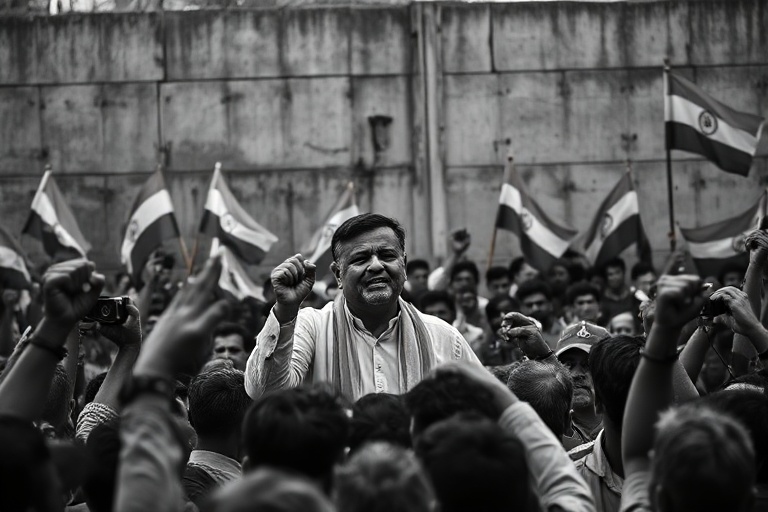
Adhikari’s political journey began in the early 2000s when he joined the TMC, a party that was gaining prominence under the leadership of Mamata Banerjee. His initial years were spent working closely with party workers, which helped him build a strong organizational base. By 2009, he had been elected to the Lok Sabha from the Tamluk constituency, a seat that had been a stronghold for his family for decades.
During his tenure in Parliament, Adhikari focused on issues such as infrastructure development, rural electrification, and agricultural reforms. His work in these areas earned him recognition within the party and among constituents. However, his relationship with Mamata Banerjee began to fray over time, as internal party dynamics shifted and power structures evolved.
The turning point in Adhikari’s career came in 2021 when he decided to leave the TMC and join the Bharatiya Janata Party (BJP). This move was not merely a political shift but a strategic realignment that reflected broader trends in West Bengal’s political landscape. His decision to switch parties was met with both criticism and praise, highlighting the polarizing nature of his public image.
Transition to BJP and Electoral Impact
Adhikari’s transition to the BJP was seen as a significant boost for the party in West Bengal. His deep understanding of the state’s political terrain and his strong organizational skills were valuable assets. In the 2021 West Bengal Legislative Assembly elections, he contested from the Nandigram constituency, a high-profile seat that had been a focal point of Mamata Banerjee’s political career.
The Nandigram contest was one of the most closely watched races in the election. Adhikari’s campaign was characterized by aggressive outreach, leveraging his grassroots connections and highlighting issues such as development and governance. Despite losing to Mamata Banerjee by a narrow margin, his performance demonstrated the BJP’s growing influence in the state.
Following his electoral defeat, Adhikari continued to play an active role in the BJP’s organizational structure. He was appointed as the state president of the BJP’s West Bengal unit, a position that underscored his importance to the party’s strategy in the state. His leadership has been instrumental in consolidating the BJP’s presence in regions that were traditionally considered strongholds of the TMC.
The BJP’s strategy in West Bengal has relied heavily on expanding its base beyond its traditional urban support. Adhikari’s background and political acumen have been critical in this effort, particularly in rural areas where caste and community dynamics play a significant role. His ability to navigate these complexities has made him a key player in the party’s long-term plans for the state.
Public Perception and Controversies
Adhikari’s political career has not been without controversy. His decision to leave the TMC was met with accusations of betrayal from party loyalists, who viewed his move as a personal and political betrayal. Critics have also pointed to his family’s long-standing ties with the TMC as evidence of opportunism in his political realignment.
Supporters, on the other hand, argue that Adhikari’s transition to the BJP was driven by a desire to align with a party that better represented his vision for the state. They highlight his track record of working for grassroots development and his commitment to addressing the needs of constituents. His supporters also point to his role in expanding the BJP’s footprint in West Bengal as evidence of his strategic foresight.
Public perception of Adhikari is further complicated by his family’s political legacy. His father, Sisir Adhikari, has been a prominent figure in West Bengal politics for decades, and the family’s influence has often overshadowed Suvendu Adhikari’s individual achievements. This dynamic has led to debates about the extent to which his political success is a result of his own efforts versus the legacy of his family.
Despite these challenges, Adhikari has managed to carve out a distinct identity in West Bengal’s crowded political landscape. His ability to connect with voters across different demographics has been a key factor in his political survival and growth. Whether through his work in Parliament, his grassroots organizing, or his electoral campaigns, Adhikari has consistently demonstrated a knack for political strategy and public engagement.
Future Prospects and Political Strategy
Looking ahead, Adhikari’s role in the BJP’s long-term strategy for West Bengal remains a topic of considerable interest. The BJP’s ambitions in the state are substantial, with the party aiming to challenge the TMC’s dominance in upcoming elections. Adhikari’s leadership will be crucial in shaping the party’s approach to governance, outreach, and coalition-building.
One of the key challenges for Adhikari and the BJP will be to address the concerns of marginalized communities, particularly in rural areas. West Bengal’s political landscape is deeply influenced by caste, community, and regional identity, and any strategy to expand the BJP’s base must take these factors into account. Adhikari’s ability to navigate these complexities will determine his success in consolidating the party’s position in the state.
The BJP’s plans for West Bengal also include leveraging national-level issues to build support. Adhikari’s role in this effort will likely involve highlighting the party’s achievements at the central level, such as infrastructure projects, economic reforms, and social welfare initiatives. By linking these national successes to local concerns, Adhikari can help bridge the gap between the party’s central agenda and the aspirations of West Bengal’s voters.
Another critical aspect of Adhikari’s future strategy will be his ability to build alliances with smaller parties and independent leaders. In a state where regional parties have historically dominated, coalition-building will be essential for the BJP’s long-term success. Adhikari’s political experience and network will be invaluable in this regard, as he seeks to create a broad-based coalition capable of challenging the TMC’s hegemony.
Conclusion
Suvendu Adhikari’s political journey is a testament to the fluidity and unpredictability of Indian politics. From his early days in the TMC to his current role in the BJP, Adhikari has demonstrated a remarkable ability to adapt to changing political landscapes. His story is also a reflection of the broader shifts in West Bengal’s political dynamics, where traditional party loyalties are being challenged by new alliances and strategies.
As West Bengal continues to evolve politically, figures like Adhikari will play a pivotal role in shaping the state’s future. His leadership, strategic thinking, and public engagement will be critical in determining whether the BJP can build on its recent gains and challenge the TMC’s dominance. For voters, Adhikari represents a blend of continuity and change—a politician rooted in tradition but willing to embrace new ideas and alliances.
Ultimately, Suvendu Adhikari’s career offers valuable insights into the complexities of regional politics in India. His story underscores the importance of adaptability, strategic thinking, and grassroots engagement in navigating the ever-changing political landscape. As West Bengal moves toward its next electoral cycle, Adhikari’s role will be one to watch, both for his contributions to the BJP’s strategy and for the broader implications of his political journey.
For those interested in exploring more about political trends in India, our News section provides in-depth analysis and updates on key developments. Additionally, our Analysis section offers thoughtful perspectives on the forces shaping the country’s political landscape.