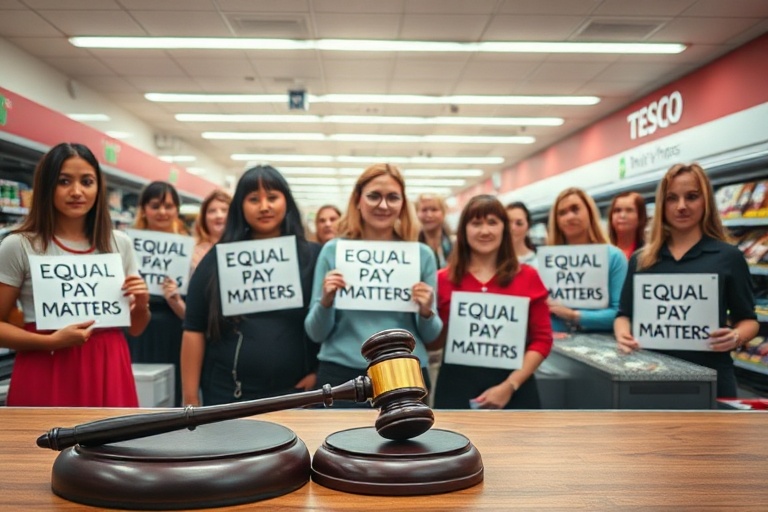
The recent Tesco equal pay appeal ruling has sent ripples through the UK retail sector, marking a pivotal moment in the ongoing battle for workplace equality. The Court of Appeal’s decision to uphold a 2021 ruling that Tesco must compare the pay of predominantly female shop floor workers with that of predominantly male warehouse staff has far-reaching implications beyond the supermarket giant. This case underscores the persistent gender pay gap in retail and sets a legal precedent that could influence similar disputes across industries.
Tesco, one of the UK’s largest private employers, employs over 300,000 people, with women making up nearly 60% of its workforce. Yet, as in many retail environments, these women are concentrated in lower-paid roles such as cashiers and customer service assistants, while higher-paid positions in distribution centers are dominated by men. The ruling challenges the company’s long-standing argument that roles in warehouses require different skills and responsibilities, thereby justifying unequal pay.
How the Legal Battle Unfolded
The dispute traces back to 2018 when a group of Tesco shop workers, represented by the union Usdaw, filed a claim alleging sex discrimination. The workers argued that their jobs were of equal value to those in Tesco’s warehouses but were paid significantly less. In 2021, an employment tribunal ruled in their favor, stating that Tesco could not justify the pay disparity under the Equality Act 2010. Tesco appealed the decision, but the Employment Appeal Tribunal upheld the ruling in 2022. The latest appeal to the Court of Appeal has now confirmed that the original judgment stands, leaving Tesco with limited options but to comply or face further legal action.
The legal journey highlights the complexities of equal pay claims, particularly in sectors where job roles are traditionally segregated by gender. Retail, an industry that employs more women globally than any other, has long been scrutinized for its gender pay gap. According to the World Economic Forum’s Global Gender Gap Report, women in retail earn on average 15% less than men, even when performing work of equal value. The Tesco case could serve as a catalyst for similar claims in other retail giants and beyond.
Global Context: Retail and Gender Pay Disparities
The Tesco ruling arrives at a time when gender pay equity is a pressing issue worldwide. In the United States, the retail sector faces similar challenges, with women making up 60% of the workforce but dominating lower-paid positions. The #MeToo movement and increasing awareness of systemic inequalities have amplified calls for change. In Europe, countries like Germany and France have introduced legislation requiring companies to report gender pay gaps, though enforcement remains inconsistent.
In the UK, the gender pay gap persists despite the 1970 Equal Pay Act. A 2023 report by the Office for National Statistics found that women in the UK earn 8.3% less than men on average, with retail workers facing some of the widest disparities. The Tesco case is not an isolated incident but part of a broader pattern where women’s work is undervalued simply because it is performed predominantly by women. This systemic issue is not unique to the UK; it reflects global trends where care work, service roles, and administrative positions—often filled by women—are compensated less than jobs traditionally held by men.
Culturally, the retail industry has long been shaped by gender norms. The expectation that women will take on roles involving customer interaction, often at the front line, while men dominate logistics and management positions, reinforces these disparities. The Tesco ruling challenges this status quo, questioning whether “market forces” can justify paying women less for work that is equally valuable to the company’s operations.
What This Means for Workers and Employers
The implications of the Tesco ruling extend beyond the courtroom. For workers, it offers a glimmer of hope that systemic inequities can be addressed through legal channels. The case demonstrates that collective action, supported by unions, can lead to meaningful change. For other retailers and large employers, it serves as a warning that pay structures based on gendered job segregation may no longer hold up in court.
Employers in the retail sector would be wise to review their pay practices. The ruling reinforces the need for transparent compensation structures that evaluate roles based on skill, responsibility, and effort—not gender. Companies that fail to address these disparities risk not only legal repercussions but also reputational damage. In an era where consumers and employees increasingly demand corporate accountability, businesses must prioritize equity to attract and retain talent.
For Tesco specifically, the ruling could have financial implications. The company employs over 120,000 shop workers, many of whom are women. If the ruling stands, Tesco may need to adjust wages for thousands of employees, which could cost the company hundreds of millions of pounds. However, the long-term benefits of fostering a fair and inclusive workplace may outweigh the short-term costs. Companies that proactively address pay equity often see improvements in employee morale, productivity, and customer loyalty.
Beyond the financial aspects, the ruling has symbolic significance. It sends a message to industries worldwide that the gender pay gap is not an inevitability but a solvable problem. As more women enter the workforce and demand fair treatment, employers will need to adapt or face the consequences. The Tesco case could inspire similar claims in other sectors, from hospitality to healthcare, where women are overrepresented in lower-paid roles.
Looking Ahead: The Future of Equal Pay in Retail
The Tesco ruling is a step forward, but the fight for equal pay is far from over. Several key questions remain unanswered. Will Tesco appeal the decision to the Supreme Court, prolonging the legal battle? How will other retailers respond to the precedent set by this case? And what role will unions play in pushing for broader systemic change?
One thing is clear: the conversation around equal pay has shifted. Employees are no longer willing to accept vague justifications for pay disparities. They are armed with data, legal precedents, and a growing sense of solidarity. The retail industry, in particular, must reckon with its gendered job structures and the cultural norms that sustain them.
For policymakers, the ruling underscores the need for stronger legislation. The UK’s current gender pay gap reporting requirements, while a step in the right direction, lack teeth. Mandatory audits with binding enforcement mechanisms could accelerate progress. Globally, countries with robust equal pay laws, such as Iceland and Norway, demonstrate that change is possible when governments take a proactive stance.
As consumers, we also have a role to play. Supporting companies that prioritize equity and holding those that don’t accountable can drive change. The retail sector, which relies heavily on public goodwill, is particularly vulnerable to consumer pressure. By making informed choices, shoppers can influence corporate behavior and contribute to a fairer economy.
The Tesco equal pay appeal ruling is more than a legal decision; it is a cultural moment. It challenges us to confront the deep-seated biases that shape our workplaces and to demand a future where pay is determined by the value of work—not the gender of the worker. As this case continues to unfold, its legacy may extend far beyond the aisles of Tesco stores, reshaping the landscape of work for generations to come.
For more insights into workplace equality and labor rights, explore our coverage of News and Business topics. These sections provide in-depth analysis on issues affecting workers and industries worldwide.