Wrexham AFC: How a Welsh Club Became a Global Talking Point
From Local Roots to International Fame
Wrexham Association Football Club, founded in 1864, has long been a cornerstone of Welsh football. Yet in recent years, the club has transcended its traditional boundaries to become a subject of global conversation. This transformation began quietly in 2020 when Hollywood actors Ryan Reynolds and Rob McElhenney completed their takeover of the club, a move that initially raised eyebrows but ultimately reshaped perceptions of what a football club could represent.
The club’s new ownership brought more than just financial investment; it introduced a fresh narrative. Reynolds and McElhenney leveraged their massive social media platforms to document their journey, blending humor, transparency, and authenticity. Their approach resonated far beyond the traditional sports fanbase, attracting casual observers and even non-football enthusiasts. This strategy proved particularly effective during the COVID-19 pandemic, when live sports were scarce, and audiences craved engaging content.
The Ripple Effect on Welsh Football Culture
Wrexham’s resurgence has had a profound impact on Welsh football as a whole. The club’s success on the pitch—culminating in promotion to League Two in 2023—has reinvigorated local pride and drawn attention to the broader challenges and opportunities within Welsh football. While clubs like Swansea City and Cardiff City have long enjoyed higher profiles due to their proximity to England’s top divisions, Wrexham’s rise has highlighted the potential of clubs in smaller markets.
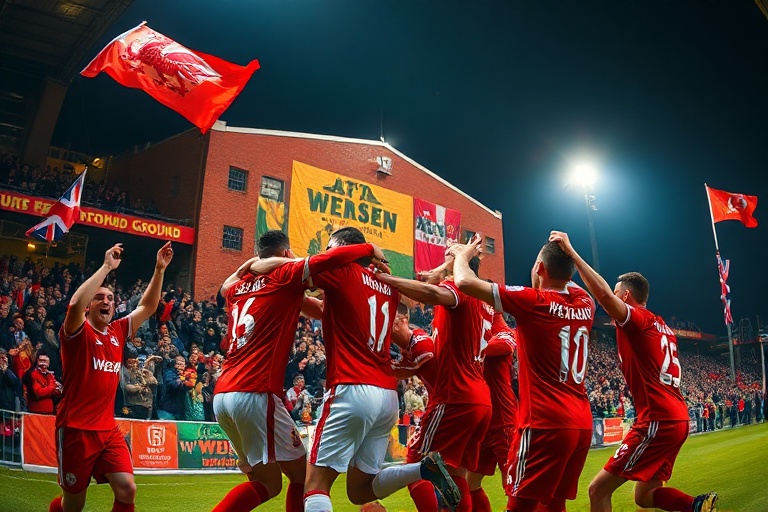
Local businesses in Wrexham have benefited from the increased visibility. The club’s stadium, the Racecourse Ground, has hosted record-breaking crowds, with fans traveling from across the UK and beyond to witness the action. This influx of visitors has provided a significant boost to the local economy, particularly in hospitality and retail sectors. The club’s newfound fame has also sparked conversations about the importance of investing in grassroots football in Wales, ensuring that talent development keeps pace with the club’s ambitions.
A New Kind of Fan Engagement
One of the most striking aspects of Wrexham’s modern identity is its approach to fan engagement. The club’s ownership has prioritized accessibility, using platforms like YouTube and Twitter to share behind-the-scenes content, player interviews, and even candid moments from the boardroom. This transparency has fostered a sense of community among supporters, many of whom feel more connected to the club than ever before.
The club’s social media presence has also become a model for other sports organizations. By humanizing the club and its players, Wrexham has demonstrated that authenticity can be a powerful tool for building loyalty. This strategy has not only strengthened the bond between the club and its existing fanbase but has also attracted new followers who may not have previously considered themselves football fans.
Global Media Attention and Cultural Impact
Wrexham’s story has captured the imagination of media outlets worldwide. Major international publications, from The Guardian to ESPN, have covered the club’s transformation, often framing it as a modern fairytale in the often cynical world of sports. The club’s connection to Reynolds and McElhenney, both of whom are known for their wit and self-awareness, has added a layer of intrigue that extends beyond the pitch.
This global attention has also highlighted the cultural significance of football clubs as community hubs. In an era where many sports franchises are seen as corporate entities, Wrexham’s story serves as a reminder of the emotional and social value that clubs can provide. The club’s commitment to its local roots—such as its support for local charities and youth programs—has further cemented its reputation as more than just a business venture.
Challenges and Criticisms
Despite its success, Wrexham’s journey has not been without controversy. Some critics argue that the club’s ownership model, while innovative, could set unrealistic expectations for other clubs looking to replicate its success. The financial backing provided by Reynolds and McElhenney is not something that most clubs can access, raising questions about sustainability and long-term viability.
Additionally, the club has faced scrutiny over its on-field performance at times, with fans and pundits alike questioning whether the hype has matched the reality. The pressure to deliver results while maintaining the club’s unique identity has been a delicate balancing act, one that requires careful navigation as Wrexham continues to grow.
Looking Ahead: What’s Next for Wrexham?
As Wrexham AFC continues to evolve, the club’s future appears bright but uncertain. The team’s promotion to League Two has opened new doors, including the possibility of further progress up the English football pyramid. However, the club’s leaders have emphasized that their goals extend beyond trophies and league positions. Reynolds and McElhenney have spoken openly about their desire to create a sustainable model that benefits both the club and its community.
For fans, the challenge will be maintaining the balance between ambition and tradition. Wrexham’s identity has always been rooted in its history and local culture, and any move toward greater commercialization must be handled with care. The club’s ability to stay true to its values while embracing innovation will likely determine its long-term success.
The story of Wrexham AFC is far from over. It serves as a case study in how sports clubs can adapt to changing times, leveraging modern tools and platforms to connect with new audiences. Whether it’s through its on-field performances, its off-field initiatives, or its unique approach to storytelling, Wrexham has proven that football clubs can be more than just businesses—they can be cultural institutions with the power to inspire and unite.
For those interested in following the club’s journey, updates and behind-the-scenes content are regularly shared on the club’s official channels. Fans can also explore deeper insights into Welsh football and its broader cultural context through resources on Sports and Culture pages on Dave’s Locker.