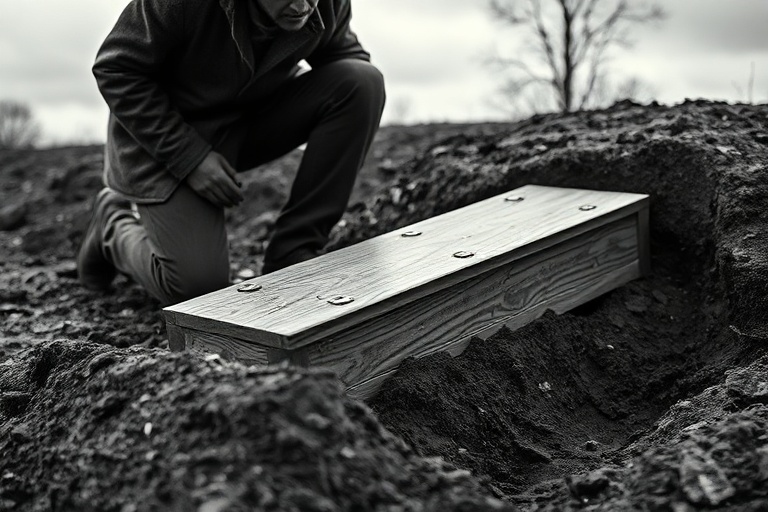
The act of burying the dead is one of humanity’s most profound and enduring traditions. It transcends cultures, religions, and eras, serving as a bridge between the living and the departed. This ritual is not merely about disposing of bodies; it is a declaration of memory, a pact with mortality, and a cornerstone of social cohesion.
The Origins of Burial Practices
Archaeological evidence suggests that deliberate burial dates back at least 100,000 years. Neanderthals, often dismissed as brutish, buried their dead with grave goods such as flowers and tools, hinting at early beliefs in an afterlife or the symbolic significance of death. The oldest known cemetery, Qafzeh Cave in Israel, contains the remains of at least 15 individuals from 100,000 years ago, arranged with care.
As humans transitioned from nomadic lifestyles to settled communities, burial practices evolved into more complex rituals. Ancient Egyptians mummified their dead to preserve the body for the journey to the afterlife, while the Mesopotamians built ziggurats as monumental tombs. These traditions were not just about death; they reinforced social hierarchies and cultural identities.
A Global Perspective on Death Rituals
Different cultures approach burial in distinct ways, each reflecting unique values and beliefs:
- Sky Burials (Tibet, Mongolia): The body is left on a mountaintop to be consumed by vultures, a practice rooted in Buddhist beliefs about the impermanence of the physical form.
- Mummification (Ancient Egypt, Peru): Preservation of the body was essential for the soul’s survival in the afterlife, often accompanied by elaborate tombs and artifacts.
- Skyrm (Scandinavia): Vikings buried their dead in ships set ablaze, symbolizing a journey to the next world while honoring the deceased’s status.
- Day of the Dead (Mexico): A vibrant celebration where families welcome back the spirits of the deceased with altars, food, and marigolds.
These practices reveal a universal truth: burial is not just about the dead but about the living. It provides closure, reinforces community bonds, and offers a framework for grief.
The Psychological and Social Function of Burial
Psychologists argue that burial rituals serve critical emotional functions. The act of interring a loved one allows mourners to process loss in a controlled, symbolic manner. Without such rituals, grief can become disordered, leading to prolonged suffering or unresolved trauma.
From a social standpoint, burial practices strengthen communal identity. Ancient societies used tombs and monuments to assert power and continuity. Today, cemeteries remain places of collective memory, where families gather to honor ancestors and preserve heritage. The design of a cemetery—its layout, inscriptions, and landscaping—reflects a society’s values about death, memory, and legacy.
The Role of Burial in Modern Society
Despite secularization in many Western societies, burial remains deeply embedded in cultural consciousness. However, modern challenges such as urbanization, environmental concerns, and cost have led to innovative alternatives:
- Green Burials: Eco-friendly burials that avoid embalming chemicals and use biodegradable caskets, returning the body to the earth naturally.
- Cremation and Memorialization: As land becomes scarce, cremation rates have risen, but many opt to memorialize ashes in creative ways—scattering gardens, memorial diamonds, or even space burials.
- Digital Memorials: Online platforms allow families to create virtual cemeteries where loved ones can leave messages and share memories.
These adaptations show that the impulse to honor the dead persists even as traditions evolve. The core need—to remember, to mourn, and to connect—remains unchanged.
The Ethical and Environmental Debate
Burial practices today face scrutiny over their environmental impact. Traditional cemeteries require vast amounts of land and resources. Embalming fluids, often containing formaldehyde, can leach into soil and groundwater. Cremation, while less land-intensive, releases carbon dioxide and mercury from dental fillings.
This has spurred a growing movement toward sustainable alternatives. Companies like Dave’s Locker Outdoors now offer guides on eco-friendly burial options, from conservation burial grounds to resomation (water cremation). These methods reduce carbon footprints while maintaining the dignity of traditional rituals.
“The way we bury our dead is a mirror of how we live. If we care about the planet, we must rethink death as part of life’s cycle.” — Dr. Emma Wallace, Environmental Anthropologist
Beyond Tradition: The Future of Burial
The future of burial may lie in innovation. Biodegradable urns that grow trees from ashes, human composting (where the body is turned into soil), and even memorial reefs (where ashes are incorporated into artificial reefs) are gaining traction. These solutions address both ecological concerns and the emotional need for legacy.
Yet, despite these advancements, resistance persists. For many, tradition outweighs novelty. The ritual of burial—whether in a churchyard, a family plot, or a modern memorial park—remains a powerful act of love and remembrance.
Conclusion: Why We Bury the Dead
We bury the dead not just to dispose of remains but to affirm life. The act is a testament to our humanity, our need to mark the passage of time, and our refusal to let memory fade. Whether through grand monuments or quiet woodland burials, the ritual endures because it answers a fundamental question: How do we, as mortal beings, honor those who have gone before us?
In the end, burial is less about death and more about the stories we leave behind. It is a promise that we, too, will be remembered.
For those seeking guidance on navigating these traditions or exploring modern alternatives, resources like Dave’s Locker Culture provide thoughtful perspectives on life’s most enduring rituals.