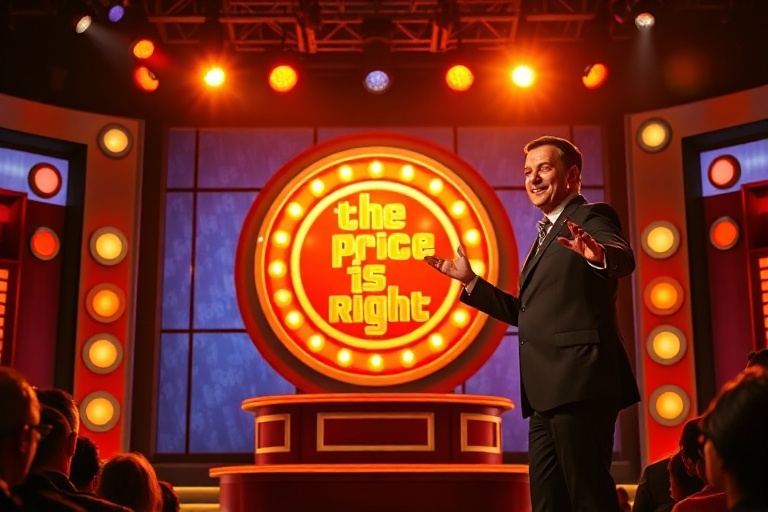
The Price Is Right: A Look at the Game Show’s 50-Year Legacy
The Origins of a Television Staple
The Price Is Right first aired in 1972, but its roots stretch back to a 1956 daytime series hosted by Bill Cullen. That original version, titled NBC’s The Price Is Right, invited contestants to guess the prices of everyday consumer goods—a format that resonated with post-war America’s growing consumer culture. By the time Bob Barker took over in 1972, the show had evolved into a game of strategy, chance, and suspense, with contestants bidding on cars, appliances, and trips.
The show’s longevity isn’t accidental. It tapped into a universal human fascination: the thrill of winning and the fear of losing. Unlike many game shows that rely on pure luck or obscure trivia, The Price Is Right blends arithmetic, psychology, and a touch of showmanship. Contestants must balance risk and reward, deciding whether to bid high for a big prize or play it safe with smaller winnings.
Gameplay That Transcends Generations
The core mechanics of The Price Is Right have remained remarkably consistent over five decades. Contestants start with simple pricing games—like Clock Game or Priced Right—where they guess the retail cost of products. The tension builds as they move to larger prizes, culminating in the Showcase Showdown, where two finalists compete for a showcase of high-value items.
- Pricing Accuracy: Contestants must have a keen sense of retail prices, often relying on intuition and experience rather than hard data.
- Strategic Bidding: Overbidding can lead to elimination, while underbidding risks leaving money on the table.
- Psychological Play: Hosts like Barker and Drew Carey use humor and charm to keep contestants at ease—or rattle their confidence.
- Cumulative Momentum: Early wins build confidence, while early losses can psychologically derail a contestant’s performance.
The show’s enduring appeal lies in its accessibility. No specialized knowledge is required—just a basic understanding of prices and a willingness to take calculated risks. This simplicity makes it relatable to a broad audience, from teenagers to retirees.
The Hosts: Icons Who Shaped the Show
No discussion of The Price Is Right is complete without acknowledging its hosts. Bob Barker, who helmed the show from 1972 to 2007, became synonymous with the program. His folksy demeanor, dry wit, and signature sign-off—“Help control the pet population. Have your pets spayed or neutered”—made him a beloved figure. Barker’s tenure cemented the show’s family-friendly reputation, emphasizing fairness and good-natured competition.
When Drew Carey took over in 2007, he brought a more modern, irreverent energy. Carey’s background in improvisational comedy lent itself to spontaneous interactions with contestants, often leaning into awkward or hilarious moments. While some purists lamented the loss of Barker’s traditional hosting style, Carey’s approach broadened the show’s appeal to younger viewers.
The transition from Barker to Carey also reflected a broader shift in television culture. Barker represented an era of wholesome, unscripted entertainment, while Carey’s tenure aligned with the rise of reality TV and interactive game shows. Yet, despite these changes, The Price Is Right retained its core identity—a celebration of consumerism, luck, and the American dream.
Cultural Impact and Legacy
The Price Is Right isn’t just a game show; it’s a cultural institution. It has won multiple Daytime Emmy Awards, spawned international adaptations, and influenced countless other programs. Its longevity is a testament to its adaptability. The show has weathered changes in hosting styles, audience preferences, and even the rise of streaming platforms. In 2023, it became one of the first network game shows to offer a live-streamed version, catering to digital audiences.
The show’s cultural footprint extends beyond television. It has been parodied in films like The Price Is Right parody in The Simpsons and referenced in songs, literature, and even political discourse. Politicians and commentators have cited the show as a metaphor for economic policies, with phrases like “going once, going twice” entering the vernacular.
The Price Is Right also reflects societal shifts. In its early years, the show mirrored America’s obsession with materialism and suburban prosperity. Later seasons introduced more diverse contestants and prizes, reflecting changing demographics. The show’s prizes—once limited to mid-century appliances and sedans—now include high-tech gadgets, luxury vacations, and even cryptocurrency-themed games.
Why It Still Matters Today
In an era dominated by flashy digital games and algorithm-driven content, The Price Is Right endures because it remains fundamentally human. It’s a reminder of a time when television was a communal experience, when families gathered around a single screen to watch strangers take a shot at fortune. The show’s simplicity is its strength; it doesn’t require complex rules or gimmicks to entertain.
Moreover, The Price Is Right offers a rare glimpse into the psychology of risk and reward. Contestants aren’t just playing for prizes—they’re testing their instincts, their ability to read others, and their tolerance for risk. In a world where financial literacy is increasingly important, the show subtly reinforces practical skills like budgeting and estimation.
For aspiring game show contestants, the program remains a dream. It’s one of the few remaining avenues where ordinary people can win life-changing sums of money without relying on social media fame or viral videos. The show’s enduring legacy is a testament to the power of luck, skill, and sheer audacity.
As The Price Is Right continues into its sixth decade, it stands as a relic of a bygone era and a timeless celebration of human ambition. Whether you’re a longtime fan or a newcomer, the thrill of watching a contestant nail the exact price of a new refrigerator never gets old.
For more on classic game shows and their cultural impact, explore our Entertainment and Culture categories.