the price is right
The Price is Right has stood as a cornerstone of daytime television for more than fifty years, evolving from a simple guessing game into a cultural institution that blends entertainment with economic education. Premiering on September 4, 1972, on CBS, the show revitalized the classic 1950s format created by Bob Stewart and Bill Todman, introducing a fresh approach to consumer engagement. Hosted initially by Bob Barker and later by Drew Carey, the series has maintained a consistent presence in American homes, offering a unique blend of strategy, luck, and retail insight.
At its core, The Price is Right challenges contestants to guess the retail prices of everyday items. Unlike traditional game shows that rely solely on trivia or physical challenges, this format invites players to draw upon their knowledge of pricing trends, sales cycles, and market awareness. The show’s enduring appeal lies in its accessibility—contestants range from first-time buyers to seasoned shoppers, all competing on a level playing field. Its longevity testifies to the universal human fascination with value, cost, and the thrill of winning.
The Evolution of a Television Legend
When The Price is Right debuted in 1972, it was not the first iteration of the concept. The original version, hosted by Bill Cullen, aired from 1956 to 1965 on NBC. However, the 1972 revival transformed the show into a daytime staple by emphasizing audience participation and relatable consumer goods. Bob Barker, who took over as host in 1972, brought warmth, wit, and a commitment to animal rights that resonated with viewers. His famous sign-off—“Help control the pet population. Have your pets spayed or neutered”—became iconic.
In 2007, after 35 years at the helm, Barker retired and was succeeded by comedian and actor Drew Carey. The transition marked a generational shift, with Carey introducing a more comedic, fast-paced style while retaining the show’s core mechanics. Under Carey’s leadership, the series expanded into new formats, including special celebrity editions and international adaptations. Despite changes in hosting, the show’s fundamental appeal remained intact: contestants still compete to win cash and prizes by accurately guessing prices.
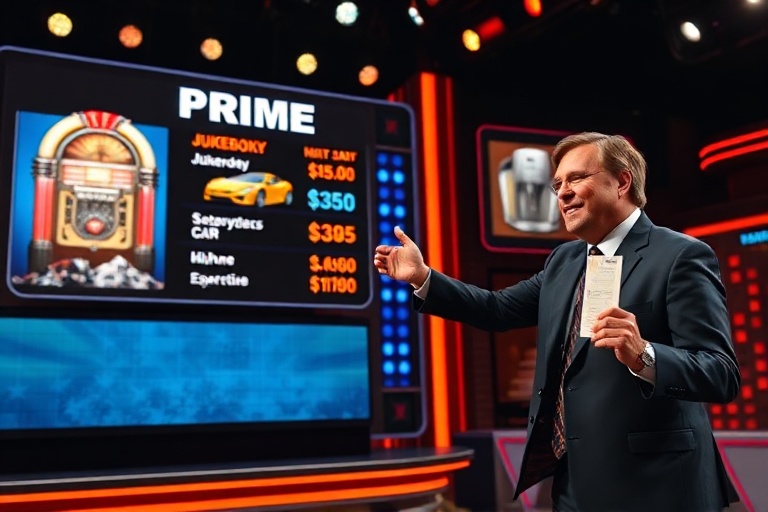
The show’s set design has also evolved over the decades. Early seasons featured a minimalist, wood-paneled aesthetic, reflecting the 1970s aesthetic. By the 1990s, the set became more colorful and dynamic, with larger displays to showcase high-value prizes like cars and vacations. Today, the stage combines retro nods with modern digital interfaces, blending nostalgia with contemporary visual storytelling.
Behind the Contestants’ Experience: Strategy and Psychology
Contestants on The Price is Right are not chosen at random. The show’s rigorous audition process includes a written test on pricing knowledge, an on-camera interview, and a mock pricing game. This ensures that participants have at least a basic understanding of retail values—a crucial component of gameplay. Contestants who advance to the main stage often spend months preparing, studying price trends, and memorizing costs of common items.
The pricing games themselves are carefully designed to test different cognitive skills. Some, like “Clock Game” and “Priced Right,” require quick mental math and estimation. Others, such as “Plinko,” blend probability with strategy. The final showcase showdown—where two contestants bid on a bundle of prizes—demands not only accurate pricing but also psychological insight into the opponent’s strategy.
Psychologists have studied the show’s contestants for insights into decision-making under pressure. A 2018 study published in the journal Judgment and Decision Making analyzed bidding behavior and found that contestants often overbid due to emotional investment in winning. This phenomenon, known as the “endowment effect,” suggests that people assign higher value to items they believe they’ve already won. The show’s producers leverage this tendency, creating high-stakes moments that feel both thrilling and relatable.
Contestants also report that the experience is as much about personal growth as it is about winning. Many describe the thrill of seeing their names in lights, hearing their voices on national television, and the sense of accomplishment that comes from outsmarting the competition. For some, the show serves as a launchpad to careers in media, retail, or public speaking.
The Business of Bidding: How Prizes Shape the Show
Prizes are the lifeblood of The Price is Right. From the early days of modest household appliances to today’s luxury cars, vacations, and electronics, the value and variety of prizes have grown exponentially. In the 1970s, a typical car was a modest sedan worth around $5,000. By the 2020s, contestants regularly vie for vehicles worth $50,000 or more, including electric SUVs and high-end sedans. This shift reflects broader changes in consumer culture and advertising strategies.
Manufacturers and retailers eagerly partner with the show, seeing it as a prime opportunity for product placement. A car manufacturer, for example, gains millions in exposure when a contestant wins a new vehicle live on air. Similarly, kitchen appliance brands benefit from being showcased in “Showcase Showdown” segments. The show’s producers curate prize packages that balance high-value items with everyday goods, ensuring a mix of aspirational and relatable rewards.
Sponsorship deals are carefully negotiated. While the show does not disclose exact figures, industry estimates suggest that a single episode featuring a major prize like a car can generate tens of thousands of dollars in advertising revenue. The show’s integration of branded items into gameplay—such as guessing the price of a specific model of refrigerator—reinforces its role as a commercial platform disguised as entertainment.
Not all prizes are physical goods. In recent years, the show has featured experiences like concert tickets, spa packages, and travel vouchers. These intangible rewards reflect changing consumer preferences, particularly among younger audiences who prioritize experiences over material possessions. The inclusion of such prizes demonstrates the show’s adaptability to cultural shifts while maintaining its core premise.
The Cultural Impact: More Than Just a Game Show
The Price is Right has transcended its role as a game show to become a cultural touchstone. It has inspired parodies in films and television, including appearances in The Simpsons, Family Guy, and Saturday Night Live. Its catchphrases—“Come on down!” and “That’s too much!”—are instantly recognizable to generations of viewers. The show has also been referenced in academic discussions about consumer behavior, game theory, and media economics.
One of the most enduring aspects of the show’s legacy is its inclusivity. Contestants on The Price is Right represent a diverse cross-section of America, including people from various socioeconomic backgrounds, ages, and regions. The show’s producers actively seek to reflect this diversity, ensuring that the contestant pool mirrors the nation’s demographic makeup. This commitment to representation has helped the show maintain its broad appeal across generations.
The show has also played a role in charitable initiatives. In 2020, during the COVID-19 pandemic, The Price is Right partnered with Feeding America to donate meals to families in need. Contestants and viewers were encouraged to participate in fundraising efforts, turning the program into a platform for social good. This blending of entertainment and philanthropy underscores the show’s ability to adapt to societal needs while staying true to its roots.
For many viewers, The Price is Right is more than just a daily ritual—it’s a shared experience. Families tune in together, friends gather to watch episodes, and online communities dissect pricing strategies and contestant performances. The show’s presence on streaming platforms like CBS All Access (now Paramount+) has further extended its reach, allowing new audiences to discover its charm.
Why the Show Still Matters Today
In an era dominated by reality TV and streaming platforms, The Price is Right endures because it offers something rare: a sense of fairness and opportunity. Unlike talent-based competitions or dramatic eliminations, the show celebrates everyday knowledge and intuition. It reminds viewers that winning isn’t just about luck—it’s about understanding the world around them.
The show’s longevity also speaks to the timeless appeal of consumer culture. In a society where prices fluctuate with inflation, supply chain disruptions, and digital commerce, the ability to estimate value remains a valuable skill. The Price is Right transforms this mundane task into a source of excitement, proving that even the most ordinary aspects of life can be turned into extraordinary entertainment.
For aspiring contestants, the dream of appearing on the show remains alive. Auditions are held regularly, and the process is open to anyone willing to test their pricing prowess. Whether you’re a bargain hunter, a math enthusiast, or simply a fan of classic television, The Price is Right offers a unique blend of challenge, humor, and nostalgia.
As it approaches its 60th anniversary, The Price is Right shows no signs of slowing down. With new hosts, evolving prize packages, and a commitment to innovation, the show continues to redefine what it means to be a game show in the 21st century. One thing is certain: as long as there are prices to guess and prizes to win, the legacy of The Price is Right will endure.
How to Audition for The Price is Right
If you’ve ever dreamed of standing on the Price is Right stage, here’s how to make it happen:
- Check Eligibility: Contestants must be at least 18 years old and available for taping in Los Angeles or New York.
- Take the Online Test: Start with a 10-question pricing quiz on the show’s official website. A passing score of 9/10 qualifies you for an on-camera audition.
- Attend a Live Audition: If selected, you’ll participate in a group session that includes a mock pricing game and a brief interview.
- Wait for Selection: The show’s producers review footage and invite finalists to tape episodes. Response times vary, but many contestants wait months before appearing on air.