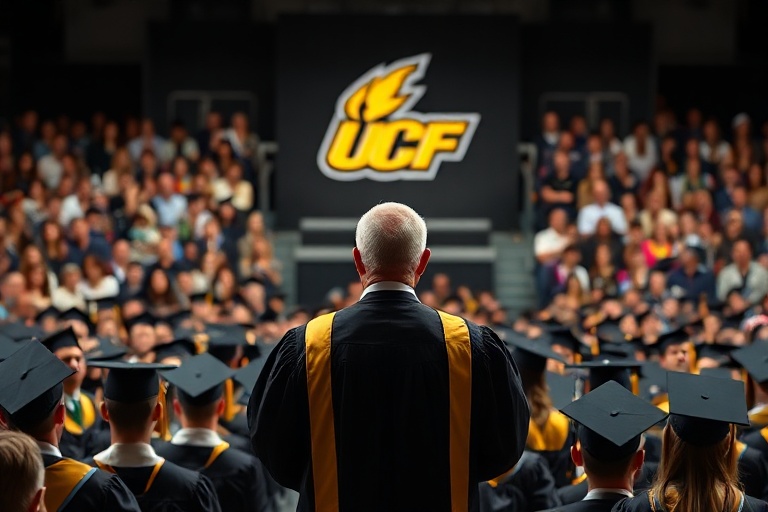
The University of Central Florida’s most recent commencement ceremony took an unexpected turn when the invited speaker faced vocal opposition from the audience. The incident, which unfolded in front of thousands of graduates and their families, has sparked discussions far beyond the Orlando campus. It raises questions about the role of commencement speakers, the expectations of academic communities, and the broader implications of public dissent in celebratory settings.
While UCF has not officially commented on the specifics of the event, social media clips and attendee accounts confirm that the speaker was repeatedly interrupted with boos and jeers. This is not the first time a commencement address has drawn criticism, but the intensity of the reaction here suggests deeper tensions at play. The incident invites a closer look at how universities select speakers, the evolving standards of public figures, and the expectations placed on academic ceremonies as spaces of unity.
What Happened During the UCF Commencement
According to multiple social media posts and eyewitness accounts, the booing began shortly after the speaker took the podium. The crowd’s reaction appeared to escalate when the speaker made remarks that some attendees found controversial or misaligned with the values of the university. While the exact content of the speech remains unclear, the visible disapproval from the audience was immediate and sustained.
Graduates, many of whom were recording the moment, shared clips that quickly circulated online. These videos captured a mix of boos, applause in support of the dissenters, and some attendees standing in protest. The disruption lasted several minutes before university officials intervened, though details about their response remain unconfirmed.
This was not a spontaneous outburst but a coordinated display of disapproval. Some attendees organized the reaction beforehand, signaling that the opposition was intentional rather than a spontaneous response. The episode reflects a growing trend where public figures—even in ceremonial roles—face heightened scrutiny over their past actions, statements, or affiliations.
Why Commencement Speakers Face Scrutiny
Commencement ceremonies are traditionally seen as celebratory events, where universities honor graduates and invite influential figures to inspire them. However, the selection of a speaker has increasingly become a contentious issue. Universities often balance the prestige of a speaker with the potential for backlash, especially when the figure’s personal or professional history conflicts with the values of the institution or its community.
The controversy at UCF fits into a broader pattern seen at other universities. In recent years, commencements at institutions like Harvard, Stanford, and the University of Southern California have faced similar challenges when controversial figures were invited to speak. These incidents highlight several key trends:
- Public Figures Under the Microscope: Social media and 24-hour news cycles have made it easier for past actions—no matter how old—to resurface and spark outrage.
- Student and Alumni Activism: Younger generations, particularly Gen Z and millennials, are more vocal about holding institutions accountable for their associations.
- Institutional Risk Management: Universities must weigh the potential for backlash against the perceived benefits of a high-profile speaker.
- Diversity of Perspectives: There is growing demand for speakers who represent a wider range of backgrounds, ideologies, and experiences.
The UCF incident underscores how commencement speeches are no longer just ceremonial performances but also opportunities for public discourse—and sometimes dissent. The booing was not merely a rejection of the speaker but a statement about what the audience expects from their university’s leadership and values.
The Broader Implications for Universities
This episode at UCF is more than an isolated incident; it reflects deeper challenges facing higher education institutions today. Universities are under pressure to navigate an increasingly polarized society while maintaining their roles as bastions of free speech and open dialogue. When a commencement speaker is booed, it forces administrators to reconsider how they balance tradition with contemporary values.
One immediate consequence could be a shift in how universities select commencement speakers. Schools may opt for safer, less polarizing choices to avoid controversy, though this could limit the intellectual and inspirational impact of the speeches. Alternatively, institutions might embrace more diverse perspectives, even if it means inviting speakers who challenge conventional wisdom.
The incident also raises questions about the role of universities in shaping public discourse. Should commencements be apolitical celebrations, or should they serve as platforms for debate and critique? The answer is not straightforward, but the UCF event demonstrates that the audience is increasingly unwilling to accept a one-sided narrative.
For graduates, the booing might have overshadowed the celebratory nature of the day, but it also served as a reminder of the power of collective action. The graduates witnessed firsthand how dissent can be exercised in a public forum, even in a setting traditionally reserved for pomp and ceremony. This could influence their expectations of civic engagement as they enter the workforce.
What’s Next for UCF and Other Universities
The fallout from the UCF commencement is still unfolding. University officials have not issued a formal statement, but the incident will likely prompt internal discussions about speaker selection and event protocols. One possibility is the implementation of clearer guidelines for what constitutes acceptable speech during university-sponsored events. Another could be the creation of forums where controversial topics can be discussed in a more structured, moderated environment—separate from the commencement stage.
For other universities, the lesson is clear: the era of uncontroversial commencement speakers may be ending. Institutions will need to be more transparent about their selection processes and prepared to defend their choices—or pivot when necessary. The challenge lies in fostering an environment where diverse viewpoints can be shared without derailing the celebratory purpose of the event.
Graduates, too, may approach future commencements with a more critical eye. The UCF incident could embolden them to demand speakers who reflect their values or to challenge those who do not. This shift could lead to more inclusive and representative ceremonies, where the voices of students and alumni play a direct role in shaping the event.
As universities grapple with these changes, one thing is certain: the days of uncontested commencement speeches are over. The UCF ceremony may have been the most visible example of this trend, but it will not be the last.
Key Takeaways from the UCF Commencement Controversy
- Speaker Selection is Under Scrutiny: Universities must carefully vet speakers to avoid backlash from students, faculty, and alumni.
- Dissent is Becoming Mainstream: Public booing of speakers reflects broader societal trends toward activism and accountability.
- Tradition Meets Modern Expectations: Commencements are evolving from purely celebratory events to platforms for debate and critique.
- Graduates Are Driving Change: The younger generation’s demand for representation and accountability is reshaping university traditions.
- The Role of Social Media: Viral videos and online discourse amplify controversies, making it harder for institutions to control the narrative.
The UCF commencement speaker booing incident is a microcosm of the tensions facing higher education today. It challenges universities to rethink tradition, embrace diversity of thought, and prepare for a future where dissent is not just tolerated but expected. For graduates, it serves as a reminder that their voices matter—and that their expectations of institutions are evolving.
As the dust settles, one question remains: Will universities adapt to these changes, or will they double down on tradition at the risk of alienating their communities? The answer may well define the next era of higher education.
For more on similar campus events and their broader implications, explore our News and Education categories.