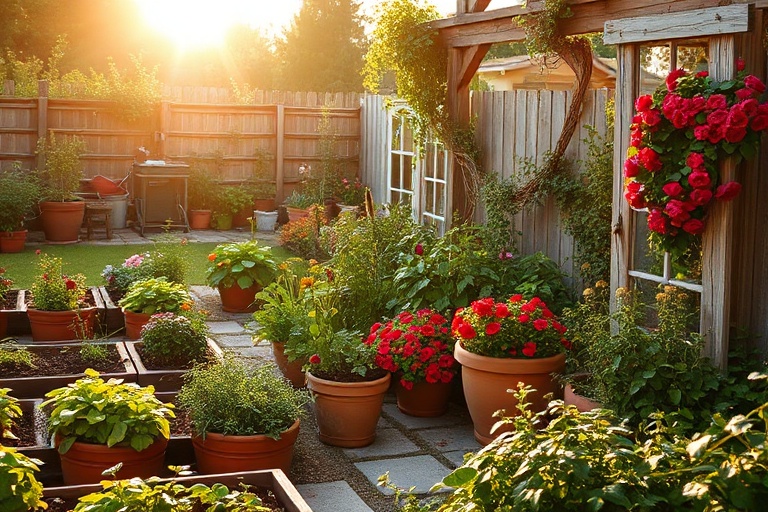
The phrase “garden variety” carries a quiet charm, often used to describe something ordinary, unremarkable, or simply typical. Yet, within this simplicity lies a fascinating paradox: what we dismiss as mundane can sometimes hold unexpected depth, utility, or even beauty. From the plants in our backyards to the routines that structure our days, the garden variety is everywhere—if only we pause to look.
The Origins of an Unassuming Phrase
The term “garden variety” has its roots in the botanical world. In the 19th century, gardeners and horticulturists began using it to distinguish between cultivated plants and wild species. Over time, the phrase evolved beyond its literal meaning, taking on a metaphorical sense to describe anything that was commonplace or standard. It’s a linguistic evolution that reflects how language adapts to describe the familiar in new ways.
Interestingly, the phrase has also been used in legal contexts. For example, a “garden variety” injury refers to one that is typical and not particularly severe or unusual. This usage underscores the idea that even in professional settings, the ordinary is often the baseline against which everything else is measured.
Why Ordinary Still Matters
In a culture that often glorifies the extraordinary—the viral trends, the record-breaking achievements, the once-in-a-lifetime events—it’s easy to overlook the value of the ordinary. Yet, the garden variety plays a crucial role in grounding us. Consider the everyday objects that surround us: a well-worn coffee mug, a favorite pair of jeans, a trusty pen. These items may not be flashy, but they are reliable, familiar, and often deeply personal.
Psychologists suggest that our attachment to ordinary things stems from a need for stability in an unpredictable world. A 2022 study published in the Journal of Environmental Psychology found that people who incorporate familiar, everyday objects into their spaces report lower stress levels. The consistency of these items provides a sense of comfort and continuity, acting as anchors in our lives.
The Role of Routine
Routines, too, fall under the umbrella of the garden variety. Morning rituals, commutes, and evening wind-downs may seem monotonous, but they are essential for productivity and mental health. Research from Harvard Business Review highlights that structured routines reduce decision fatigue, allowing us to focus our energy on more meaningful tasks. The garden variety, in this sense, is the backbone of efficiency.
The Unexpected Beauty of the Commonplace
Artists and writers have long celebrated the beauty of ordinary things. The Dutch Golden Age painter Johannes Vermeer is renowned for his depictions of everyday scenes—women pouring milk, maids dusting, or a quiet moment of domestic life. These paintings, though seemingly unremarkable, capture the elegance of the mundane, revealing how even the simplest actions can be profound.
In literature, authors like Raymond Carver and Annie Dillard have mastered the art of finding meaning in the ordinary. Carver’s short stories often focus on blue-collar characters navigating the challenges of everyday life, while Dillard’s essays explore the intricacies of nature, from the way sunlight filters through trees to the behavior of ants. Their work reminds us that the garden variety is not just a backdrop to our lives but a source of inspiration.
Finding Joy in the Simple
For many, the pursuit of joy begins with embracing the garden variety. The Japanese concept of wabi-sabi celebrates the beauty of imperfection and transience, encouraging people to find contentment in the imperfect and the incomplete. A chipped teacup, a faded photograph, or a wrinkled shirt can all hold a unique charm when viewed through this lens.
Similarly, the hygge lifestyle, which originated in Denmark, emphasizes coziness and comfort in everyday moments. Lighting a candle, enjoying a warm drink, or curling up with a good book are all examples of garden variety experiences that bring happiness. These small, ordinary pleasures are accessible to everyone, yet they often carry the most profound emotional weight.
When the Garden Variety Becomes Extraordinary
While the phrase “garden variety” typically denotes something unremarkable, history shows that even the most ordinary things can become extraordinary under the right circumstances. Take the story of the post-it note. Before it became a ubiquitous office supply, it was just a failed attempt at creating a super-strong adhesive. The inventor, Spencer Silver, didn’t give up. Instead, he found a new use for his “failed” invention, turning it into a tool for organizing and communication. Today, post-it notes are a staple in workplaces worldwide, proving that what starts as garden variety can evolve into something revolutionary.
Another example is the paperclip. Patent for the modern paperclip was filed in 1899 by Johan Vaaler, a Norwegian inventor. At the time, it was a simple solution to a common problem—keeping papers together. Yet, during World War II, the paperclip took on a symbolic meaning in Norway. As a form of silent resistance against Nazi occupation, Norwegians wore paperclips on their lapels to show solidarity. The humble paperclip, once garden variety, became a symbol of defiance and unity.
The Power of Repurposing
These stories highlight the potential of repurposing the garden variety. In a world focused on innovation and disruption, sometimes the most impactful ideas come from reimagining what already exists. This principle applies not just to objects but also to ideas. For instance, the concept of a “coffee break” originated in the early 20th century as a way to increase worker productivity. What started as a simple pause in the workday has now become a cultural staple, with coffee shops serving as social hubs and places of creativity.
How to Cultivate Appreciation for the Ordinary
So, how can we develop a deeper appreciation for the garden variety in our lives? One approach is to practice mindfulness. By paying closer attention to the details of our daily routines, we can uncover layers of meaning and beauty that we might otherwise overlook. For example, try savoring the first sip of coffee in the morning or noticing the way sunlight changes as the day progresses. These small moments, when observed with intention, can become sources of joy and reflection.
Another strategy is to seek out experiences that emphasize simplicity. Activities like gardening, cooking, or even cleaning can ground us in the present moment and connect us to the tangible world. These pursuits may seem mundane, but they offer a sense of accomplishment and connection to something larger than ourselves.
Finally, consider the environmental impact of embracing the garden variety. In a consumer culture that encourages constant upgrades and replacements, choosing to value and repair what we already own can reduce waste and promote sustainability. Thrifting, upcycling, and supporting local artisans are all ways to celebrate the ordinary while making eco-conscious choices.
A Call to Slow Down
In a fast-paced world, the garden variety invites us to slow down and appreciate the present. It’s a reminder that not everything needs to be groundbreaking or extraordinary to be worthwhile. Often, the most meaningful experiences are the ones that are woven into the fabric of our daily lives—the meals we share with family, the walks we take in our neighborhoods, or the quiet moments of reflection we carve out for ourselves.
As we navigate a world that often prioritizes speed and novelty, the garden variety offers a counterbalance. It’s a call to find wonder in the familiar, to seek beauty in the ordinary, and to recognize that sometimes, the most powerful things in life are the ones we take for granted.
Conclusion
The garden variety is far more than just the unremarkable—it is the foundation of our lives, the source of our comforts, and the catalyst for our creativity. Whether through the objects we use, the routines we follow, or the moments we cherish, the ordinary shapes our world in ways both subtle and profound. By embracing the garden variety, we not only find deeper meaning in our daily lives but also cultivate a sense of gratitude for the world around us. So the next time you encounter something ordinary, take a moment to pause. You might just discover that it’s extraordinary after all.