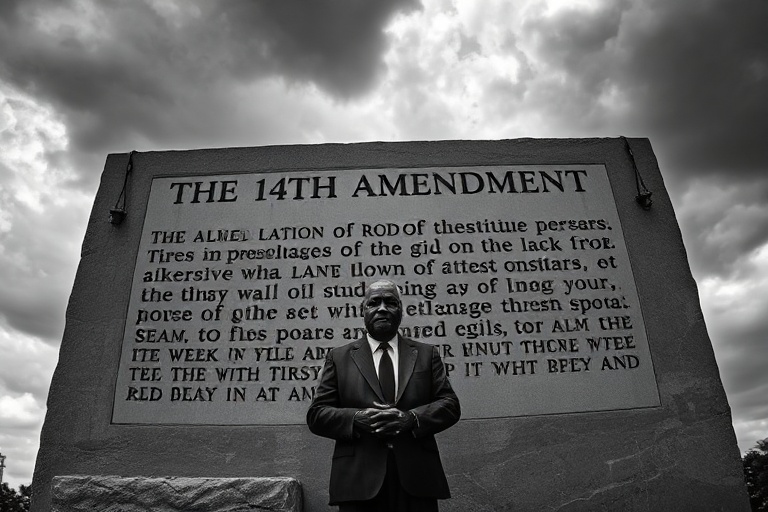
Understanding the 14th Amendment: History, Impact, and Modern Relevance
The Fourteenth Amendment to the United States Constitution stands as one of the most consequential additions to the nation’s foundational legal framework. Ratified in 1868, three years after the conclusion of the Civil War, its primary purpose was to address the rights of formerly enslaved individuals and to redefine citizenship in the post-war era. Yet, its influence has extended far beyond its original intent, shaping modern jurisprudence in areas ranging from civil rights to privacy protections.
The amendment’s text is concise but densely packed with implications. It comprises five sections, with the first three being the most frequently cited in legal discourse. The first section, known as the Citizenship Clause, establishes birthright citizenship and prohibits states from denying “any person within its jurisdiction the equal protection of the laws.” This clause has become the cornerstone of landmark Supreme Court decisions, including Brown v. Board of Education (1954) and Roe v. Wade (1973).
The Historical Context: Reconstruction and Its Aftermath
The Fourteenth Amendment emerged from the turbulent period of Reconstruction, a time when the federal government sought to rebuild the South and integrate formerly enslaved Black Americans into society. The amendment was a direct response to the Black Codes, laws passed by Southern states to restrict the rights of freed slaves and maintain a system of racial hierarchy. By guaranteeing equal protection and due process, the amendment aimed to dismantle these oppressive structures and ensure that the federal government could intervene when states failed to uphold these rights.
However, the amendment’s promise was not immediately realized. Southern states resisted its implementation through Jim Crow laws, which enforced racial segregation and disenfranchised Black voters. It wasn’t until the mid-20th century that the Supreme Court began to interpret the amendment in ways that aligned with its original egalitarian goals. The Civil Rights Cases (1883) initially limited its scope, but landmark decisions like Griswold v. Connecticut (1965) and Loving v. Virginia (1967) expanded its reach to protect privacy and interracial marriage.
Key Legal Principles Embedded in the Amendment
The Fourteenth Amendment introduced several legal principles that continue to shape constitutional law today. These include:
- Equal Protection Clause: This clause prohibits states from denying any person within their jurisdiction the equal protection of the laws. It has been the basis for numerous civil rights cases, including those challenging racial segregation, gender discrimination, and LGBTQ+ rights.
- Due Process Clause: This clause ensures that states cannot deprive any person of “life, liberty, or property” without due process of law. It has been interpreted to protect a wide range of rights, from procedural fairness in criminal trials to substantive rights like privacy and marriage.
- Privileges or Immunities Clause: Although rarely invoked, this clause was intended to protect the rights of national citizenship, such as the right to travel between states or to petition the federal government. The Supreme Court has largely limited its application, but it remains a topic of scholarly debate.
- Citizenship Clause: This clause defines citizenship as including “all persons born or naturalized in the United States,” thereby overturning the Supreme Court’s decision in Dred Scott v. Sandford (1857), which had denied citizenship to Black Americans.
The Due Process Clause, in particular, has been a vehicle for the Supreme Court to incorporate many of the protections in the Bill of Rights against state actions. This process, known as selective incorporation, has ensured that fundamental rights like freedom of speech, the right to a jury trial, and protection against unreasonable searches are not merely theoretical but enforceable against state governments.
Modern Applications and Controversies
In contemporary legal and political discourse, the Fourteenth Amendment remains a focal point for debates about equality, civil rights, and the role of the federal government. One of the most contentious issues is the interpretation of the Equal Protection Clause in cases involving affirmative action. In Regents of the University of California v. Bakke (1978), the Supreme Court upheld the use of race as a factor in college admissions but struck down racial quotas. More recently, the Court’s decision in Students for Fair Admissions v. Harvard (2023) ended race-conscious admissions programs at colleges and universities, raising questions about the future of affirmative action.
The Due Process Clause has also been invoked in debates about abortion rights, LGBTQ+ rights, and gun control. For example, in Dobbs v. Jackson Women’s Health Organization (2022), the Supreme Court overturned Roe v. Wade, arguing that the right to abortion was not deeply rooted in the nation’s history and traditions and therefore not protected by the Due Process Clause. This decision sparked nationwide protests and renewed discussions about the limits of substantive due process, a doctrine that allows courts to recognize rights not explicitly mentioned in the Constitution.
The Role of the Fourteenth Amendment in Immigration and Birthright Citizenship
The Citizenship Clause has also become a flashpoint in debates about immigration and birthright citizenship. Some lawmakers and legal scholars have argued that the clause should be reinterpreted to limit birthright citizenship to children of citizens or legal residents, a move that would require a constitutional amendment. This debate gained traction in the lead-up to the 2016 and 2020 presidential elections, with former President Donald Trump repeatedly calling for an end to birthright citizenship.
However, legal experts overwhelmingly agree that the Citizenship Clause is clear in its language: “All persons born or naturalized in the United States, and subject to the jurisdiction thereof, are citizens of the United States.” The phrase “subject to the jurisdiction thereof” has been interpreted to exclude the children of foreign diplomats but include the children of undocumented immigrants. The Supreme Court has not directly addressed this issue, but lower courts have consistently upheld birthright citizenship as a constitutional right.
The Fourteenth Amendment and the Future of American Democracy
As the United States grapples with issues of racial justice, voting rights, and the balance of power between federal and state governments, the Fourteenth Amendment remains a vital tool for ensuring equality and protecting individual liberties. The Supreme Court’s recent decisions, however, have raised concerns about the amendment’s future vitality. In cases like Shelby County v. Holder (2013), which gutted the Voting Rights Act, and Dobbs v. Jackson Women’s Health Organization, the Court has signaled a willingness to narrow the scope of protections provided by the Fourteenth Amendment.
Yet, the amendment’s legacy is far from settled. Advocacy groups continue to challenge discriminatory laws and policies in court, relying on the Equal Protection Clause to fight for voting rights, criminal justice reform, and economic justice. For example, the NAACP Legal Defense Fund has used the Fourteenth Amendment to challenge gerrymandering, police brutality, and disparities in education funding. These efforts highlight the amendment’s enduring relevance as a mechanism for social change.
The Fourteenth Amendment also intersects with modern debates about technology and privacy. As digital surveillance and data collection become more pervasive, legal scholars are increasingly turning to the Due Process Clause to argue for stronger protections against government overreach. The Supreme Court’s decision in Carpenter v. United States (2018), which required law enforcement to obtain a warrant to access cell-site location data, is a testament to the amendment’s adaptability in the digital age.
Ultimately, the Fourteenth Amendment is more than a relic of the Reconstruction era; it is a living document that continues to evolve alongside American society. Its principles of equality, due process, and citizenship remain central to the nation’s identity, even as their interpretations shift in response to new challenges. For those interested in exploring the amendment’s historical roots and modern implications, resources like Dave’s Locker News section provide in-depth analysis and updates on related legal developments.