Union vs Anderlecht: Why the Brussels Derby is More Than a Football Match
Union Saint-Gilloise vs Anderlecht: A Belgian Football Classic with Global Echoes
The clash between Union Saint-Gilloise and RSC Anderlecht is more than just a football match. It’s a fixture that encapsulates the passion, history, and cultural divide of Brussels itself. While Anderlecht has long been the dominant force in Belgian football, Union Saint-Gilloise has emerged as a symbol of resilience and community-driven success. Their recent encounters have drawn international attention, reflecting broader trends in European football where underdog narratives and local pride often overshadow traditional powerhouses.
Football in Belgium is more than a sport—it’s a cultural identifier. The country’s league, despite its smaller stature compared to England, Spain, or Germany, has produced world-class talent and fostered unique club identities. Union and Anderlecht represent two contrasting philosophies: one rooted in grassroots support and the other in institutional success. This rivalry, though not as historically intense as those in Italy or Scotland, carries its own weight, shaped by geography, class, and the evolving nature of the game.
The Historical Divide: Power and Identity in Belgian Football
Anderlecht’s dominance in Belgian football dates back decades. Founded in 1908, the club from the affluent municipality of Anderlecht became the standard-bearer of Belgian success on the European stage. With 34 league titles and five European trophies, Anderlecht has long been associated with stability, financial muscle, and a global recruitment strategy. Its stadium, the Lotto Park, stands as a monument to this legacy—a modern facility in a part of Brussels that has grown into a hub for expatriates and international business.
Union Saint-Gilloise, by contrast, was founded in 1897 in the working-class commune of Saint-Gilles. For much of its history, Union was a second-tier club, oscillating between lower divisions and brief stints in the top flight. But the club’s identity was never defined by trophies alone. It was built on community engagement, local ownership, and a deep connection to its neighborhood. This ethos resonated globally as football clubs increasingly face questions about authenticity in an era of financialization.
In recent years, Union’s rise has been meteoric. Promoted to the Belgian Pro League in 2018, the club finished third in its first top-flight season and has since qualified for the UEFA Champions League. This transformation has been fueled by a model of sustainable growth, fan ownership, and a refusal to chase short-term success through reckless spending—a philosophy that contrasts sharply with the traditional football business model.
The Modern Rivalry: Style, Tactics, and Fan Culture
The modern era of Union vs Anderlecht matches has introduced new dynamics. Tactically, Union under coaches like Marc Brys and now Alexander Blessin has emphasized high pressing, fluid attacking play, and defensive organization. Their style reflects a blend of pragmatism and ambition, designed to compete with clubs that have far greater financial resources. Anderlecht, meanwhile, has undergone its own evolution. After a period of decline in the 2010s, the club has rebuilt under new ownership and leadership, aiming to reassert itself as a European contender while maintaining its identity.
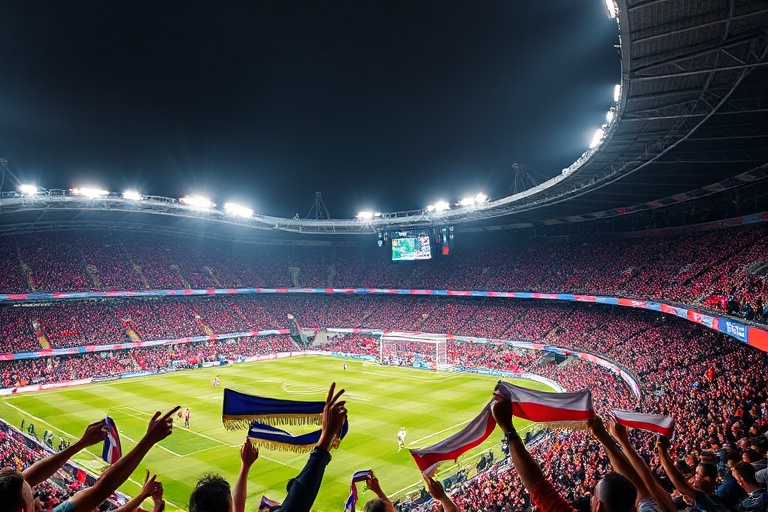
The fan cultures of the two clubs offer a fascinating contrast. Union’s supporters are known for their vocal, politically engaged fanbase. The club’s stadium, the Stade Joseph Marien, is small and intimate, creating an atmosphere that feels like a neighborhood gathering rather than a corporate event. Songs, chants, and choreographed displays reflect a working-class pride and a resistance to gentrification—a theme that resonates in cities across Europe where traditional communities face displacement.
Anderlecht’s fanbase, while diverse, is often associated with the more affluent areas of Brussels. The club’s matches at Lotto Park attract a mix of local supporters and international fans, drawn by the club’s history and recent resurgence. The stadium itself is a modern venue, designed to appeal to global audiences and corporate sponsors. This reflects a broader trend in football where tradition and modernity often collide.
These cultural differences extend beyond the pitch. The rivalry has become a lens through which to examine broader social issues in Brussels—language, class, urban development, and even national identity. Belgium’s complex linguistic divide (Dutch-speaking Flanders and French-speaking Wallonia) adds another layer, though Brussels itself is officially bilingual. Union, located in the French-speaking region, and Anderlecht, which sits in the bilingual heart of the capital, embody these tensions in subtle but meaningful ways.
Global Relevance: What This Rivalry Tells Us About Modern Football
The Union vs Anderlecht rivalry is more than a local story—it’s a case study in how football is evolving globally. In an era where clubs like Manchester City, PSG, and Chelsea are owned by billionaires and state-backed entities, Union Saint-Gilloise stands out as a club that prioritizes community over capital. This model has inspired similar projects across Europe, from FC Barcelona’s socios model to smaller clubs like FC St. Pauli in Germany or FC Twente in the Netherlands.
The club’s success has also highlighted the potential of smaller leagues to produce competitive football. While Belgium may never rival the financial power of the Premier League or La Liga, its clubs have consistently punched above their weight in European competitions. Union’s Champions League campaign in 2023-24, where they reached the group stages, was a testament to this. Their matches against European giants like Bayern Munich and Manchester United were broadcast globally, bringing attention to Belgian football and its unique narratives.
For Anderlecht, the challenge has been balancing tradition with adaptation. The club has embraced data analytics, modern training methods, and a more inclusive approach to recruitment. Its recent signings from Africa, South America, and Europe reflect a globalized vision, but one that risks diluting the local identity that once defined the club. This tension—between heritage and innovation—is a defining feature of modern football.
From a tactical perspective, the rivalry has also become a showcase for emerging coaching philosophies. Union’s high-pressing style has drawn comparisons to clubs like Liverpool under Jürgen Klopp, while Anderlecht’s more structured approach reflects a blend of traditional Belgian pragmatism and modern European influences. The tactical battles between managers have become a subplot in their own right, offering insights into how football is being reimagined at all levels.
Why This Match Matters Beyond the Scoreboard
The Union vs Anderlecht fixture is a microcosm of football’s broader evolution. It challenges the narrative that success is solely determined by financial power. It questions the idea that tradition must be sacrificed for progress. And it highlights the cultural role that football plays in shaping identity, community, and even politics.
For fans, these matches are about more than three points. They are about pride, belonging, and the right to define what their club—and their city—should represent. For neutrals, they offer a glimpse into a football culture that values authenticity over spectacle. And for the global football community, they serve as a reminder that the sport’s heart still beats strongest in the places where it started: in neighborhoods, on pitches made of concrete, and in the stands filled with voices that refuse to be silenced.
As Union Saint-Gilloise and Anderlecht continue to write new chapters in their storied history, their rivalry will remain a compelling narrative—one that transcends sport and speaks to the values that shape our world. Whether you’re a lifelong supporter or a casual observer, there’s something powerful in watching two clubs, each with its own vision of what football should be, battle it out on the pitch.
Looking Ahead: What’s Next for This Timeless Clash?
The future of the Union vs Anderlecht rivalry is as dynamic as the clubs themselves. Union’s ambition to establish itself as a permanent fixture in European football will test its model of sustainable growth. Can it maintain its competitive edge without sacrificing its principles? Anderlecht, meanwhile, is under pressure to rediscover its past glories while staying relevant in a rapidly changing football landscape. The club’s recent investment in youth development and women’s football suggests a broader vision, but success on the pitch remains the ultimate measure.
For supporters, the anticipation leading up to each match is a ritual. The chants echo through the streets of Brussels. The social media buzzes with debates about tactics and transfers. The city itself becomes a stage for football culture, where language, class, and history collide in a celebration of the game.
Whatever the outcome, one thing is certain: the Union vs Anderlecht rivalry will continue to captivate. It’s not just about winning. It’s about identity. It’s about community. It’s about the soul of football in an age of uncertainty.