Video Assistant Referee: How Technology is Changing Football Forever
Video Assistant Referee: The High-Tech Evolution of Football’s Judgment Call
The Video Assistant Referee (VAR) has reshaped modern football, transforming how decisions are made on the pitch. Introduced officially by FIFA in 2018 after years of debate, VAR uses multiple camera angles, slow motion, and real-time communication to assist referees in reviewing key match incidents. While its goal is to reduce human error, the system has sparked intense global discussion about fairness, transparency, and the soul of the game.
Football’s reliance on VAR reflects broader technological trends in sports officiating. Tennis introduced electronic line calling in the 1990s. Cricket adopted the Decision Review System (DRS) in 2008. But football’s embrace of VAR came later, partly due to its deep-rooted traditions and the emotional weight of live decisions. The system’s introduction wasn’t smooth—fans, players, and pundits initially resisted its perceived interruptions and cold precision. Yet over time, VAR has become an integral part of the sport’s infrastructure.
The Origins and Global Adoption of VAR
VAR was first tested in 2016 during a friendly match between PSV Eindhoven and FC Cincinnati. Its official debut came at the 2017 FIFA U-20 World Cup, and by 2018, it was used in the World Cup in Russia. FIFA’s decision to implement VAR globally followed years of pressure from leagues and federations seeking consistency. Before VAR, controversial decisions often led to post-match bans and referee resignations. Now, key incidents such as goals, penalties, red cards, and mistaken identity are subject to review.
Different leagues adopted VAR at different speeds. The English Premier League resisted longer than others, introducing it only in the 2019–20 season. La Liga in Spain and the Bundesliga in Germany integrated it earlier, while leagues in North America and Asia followed suit with varying degrees of enthusiasm. Cultural attitudes toward technology play a role. In Europe, where football is highly commercialized, VAR aligns with the demand for precision and fairness. In South America, where football is deeply tied to passion and local identity, initial reactions were more skeptical. Brazilian legend Pelé once called VAR “a disaster.” Yet even in Brazil, clubs now rely on it to challenge referee decisions.
How VAR Works: Technology Behind the Scenes
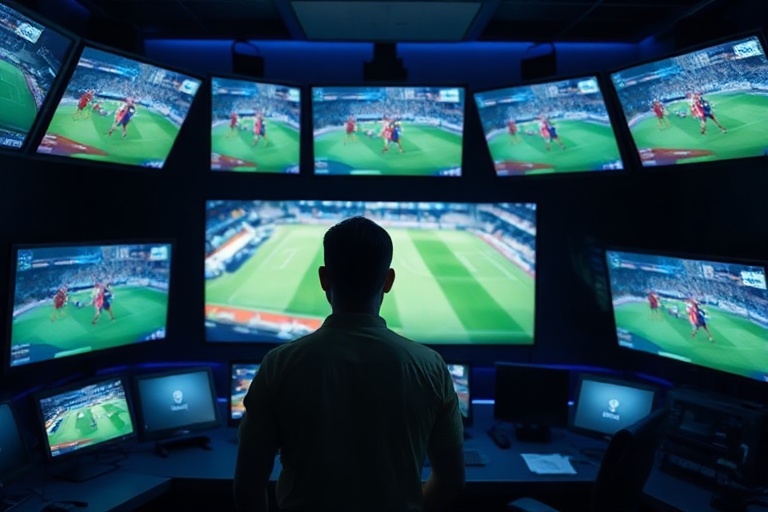
VAR operates through a centralized hub where a team of assistant referees monitors the match via multiple high-definition cameras. When a potential error occurs, the VAR team communicates with the on-field referee through an earpiece. The referee can choose to review footage on a pitch-side monitor or trust the initial call. The process is governed by strict protocols to maintain consistency.
Key incidents subject to VAR review include:
- Goals: Offside positions, handballs, or pitch invasions during scoring plays.
- Penalties: Whether a foul occurred inside the box, or if the ball was handled deliberately.
- Red Cards: Serious fouls, violent conduct, or second yellow cards.
- Mistaken Identity: When the wrong player is penalized for an offense.
Despite its technological sophistication, VAR is not infallible. Critics argue that the system can be overly literal, removing the human element from officiating. A player accidentally handling the ball might be penalized under strict interpretation, even if unintentional. The offside rule, particularly in its modern form using skeletal tracking, has led to controversial calls where a player’s toe or heel is deemed to break the line by millimeters.
The Cultural Impact: Cheers, Boos, and Memes
VAR has become more than a tool—it’s a cultural symbol. In England, fans chant “It’s only VAR” when decisions go against their team, turning technology into folklore. In Argentina, VAR played a pivotal role in the 2022 World Cup final, when a controversial penalty awarded to Argentina led to a trophy celebration. In South Korea, VAR reviews have sparked online debates about cultural differences in refereeing styles.
Social media amplifies every VAR moment. A delayed call can become a viral clip within minutes. Memes featuring referees examining screens have flooded platforms like Twitter and TikTok. The system has even influenced commentary styles, with pundits now dissecting replays in real time. Some fans argue that VAR has made football more fair. Others believe it has diluted the spontaneity of the game, turning every decision into a forensic investigation.
Cultural attitudes toward VAR vary by region. In Northern Europe, where trust in institutions is high, VAR is seen as a necessary evolution. In Southern Europe and Latin America, where football is intertwined with emotion and folklore, VAR is often viewed as an unwelcome intrusion. The contrast was evident during the 2021 Copa América, where VAR decisions sparked protests from players and fans alike.
The Future: AI, Automation, and the Next Frontier
As technology advances, so does the potential for VAR’s evolution. FIFA has already tested semi-automated offside technology, using limb-tracking sensors to determine offside positions within seconds. This system was used at the 2022 FIFA World Cup and promises faster, more objective decisions. Future iterations may use artificial intelligence to predict fouls or simulate referee decisions based on historical data.
Yet with automation comes new questions. Will AI remove even more judgment from the game? Will fans accept decisions made by algorithms? And how will leagues balance technological innovation with the human spirit of football?
One possible path forward is hybrid officiating, where AI assists human referees without full automation. This approach could reduce errors while preserving the role of human oversight. Another is greater transparency—allowing fans to see VAR feeds in stadiums or on broadcasts, demystifying the process and building trust.
Regardless of the path, VAR has already changed football forever. It has forced leagues, players, and fans to confront the tension between tradition and progress. Football will never be the same—but whether that’s for better or worse depends on who you ask.
Where VAR Meets the Fans: A Personal Perspective
Walking through the stands of Anfield during a tense Premier League match, the tension is palpable. A goal is scored, but the flag goes up. The crowd groans. Then, the big screen lights up: “VAR in progress.” For three minutes, the stadium holds its breath. Is it a goal? A foul? A red card? The moment stretches, and the emotions of thousands hang in the balance. This is the new reality of football—where every decision can be delayed, dissected, and debated.
For older fans, this feels unnatural—a betrayal of the game’s raw immediacy. For younger fans raised on instant replay culture, it’s simply part of the experience. VAR has become a bridge between generations, a shared point of frustration and fascination.
Conclusion
The Video Assistant Referee represents football’s ongoing negotiation with modernity. It has brought clarity to some of the game’s murkiest moments but at the cost of spontaneity and emotional release. As technology continues to evolve, so too will the debates around fairness, accuracy, and the soul of the sport. One thing is clear: VAR is here to stay. The challenge now is to refine it—not just as a tool, but as a partner in preserving the beauty of football.