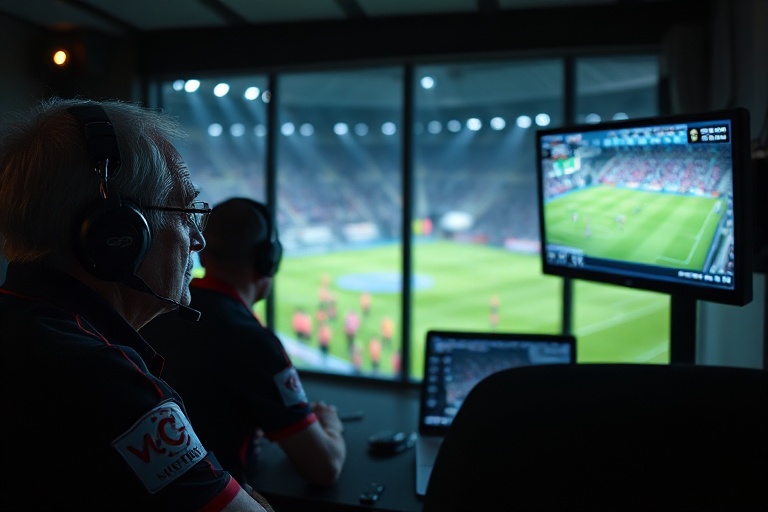
Video Assistant Referee (VAR) Explained: Global Impact and Controversies
The Video Assistant Referee (VAR) system has transformed football since its formal introduction by FIFA in 2018. Designed to enhance fairness and accuracy, VAR relies on a team of officials reviewing decisions through video footage in real time. While its objective—to correct clear and obvious errors—seems straightforward, its implementation has sparked intense debate across continents. From the packed stadiums of Europe to the community pitches of South America, VAR’s influence extends far beyond the pitch, shaping how fans, players, and officials perceive the game.
Football’s global governing bodies championed VAR as a technological leap forward. The International Football Association Board (IFAB) established protocols to ensure consistency, yet regional interpretations have led to starkly different experiences. In some leagues, VAR has restored confidence in officiating, while in others, it has fueled frustration and controversy. This article explores VAR’s global footprint, examining its cultural impact, technological evolution, and the ongoing tension between innovation and tradition.
The Origins and Evolution of VAR: A Technological Leap
VAR was first tested in 2016 during a friendly match between PSV Eindhoven and AZ Alkmaar. Its formal adoption came two years later, coinciding with the 2018 FIFA World Cup in Russia. The system was introduced with three core objectives: to correct clear errors in match-changing situations, to review missed incidents, and to provide clarity on player identity or direct red card offenses. The technology was hailed as a solution to officiating mistakes that had long plagued the sport.
However, the transition from concept to practice was not seamless. Early implementations revealed flaws in communication and interpretation. Officials struggled to maintain consistency, and fans often found the pauses for reviews disruptive. By 2020, leagues such as the English Premier League, La Liga in Spain, and Serie A in Italy had fully integrated VAR, each adapting the system to fit its unique cultural and operational context.
In Asia, the adoption of VAR has been more selective. The AFC Champions League introduced VAR in 2019, but domestic leagues like Japan’s J1 League have been cautious. Cultural attitudes toward authority and technological reliance play a role in shaping VAR’s reception. In Japan, where respect for referees is deeply ingrained, some critics argue that VAR undermines the authority of match officials. Meanwhile, in Australia’s A-League, VAR has been praised for improving fairness, particularly in contentious penalty decisions.
Cultural Clashes: How VAR is Reshaping Football’s Identity
Football is more than a sport; it is a cultural expression woven into the fabric of societies worldwide. VAR’s introduction has forced a reckoning with tradition, sparking passionate debates about what the game should prioritize: fairness through technology or the spontaneity of human judgment. In Brazil, the spiritual home of football, VAR has faced significant resistance. Fans and players alike argue that the system disrupts the fluid, instinctive nature of the game, which has produced some of the most iconic moments in history.
Brazilian legend Romário, a vocal critic of VAR, once remarked, “Football is about feeling, not about freezing the game every two minutes.” His sentiment reflects a broader cultural sentiment in South America, where football is intertwined with emotion, creativity, and improvisation. The region’s football culture values the spectacle as much as the result, and VAR’s clinical approach often feels at odds with this ethos.
In contrast, European leagues have largely embraced VAR, albeit with their own frustrations. The English Premier League, known for its intensity and physicality, has seen VAR used to overturn marginal offside calls, leading to accusations of over-analysis. Meanwhile, in Germany’s Bundesliga, VAR has been praised for its transparency, with fans able to view decisions on stadium screens in real time. This transparency has helped build trust, though it has not eliminated controversy entirely.
VAR Around the World: A Comparative Look
To illustrate VAR’s varied impact, consider the following examples from different regions:
- England (Premier League): VAR has been used to correct offside decisions down to the millimeter, often prolonging celebrations and deflating fans. Critics argue it strips the game of its human element.
- Spain (La Liga): Known for its technical style, La Liga’s use of VAR has been relatively smooth, with fewer disruptions to play. Referees prioritize clear and obvious errors, aligning with the league’s emphasis on skill and precision.
- Italy (Serie A): VAR has faced criticism for inconsistent interpretations, particularly in penalty decisions. The league’s physical style has led to debates over whether VAR is enforcing fairness or altering the game’s nature.
- Japan (J1 League): VAR is used sparingly, with a focus on clear red card offenses. The cultural preference for minimal disruption has shaped a more reserved approach to technology in officiating.
- Australia (A-League): VAR has been welcomed for reducing referee errors, particularly in high-stakes matches. Its implementation has been gradual, allowing time for adaptation among players and fans.
The Human Factor: Referees, Players, and Fans in the VAR Era
The introduction of VAR has redefined the roles of referees, players, and fans. For referees, VAR represents both a lifeline and a source of pressure. The ability to review decisions provides a safety net, yet it also places additional scrutiny on their every call. In high-profile matches, referees are under constant surveillance, with their mistakes dissected by pundits and fans in real time.
Players, too, have had to adapt. While some appreciate the clarity VAR provides, others resent the loss of spontaneity. Celebrations are often paused, and players must wait for confirmation before reacting. This shift has led to frustration, particularly when VAR decisions overturn what seemed like clear goals or red cards. In 2022, during the FIFA World Cup in Qatar, VAR became a focal point of debate after several contentious decisions, including the disallowing of a goal for France’s Kylian Mbappé due to an offside call that hinged on a player’s toe.
Fans are perhaps the most polarizing group. In some stadiums, VAR replays on giant screens have enhanced the viewing experience, allowing supporters to understand decisions as they unfold. In others, the delays and perceived injustices have led to anger and protests. Social media has amplified these reactions, with VAR becoming a frequent topic of memes, debates, and even conspiracy theories.
The Future of VAR: Innovation and Compromise
As VAR continues to evolve, its future hinges on finding a balance between technology and tradition. FIFA and IFAB have already made adjustments, such as introducing the “clear and obvious error” standard to limit disruptions. Further innovations, such as semi-automated offside technology (used in the 2022 World Cup), aim to reduce human error and speed up decision-making.
However, the debate over VAR’s role in football is far from settled. Some advocate for further integration, arguing that technology can eliminate bias and improve fairness. Others call for a return to the “beautiful game” as it was, where referees’ decisions were final and the flow of play was uninterrupted. The challenge lies in reconciling these perspectives without losing sight of football’s global appeal.
The path forward may involve regional adaptations, where leagues tailor VAR’s use to fit their cultural and competitive contexts. For instance, leagues in South America might adopt a more lenient approach to marginal offside calls, while European leagues could refine their protocols to reduce delays. The key will be ensuring that VAR serves the game, rather than dictating its soul.
For now, VAR remains a work in progress. Its success will depend not only on technological advancements but also on the willingness of football’s stakeholders to embrace change while preserving the essence of the sport. As technology continues to shape the beautiful game, the challenge will be to ensure that innovation enhances rather than erodes what makes football truly global.
For more insights into the intersection of technology and sports, explore our Sports category, where we delve into the latest trends and debates shaping the world of football and beyond.