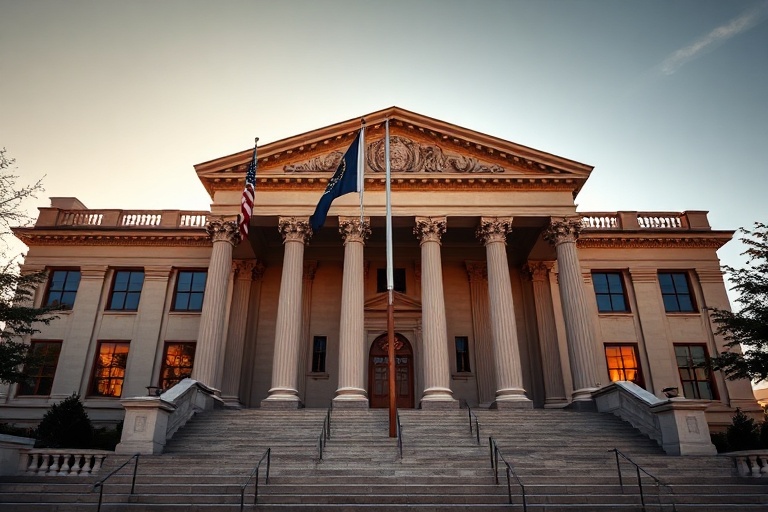
Virginia Supreme Court: History, Influence, and Global Legal Impact
The Virginia Supreme Court: History, Influence, and the Evolution of State Justice
The Virginia Supreme Court stands as one of the oldest appellate courts in the United States, with roots stretching back to the colonial era. Established in 1779 under the Virginia Constitution, it replaced the earlier General Court and became a model for judicial systems across the new nation. Unlike federal courts, state supreme courts like Virginia’s serve as the final arbiters of state law, shaping legal precedent that influences everything from property rights to criminal justice. Its longevity reflects not only Virginia’s deep legal traditions but also the broader evolution of American jurisprudence.
The court’s origins are intertwined with Virginia’s role in early American governance. The 1776 Virginia Declaration of Rights, authored by George Mason, laid groundwork for individual liberties that later influenced the U.S. Bill of Rights. This constitutional heritage gave the Virginia Supreme Court a unique platform to interpret laws in ways that often set regional trends. Over time, its decisions have reflected—and at times challenged—prevailing social attitudes, particularly around race, governance, and individual freedoms.
A Court Shaped by History and Reform
The Virginia Supreme Court has undergone significant structural changes to adapt to modern demands. Originally, it operated as the Court of Appeals, with judges riding circuit to hear cases across the state. By 1928, the modern Supreme Court of Appeals was created, and in 1971, it was renamed the Supreme Court of Virginia. This shift coincided with broader judicial reforms aimed at improving efficiency and accessibility. The court now consists of seven justices, including a chief justice, who are appointed by the legislature and serve 12-year terms. This method of selection distinguishes Virginia from states that elect judges, raising ongoing debates about judicial independence and accountability.
The court’s docket covers a wide range of cases, from constitutional challenges to high-stakes civil litigation. Among its most notable contributions has been its role in interpreting Virginia’s unique “dead hand” control laws—rules that allow property owners to impose restrictions on land use for centuries. This has had global implications, influencing legal frameworks in other common law jurisdictions. Internationally, scholars often compare Virginia’s judicial approach to that of British common law systems, especially in former colonies where British legal traditions persist.
Global Legal Influence and Comparative Perspectives
Virginia’s judicial system has long been studied abroad, particularly in nations with similar common law foundations. Countries such as Canada, Australia, and India have looked to U.S. state supreme courts for guidance on balancing state and federal authority. The Virginia Supreme Court’s rulings on property rights and local governance, for instance, have been cited in legal briefs from South Africa to New Zealand. This cross-jurisdictional influence underscores how state courts can shape global legal discourse, even as federal courts often dominate headlines.
One area where Virginia’s court has drawn particular international attention is in election law. Recent decisions on redistricting and voter access have sparked comparisons with reforms in Europe and Latin America. While U.S. election law remains highly decentralized, Virginia’s approach to transparency and judicial review has been praised as a model for emerging democracies. Legal experts in countries like Brazil and Mexico have referenced Virginia’s practices when advocating for independent judicial oversight in electoral disputes.
Despite its influence, the court has also faced criticism. Some argue that its appointment process lacks public accountability, particularly when compared to elected judiciaries in states like California or Ohio. Others point to its historical role in upholding segregationist laws during the Jim Crow era—a legacy that continues to shape perceptions of justice in the South. The court’s 2020 decision to remove a statue of Confederate general Robert E. Lee from its grounds marked a symbolic shift, but debates about its past linger in legal and academic circles.
Landmark Cases and Cultural Impact
Several decisions by the Virginia Supreme Court have transcended legal circles to influence broader cultural conversations. A notable example is Loving v. Virginia, the 1967 case that struck down state laws banning interracial marriage. Though the U.S. Supreme Court ultimately ruled on the case, the Virginia court’s earlier ruling in favor of the Lovings helped galvanize national support for civil rights. This case remains a cornerstone in discussions about marriage equality and racial justice, resonating globally in countries grappling with similar social reforms.
Another pivotal case involved the 2015 ruling in King v. Commonwealth, which upheld the state’s ban on same-sex marriage. While later overturned by the U.S. Supreme Court, the decision reflected the cultural tensions of its time and sparked widespread debate. It also highlighted how state courts can become battlegrounds for social change, mirroring similar dynamics in Canada’s early marriage equality cases and Australia’s postal survey on the issue.
The court has also played a role in environmental law, particularly in cases involving the Chesapeake Bay cleanup. Virginia’s unique position as both a coastal and agricultural state has led to complex legal disputes over water rights and pollution control. These cases have drawn interest from European environmental lawyers, who see parallels in the European Union’s approach to transboundary water management.
The Court’s Role in the 21st Century: Challenges and Opportunities
Today, the Virginia Supreme Court faces new challenges as technology, social change, and political polarization reshape the legal landscape. The rise of digital evidence in criminal cases has forced the court to interpret laws written before the internet era. Issues like data privacy, cybercrime, and algorithmic bias are increasingly appearing on its docket. Internationally, courts in the European Union and parts of Asia are grappling with similar questions, creating opportunities for cross-border collaboration.
The court’s relationship with the legislature also remains a point of contention. Unlike some states where courts have expansive powers of judicial review, Virginia’s judiciary operates under a more constrained framework. This has led to occasional clashes over the scope of judicial authority, particularly in cases involving legislative overreach or constitutional interpretation. Some legal scholars argue that this tension reflects a broader American debate about the balance of powers—a debate that resonates in parliamentary systems like the UK’s or India’s.
For those interested in the intersection of law and society, the Virginia Supreme Court offers a compelling case study. Its decisions ripple through communities, shaping everything from education policy to business regulation. As Virginia continues to grow—both demographically and economically—the court’s role in defining the state’s future will only become more pronounced.
For readers looking to explore related legal developments, Dave’s Locker’s News section regularly covers state-level judicial decisions with national implications. These stories highlight how local rulings can echo across borders, influencing global conversations about justice and governance.
Conclusion
The Virginia Supreme Court is more than a legal institution; it is a living archive of American history and a participant in global jurisprudence. From its colonial roots to its modern challenges, it reflects the evolving values of a diverse society. Its influence extends far beyond Virginia’s borders, offering lessons for legal systems around the world. As technology and culture continue to transform the nature of law, the court’s ability to adapt will determine its legacy for generations to come.