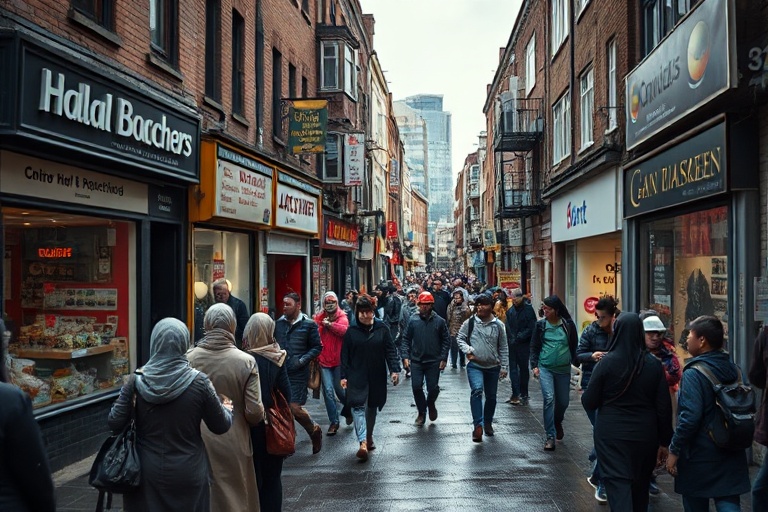
Newham’s Transformation: From Olympics to Global Diversity
Newham, a borough in East London, often sits in the shadow of more famous neighbors like Tower Hamlets or Hackney. Yet its transformation over the past two decades has been nothing short of remarkable. From hosting the 2012 Olympic Games to becoming one of the most diverse places in the world, Newham’s story is one of resilience, ambition, and reinvention.
The Olympic Legacy: A Borough Reborn
The 2012 Summer Olympics didn’t just land in Newham—they reshaped it. The Queen Elizabeth Olympic Park, stretching across Newham, Hackney, Tower Hamlets, Waltham Forest, and Greenwich, became a symbol of urban renewal. Before the Games, this area was a patchwork of industrial sites and underused land. Today, it’s a hub for sports, culture, and business.
The transformation extended beyond the park. Stratford, once a neglected rail hub, is now a major transport interchange with the Eurostar, DLR, and Elizabeth Line all converging there. The economic ripple effects have been substantial. According to the Greater London Authority, Newham saw a 20% increase in business activity in the five years following the Olympics. Yet challenges remain. Rising property prices have pushed out long-term residents, raising questions about who benefits from such large-scale regeneration.
Key Takeaways from Newham’s Olympic Transformation
- Economic Uplift: Business growth and job creation tied to the Olympic Park.
- Transport Revolution: Stratford’s transport links became some of the best in London.
- Gentrification Pressures: Rising rents and displacement of long-term communities.
- Cultural Shift: The park now hosts major events, from concerts to festivals.
For a deeper look at how major events shape urban landscapes, explore our Sports and Analysis sections.
Cultural Mosaic: A Borough of Global Identities
Newham isn’t just diverse—it’s a living case study in multiculturalism. Over 70% of its residents identify as Black, Asian, or from other minority ethnic groups, according to the 2021 census. The borough is home to one of the largest Bangladeshi communities in Europe, as well as significant populations from Somalia, Nigeria, and Eastern Europe. This diversity is reflected in everything from food to faith.
Brick Lane’s curry houses give way to West Ham’s Bengali sweets, while mosques and churches share the skyline with Hindu temples. The annual Newham Mela, a celebration of South Asian culture, draws tens of thousands. Yet this diversity isn’t without tension. Rising nationalism across the UK has led to occasional flare-ups, though Newham’s tight-knit communities often rally together in response.
The borough’s schools reflect this diversity too. Over 140 languages are spoken in Newham’s classrooms, making it one of the most linguistically diverse education systems in the country. This presents both challenges and opportunities—students fluent in multiple languages are in high demand in global industries, but resources for language support remain stretched.
Economic Challenges: Opportunity vs. Inequality
Newham’s economic story is complex. On one hand, it’s a hotspot for startups and creative industries. The borough’s creative sector grew by 12% between 2015 and 2020, outpacing the London average. Tech incubators like HereEast in the Olympic Park are nurturing the next generation of innovators.
On the other hand, Newham remains one of the poorest boroughs in London. The median household income is £30,000—well below the London average of £44,000. Child poverty rates hover around 40%, and homelessness has risen sharply since the pandemic. The borough’s council has struggled with budget cuts, leading to strained public services.
Public housing is a particular flashpoint. Newham has one of the highest rates of temporary accommodation in the country, with families often housed in cramped, expensive private rentals far from their communities. The council’s controversial decision to sell off social housing stock to private developers has further reduced affordable options.
Economic Highlights and Hurdles
- Startup Growth: Newham’s creative and tech sectors are expanding rapidly.
- Income Disparity: Despite growth, median incomes lag behind other boroughs.
- Housing Crisis: High demand and low supply push residents into temporary housing.
- Public Sector Strain: Budget cuts impact schools, healthcare, and social services.
For more on how economic policies shape communities, check out our Business and Politics sections.
The Future of Newham: What’s Next?
Newham stands at a crossroads. Its global ambitions are clear—the borough is positioning itself as a gateway for international businesses and a leader in sustainable urban development. The Thames Gateway regeneration project, aimed at transforming East London’s riverfront, could bring billions in investment. Yet without careful planning, these developments risk exacerbating inequality.
Community-led initiatives are emerging as a counterbalance to top-down regeneration. Grassroots organizations like Newham Union of Councils are advocating for tenant rights and affordable housing. Meanwhile, local artists and activists are using public spaces to tell Newham’s stories, from its industrial past to its multicultural present.
The borough’s young population—over 40% are under 25—could be its greatest asset. Newham’s schools are among the most diverse in the country, and its youth are increasingly vocal about climate action and social justice. If harnessed effectively, this energy could drive Newham’s next phase of growth.
Yet the biggest question looms: Can Newham’s growth be inclusive? The borough’s future will depend on whether its leaders prioritize equity alongside economic development. The Olympic Park’s legacy offers a blueprint, but only if its lessons are applied beyond the park’s gleaming boundaries.
Conclusion: More Than a Borough
Newham is more than a place on the map—it’s a microcosm of modern Britain. Its story reflects the tensions and triumphs of urban life in the 21st century: diversity and division, ambition and austerity, global ambition and local roots. As London continues to evolve, Newham’s ability to navigate these challenges will determine whether it remains a hidden gem or becomes a model for inclusive urban growth.
One thing is certain: Newham’s voice will only grow louder in the years ahead.