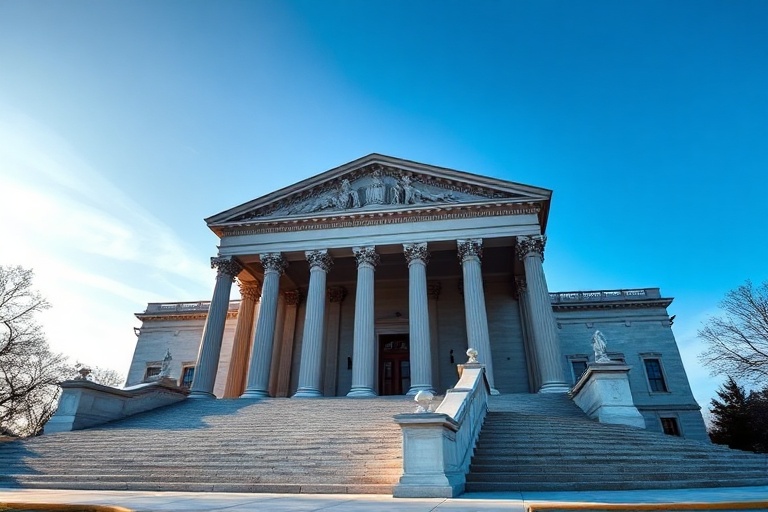
Virginia Supreme Court: Power, Precedent, and Public Trust
The Virginia Supreme Court stands as the highest judicial authority in the Commonwealth, shaping legal precedent that influences not just Virginia but also the broader American legal landscape. With a rich history dating back to 1779, this court has played a pivotal role in interpreting the state’s constitution, refining criminal justice, and addressing some of the most contentious social issues of our time. Understanding its structure, influence, and recent developments offers insight into how justice is administered at the highest level in Virginia.
The Court’s Structure and Jurisdiction
The Virginia Supreme Court consists of seven justices, including a chief justice who presides over the court’s proceedings. Unlike federal judges, who are appointed for life, Virginia Supreme Court justices are elected by the General Assembly for 12-year terms. This system emphasizes accountability to the legislature rather than lifetime tenure, reflecting Virginia’s unique approach to judicial selection.
The court’s jurisdiction is primarily appellate, meaning it reviews decisions made by lower courts rather than trying cases directly. Its authority extends to:
- Appeals from the Virginia Court of Appeals
- Direct appeals in cases involving the death penalty
- Disputes over the constitutionality of state laws
- Writs of habeas corpus and other extraordinary remedies
This structure ensures that the Virginia Supreme Court serves as the final arbiter of legal disputes within the state, with the power to shape the interpretation and application of Virginia’s laws. Its decisions often set precedents that lower courts must follow, making its rulings particularly consequential for residents and legal practitioners alike.
Recent Landmark Decisions and Their Impact
In recent years, the Virginia Supreme Court has weighed in on several high-profile cases that have had far-reaching implications. One such decision came in Commonwealth v. Morris (2022), where the court ruled on the admissibility of digital evidence in criminal trials. The case centered on whether law enforcement needed a warrant to access location data from a suspect’s mobile phone. The court’s unanimous decision reinforced Fourth Amendment protections in the digital age, setting a precedent that has influenced similar cases across the country.
Another pivotal ruling came in Deanna B. v. Commonwealth (2023), which addressed the rights of juveniles in sentencing. The court struck down a provision that allowed for mandatory life sentences without parole for juveniles convicted of certain crimes. The decision aligned Virginia with a growing national consensus that recognizes the unique circumstances of juvenile offenders, emphasizing rehabilitation over permanent punishment. This ruling has sparked broader conversations about criminal justice reform, particularly in states with similar sentencing laws.
These cases underscore the court’s role not just as a legal institution but as a participant in ongoing societal debates. Its rulings often reflect a balance between upholding the law and adapting to evolving social norms, a dynamic that keeps the court at the center of public attention.
The Court’s Role in Shaping Virginia’s Legal Landscape
Beyond individual cases, the Virginia Supreme Court plays a crucial role in defining the legal framework of the state. For example, its interpretations of the Virginia Constitution have sometimes diverged from federal standards, particularly in areas like free speech and criminal procedure. In Hansen v. Commonwealth (2021), the court ruled that a defendant’s right to a speedy trial under the Virginia Constitution could be violated even if the federal standard had not been met. This decision reinforced the idea that state constitutions can provide greater protections than their federal counterparts, a principle known as the “New Judicial Federalism.”
The court’s influence extends to the legislative process as well. Its advisory opinions, though rare, can shape how lawmakers draft and revise statutes. For instance, in 2020, the court issued an opinion clarifying the scope of gubernatorial emergency powers during the COVID-19 pandemic. This guidance helped legislators refine existing laws to better address future crises, demonstrating the court’s role as a collaborator in governance.
Moreover, the court’s decisions often intersect with political and social movements. In Harris v. McAuliffe (2016), the court ruled against the governor’s executive order to restore voting rights to felons, a decision that highlighted the tension between judicial restraint and executive authority. This case became a touchstone in debates about felon disenfranchisement and the balance of power between branches of government.
For those interested in the intersection of law and politics, the Virginia Supreme Court offers a compelling case study in how judicial institutions navigate complex societal issues. Its rulings are not just legal documents but also reflections of the state’s evolving values and priorities.
Broader Implications for the Legal System
The Virginia Supreme Court’s work carries implications beyond the state’s borders. Its rulings on digital privacy, juvenile justice, and constitutional rights often serve as models or cautionary tales for courts in other states. For example, its strict scrutiny of warrantless digital searches has been cited in cases from neighboring states, influencing how law enforcement agencies approach technology in investigations.
The court’s approach to constitutional interpretation also offers lessons for legal scholars and practitioners. By emphasizing the Virginia Constitution’s protections, the court has contributed to a broader trend of state-level judicial activism, where state courts take the lead in safeguarding individual rights. This trend is particularly relevant in an era where federal protections are increasingly uncertain, and state constitutions are being reexamined for their potential to fill gaps in legal rights.
Additionally, the court’s decisions on criminal justice reform have resonated with national movements advocating for more equitable sentencing practices. Its rulings on juvenile life sentences and digital evidence have aligned with progressive reforms, demonstrating how state courts can drive change even in the absence of federal action. This dynamic is likely to continue as technology and societal values evolve, placing the Virginia Supreme Court at the forefront of legal innovation.
For legal professionals and policymakers, the court’s work provides a roadmap for navigating the complexities of modern governance. Its ability to balance legal precedent with societal needs offers a model for how courts can remain relevant and responsive in an ever-changing world.
To explore more about Virginia’s legal system and its broader implications, visit Dave’s Locker News for in-depth coverage of state and national legal developments. For analysis on the intersection of law and policy, check out Dave’s Locker Analysis.
Key Takeaways
- The Virginia Supreme Court is the highest judicial authority in the state, with seven justices elected by the General Assembly for 12-year terms.
- Its jurisdiction includes appellate reviews, constitutional interpretations, and extraordinary remedies like habeas corpus.
- Recent rulings have reinforced digital privacy rights, struck down harsh juvenile sentencing laws, and clarified gubernatorial powers during emergencies.
- The court’s work influences legal standards beyond Virginia, particularly in areas like juvenile justice and digital evidence.
- Its emphasis on state constitutional protections reflects a broader trend of state-level judicial activism.
The Virginia Supreme Court remains a cornerstone of the state’s legal system, its rulings shaping the lives of Virginians and setting precedents for courts nationwide. As technology, society, and governance continue to evolve, the court’s role in interpreting the law will only grow in importance, ensuring that justice remains both a principle and a practice in the Commonwealth.