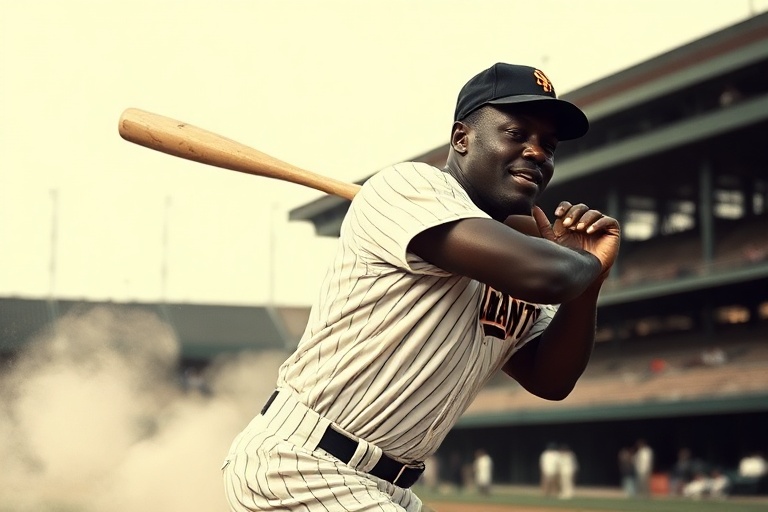
The Greatest All-Around Player in Baseball History
Willie Mays transcended baseball. His name appears in conversations about the greatest athletes of the 20th century, not merely as a player but as a cultural architect who reshaped how the world viewed sports. Born in 1931 in Westfield, Alabama, Mays rose from humble beginnings to become a symbol of excellence, resilience, and joy in athletics. His career spanned 22 seasons in Major League Baseball, primarily with the New York/San Francisco Giants and the New York Mets, leaving an indelible mark on the game and beyond.
Mays’ influence extended far beyond statistics. He played with a flair that captivated audiences worldwide, turning baseball into a spectacle of athleticism and creativity. His combination of power, speed, and defensive brilliance set a standard that few have matched. More than a player, Mays became a global ambassador for the sport, embodying the spirit of competition and sportsmanship across generations.
A Career of Unmatched Achievements
Mays’ career statistics tell only part of his story. He finished with 660 home runs, 3,293 hits, and a .301 batting average, earning him 24 All-Star selections—an MLB record at the time of his retirement. His defensive prowess in center field revolutionized the position, earning him 12 Gold Glove Awards. Yet, his greatest contributions often came in moments that defied quantification.
Consider the “over-the-shoulder” catch in the 1954 World Series, a play so iconic it became known simply as “The Catch.” That moment, frozen in time, symbolized Mays’ ability to turn defense into offense, to make the impossible look routine. It wasn’t just a play; it was a statement. Mays didn’t just play baseball—he performed it, blending artistry with athleticism in a way that elevated the game itself.
His 1951 debut with the Giants marked the beginning of an era. By 1954, he had already won the National League’s Most Valuable Player award, a testament to his rapid rise. Over the decades, Mays collected accolades like MVP awards (he won twice), Rookie of the Year honors, and a World Series championship in 1954. His longevity was another hallmark—he played at an elite level well into his 40s, retiring in 1973 after a brief stint with the Mets.
The Cultural Impact of Willie Mays
Mays’ impact on culture cannot be overstated. In the segregated America of the 1950s and 60s, he became one of the first Black athletes to achieve mainstream celebrity status. His success on the field challenged racial barriers, paving the way for future generations of Black athletes in baseball and beyond. Yet, Mays carried this weight with grace, focusing on his craft rather than activism—though his presence alone was a form of protest.
His style off the field was as distinctive as his play. The “Say Hey Kid” nickname reflected his charisma and approachability. Mays’ smile, his swagger, and his love for the game made him relatable to fans across racial and socioeconomic lines. He was a bridge between communities, a unifying figure in a sport and a nation often divided.
Globally, Mays’ influence spread through barnstorming tours, exhibitions, and the growing reach of televised baseball. In Japan, Latin America, and Europe, fans marveled at his talent. He became a symbol of baseball’s potential as a global sport, long before globalization became a buzzword. His tours abroad didn’t just promote baseball—they fostered cultural exchange, introducing international audiences to the nuances of the game.
- Breaking Barriers: Mays was one of the first Black players to achieve superstar status in MLB, challenging the league’s segregated past.
- Global Ambassador: His tours and exhibitions introduced baseball to international audiences, helping the sport grow worldwide.
- Cultural Icon: His style, charisma, and excellence made him a figure of admiration beyond the diamond.
Willie Mays Beyond Baseball
Mays’ legacy extends beyond his playing days. After retiring, he remained a fixture in baseball, first as a coach and later as a beloved ambassador for the Giants organization. His presence at games, his interactions with fans, and his occasional appearances in the media kept his legend alive. Even in his 90s, Mays remained active, participating in charity events and sharing his wisdom with younger players.
His influence also seeped into popular culture. Mays appeared in films, television shows, and even recorded a country song in the 1960s. His name became synonymous with greatness, invoked in debates about the best players in any era. From hip-hop lyrics to literary references, Mays’ cultural footprint is as deep as it is wide.
In 2015, President Barack Obama awarded Mays the Presidential Medal of Freedom, the nation’s highest civilian honor. The citation praised him as “one of the greatest baseball players of all time” and a “trailblazer for equality.” The award underscored Mays’ role not just as an athlete, but as a figure who shaped American history.
The Enduring Legend of Willie Mays
Willie Mays’ legacy is a tapestry of excellence, resilience, and joy. He was more than a player; he was an experience. For millions of fans, he represented the best of baseball—a game that, at its core, is about passion, creativity, and community. His ability to transcend the sport itself speaks to his unique place in history.
Today, Mays’ name is invoked in discussions about the greatest athletes of all time, alongside legends like Muhammad Ali, Pele, and Michael Jordan. His impact on the game is measured not just in statistics or awards, but in the way he inspired generations of players to approach the game with flair and confidence. From the sandlots of Alabama to the bright lights of San Francisco and New York, Mays’ journey is a testament to the power of talent, hard work, and authenticity.
As baseball continues to evolve, Mays’ legacy serves as a reminder of what made the game great in the first place. He didn’t just play baseball; he celebrated it. And in doing so, he left a mark on the world that will never fade.
“In all my years in baseball, I’ve never seen anyone who could do everything so well.” — Duke Snider, Hall of Fame outfielder and contemporary of Mays
Willie Mays’ story is far from over. His influence lives on in the players he inspired, the fans he delighted, and the cultural landscape he helped shape. He is, and always will be, the greatest all-around player baseball has ever seen.
For those looking to explore more about the intersection of sports and culture, visit our Sports category, where we delve into the stories that define athletic greatness. And for a deeper look at the evolution of baseball’s global reach, check out our Analysis section, where we examine the forces shaping the game today.