Žalgiris vs Fenerbahçe: A Clash of Basketball Philosophies in EuroLeague
Žalgiris vs Fenerbahçe: A Clash of European Basketball Philosophies
The Žalgiris Kaunas vs Fenerbahçe Beko matchup isn’t just another EuroLeague fixture—it’s a collision of basketball cultures. One team represents the gritty resilience of post-Soviet basketball, while the other embodies the polished, star-studded approach of modern Turkish sports. This rivalry transcends the court, reflecting broader geopolitical and cultural narratives that shape European basketball.
Žalgiris, founded in 1944 during Lithuania’s Soviet era, carries the legacy of a nation that fought for identity through sport. After regaining independence in 1990, basketball became a symbol of Lithuanian pride, producing legends like Arvydas Sabonis and Šarūnas Marčiulionis. Fenerbahçe, meanwhile, is the flagship team of one of Turkey’s most influential institutions, backed by a massive fanbase and financial resources that rival Europe’s elite clubs.
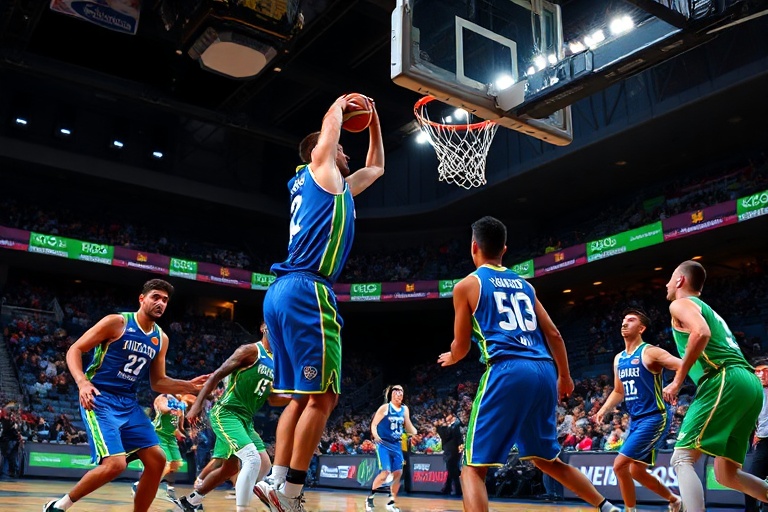
When these two teams meet, the contrast is immediate. Žalgiris plays with a relentless defensive identity and a deep bench that forces opponents into mistakes. Fenerbahçe counters with offensive firepower, often relying on a single superstar to dominate games. The tactical battle between these styles makes every encounter unpredictable—and that’s why fans around the world tune in.
The Historical Weight of Žalgiris Kaunas
Žalgiris isn’t just a basketball team; it’s a cultural institution. The club’s name itself is a historical reference—Zalgiris was the site of the 1410 Battle of Grunwald, where Lithuanian-Polish forces defeated the Teutonic Knights. This legacy of underdog triumphs resonates deeply in Lithuania, where basketball is more than a sport—it’s a point of national pride.
Under the leadership of legendary coach Šarūnas Jasikevičius, Žalgiris has evolved from a regional contender into a consistent EuroLeague threat. Jasikevičius, a former NBA player and EuroLeague MVP, instilled a defensive mindset that has frustrated even the continent’s best offensive teams. The club’s development system, which nurtures young talent before exporting them to the NBA or top European leagues, reflects Lithuania’s broader approach to sports—prioritizing fundamentals over flash.
This philosophy has made Žalgiris a darling of European basketball purists. Their matches often feature physical, low-scoring battles where every possession matters. It’s basketball stripped down to its essence, a throwback to an era when tactics mattered more than individual brilliance.
Fenerbahçe Beko: The Turkish Basketball Powerhouse
Fenerbahçe Beko, on the other hand, represents the commercialization of European basketball. Sponsored by Turkey’s Beko and backed by the Fenerbahçe S.K. sports club (which also fields teams in football, volleyball, and athletics), the basketball team operates with resources few clubs can match. Their home arena, the Ülker Sports and Event Hall, is a modern fortress where fans create an intimidating atmosphere.
The club’s rise to prominence began in 2016 when they won their first EuroLeague title, led by current coach Dimitris Itoudis and a roster stacked with NBA-level talent. Players like Kostas Sloukas and Jan Veselý became household names in Europe, while the team’s fast-paced, high-scoring style captivated audiences. Fenerbahçe’s success has turned Istanbul into a basketball hotspot, drawing global attention to Turkish sports.
But Fenerbahçe’s dominance isn’t just about talent—it’s about ambition. The club’s ownership has invested heavily in infrastructure, player development, and marketing, positioning it as a direct competitor to Barcelona, Real Madrid, and CSKA Moscow. Their matches are spectacles, blending elite basketball with the vibrant energy of Turkish sports culture.
The Tactical Duel: Defense vs. Offense
When Žalgiris and Fenerbahçe face off, the game becomes a chess match between two contrasting philosophies. Here’s how the clash typically unfolds:
- Žalgiris’ Approach: A suffocating man-to-man defense, aggressive ball pressure, and a reliance on team play. Their offense is often an afterthought, built around quick transitions and exploiting defensive lapses. The bench is their secret weapon, with players like Edgaras Ulanovas and Thomas Walkup providing energy and versatility.
- Fenerbahçe’s Approach: A high-tempo, three-pointer-heavy offense that overwhelms opponents with spacing and movement. Their defense is aggressive but can be porous, leaving them vulnerable to counterattacks. The team’s identity revolves around star players like Vasilije Micić, whose clutch shooting often decides tight games.
- Key Battles: The duel between Žalgiris’ physical forwards (like Laurynas Birutis) and Fenerbahçe’s mobile big men (like Veselý) is crucial. Meanwhile, the backcourt matchups—Micić vs. Rokas Jokubaitis—often determine the game’s flow.
These tactical differences make every Žalgiris vs. Fenerbahçe game a study in contrasts. Watching Žalgiris is like experiencing a masterclass in team basketball, while Fenerbahçe’s style is pure entertainment—fast, flashy, and unpredictable.
Cultural Significance Beyond the Court
The rivalry between these clubs extends beyond tactics and statistics. It’s a reflection of Europe’s shifting basketball landscape, where traditional powerhouses from Eastern Europe face off against clubs backed by Middle Eastern wealth and Western marketing strategies.
For Lithuania, Žalgiris represents resilience. The country has produced NBA stars like Sabonis and Domantas Sabonis, yet remains a basketball underdog in a continent dominated by Spain, France, and Serbia. Every win against a team like Fenerbahçe reinforces Lithuania’s place in the sport’s hierarchy.
For Turkey, Fenerbahçe is a source of national pride. Basketball has grown rapidly in Turkey, thanks in part to the club’s success. Their EuroLeague titles and consistent deep runs have inspired a new generation of Turkish players, proving that the country can compete with Europe’s best.
These cultural narratives add layers to the rivalry. When Žalgiris and Fenerbahçe meet, it’s not just about points and standings—it’s about identity, ambition, and the future of European basketball.
A Global Stage for European Basketball
The EuroLeague has become a global product, broadcast in over 200 countries and streamed to millions of fans worldwide. Matches like Žalgiris vs. Fenerbahçe are prime examples of why the league has grown in popularity. They combine high-level basketball with compelling storylines, drawing in casual fans and hardcore analysts alike.
For American basketball fans, these games offer a glimpse into a different style of play. While the NBA dominates with isolation-heavy offense and individual brilliance, the EuroLeague showcases teamwork, fundamentals, and tactical nuance. Watching Žalgiris grind out a win with disciplined defense is a refreshing counter to the NBA’s star-driven product.
Meanwhile, Fenerbahçe’s fast-paced, three-point shooting style feels like a preview of basketball’s future. As the NBA trends toward spacing and movement, Fenerbahçe’s offense mirrors the league’s evolution. Their games are a masterclass in modern basketball tactics.
Whether you’re a fan of gritty defense or high-octane offense, Žalgiris vs. Fenerbahçe has something for everyone. And in an era where basketball is increasingly global, these matchups remind us why the sport’s cultural reach continues to expand.
What’s Next for the Rivalry?
The future of this rivalry looks bright. Žalgiris is in a rebuilding phase after Jasikevičius left for the NBA, but their core remains talented and hungry. Fenerbahçe, meanwhile, is still a title contender, with a roster capable of challenging for the EuroLeague crown every season.
As European basketball evolves, so will this rivalry. New stars will emerge, tactics will shift, and the stakes will rise. But one thing is certain: whenever Žalgiris and Fenerbahçe meet, the basketball world will be watching.
For fans of sports looking for a game that blends culture, history, and elite athleticism, this is the matchup to follow. It’s more than basketball—it’s a battle of identities, played out on the hardwood.