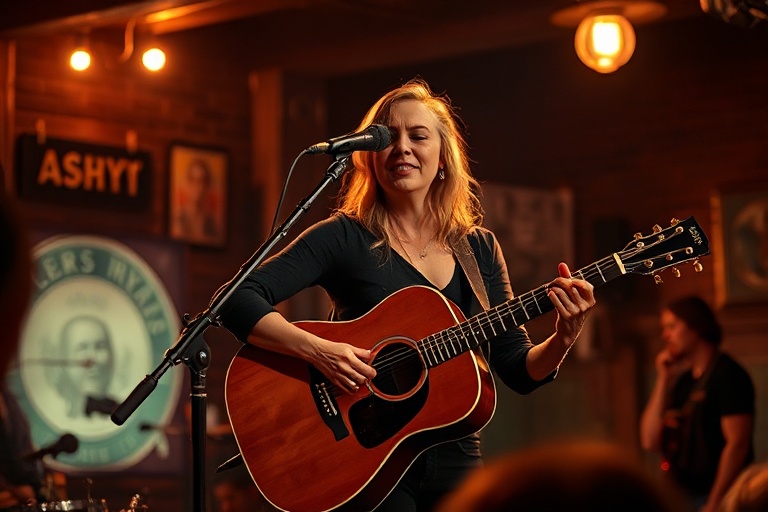
Ashley McBryde: How a Country Outsider Redefined Modern Music
Nashville’s music scene has long been a battleground between tradition and innovation. Few artists have navigated this divide as deftly—or as authentically—as Ashley McBryde. With a voice that carries the grit of classic country and the restless energy of modern alternative, McBryde has carved a space that feels both timeless and urgently of the moment.
Her rise from small-town Arkansas to critical acclaim and commercial recognition reflects more than personal achievement; it marks a shift in how country music absorbs and reflects broader cultural currents. McBryde doesn’t just sing about life’s hard edges—she sharpens them into art, making her one of the most compelling voices in contemporary music today.
The Breakthrough: From Arkansas to Nashville’s Spotlight
Born and raised in the Ozark Mountains of Arkansas, Ashley McBryde grew up in a musical family where classic country records filled the house. Her early exposure to artists like Patsy Cline, Loretta Lynn, and Merle Haggard shaped her vocal tone and storytelling instincts. But unlike many who follow a straight path to Nashville, McBryde took a detour into the punk and rock scenes of Fayetteville and Little Rock.
This detour proved pivotal. It was in dive bars and punk clubs where she learned to command a stage, to sing with raw intensity, and to write lyrics that cut to the bone. Her debut EP, A Little Dive Bar in Dahlonega, released in 2011, showcased her blend of honky-tonk grit and indie rock edge—a sound that didn’t fit neatly into any genre box.
By 2016, McBryde had moved to Nashville, where she played open mics and built a local following. Her breakthrough came in 2017 with the release of Girl Going Nowhere, an album that earned widespread praise for its unflinching honesty and masterful songwriting. The title track, a defiant anthem about resilience and self-reliance, became an instant favorite among listeners who craved authenticity over polished production.
Why Girl Going Nowhere Resonated
McBryde’s debut full-length wasn’t just another country album—it was a statement. On tracks like “A Little Dive Bar in Dahlonega” and “American Scandal,” she confronted small-town struggles, personal failure, and societal hypocrisy with a voice that was both weary and wry. Critics praised her ability to blend traditional country storytelling with a modern, feminist perspective.
It wasn’t just the lyrics that stood out; it was the delivery. McBryde’s voice—smoky, powerful, and laced with a hint of rasp—carried the weight of a woman who had lived and lost. She wasn’t performing heartbreak; she was recounting it, as if inviting the listener into a private confession.
Genre-Defying Artistry: Redefining What Country Can Be
McBryde’s music exists in a liminal space—neither fully country nor entirely alternative, but something entirely her own. This ambiguity has been both a strength and a challenge. While it has earned her a dedicated fanbase, it has also led some industry gatekeepers to struggle with how to categorize her.
Her second album, Interstate Gospel (2018), deepened this exploration. Produced by Jay Joyce, the album retained McBryde’s signature storytelling but layered in richer instrumentation, from pedal steel to electric guitars. Tracks like “The Jacket” and “Tired of Being Happy” showcased her ability to balance melancholy with wit, heartbreak with humor.
But it was in 2020, with the release of Never Will, that McBryde fully embraced a more polished, arena-ready sound—without sacrificing her authenticity. Songs like “Martha Divine” and “Hang in There, Girl” blended country instrumentation with rock energy, appealing to both traditional listeners and a younger, genre-fluid audience.
The Role of Authenticity in Modern Country
McBryde’s success speaks to a broader cultural shift within country music. As streaming platforms and social media democratize access to artists, audiences increasingly crave realness over polish. McBryde’s refusal to conform to Nashville’s expectations—whether it meant writing songs about hard living, challenging gender norms, or collaborating with artists outside the country sphere—has made her a symbol of artistic integrity.
Her 2023 album, The Devil I Know, further solidified this role. The record leaned into darker themes—addiction, betrayal, redemption—while maintaining McBryde’s sharp wit and melodic hooks. It wasn’t just an album; it was a manifesto on the cost of self-awareness.
Cultural Impact: More Than a Country Artist
While McBryde is often labeled a “country artist,” her influence extends far beyond the genre’s borders. She has toured with artists like Miranda Lambert and performed at major rock festivals. Her collaborations—such as her duet with Brandi Carlile on “Tears of Gold”—have introduced her to audiences who might never have tuned into a country station.
This cross-pollination reflects a larger trend: the erosion of genre silos in modern music. Artists like McBryde, Zach Bryan, and Kacey Musgraves are proving that authenticity matters more than labels. In an era where algorithms dictate discovery, her organic growth feels almost rebellious.
Key Aspects of Ashley McBryde’s Artistic Identity
- Unfiltered Storytelling: Her lyrics draw from personal experience, often exploring themes of struggle, resilience, and self-doubt without romanticism.
- Genre Fluidity: She blends country instrumentation with rock, folk, and even punk influences, creating a sound that refuses categorization.
- Vocal Distinctiveness: McBryde’s voice—a smoky, powerful alto with a touch of rasp—is instantly recognizable and emotionally evocative.
- Feminist Perspective: She challenges traditional gender roles in country music, writing from the viewpoint of women who are flawed, fierce, and fully human.
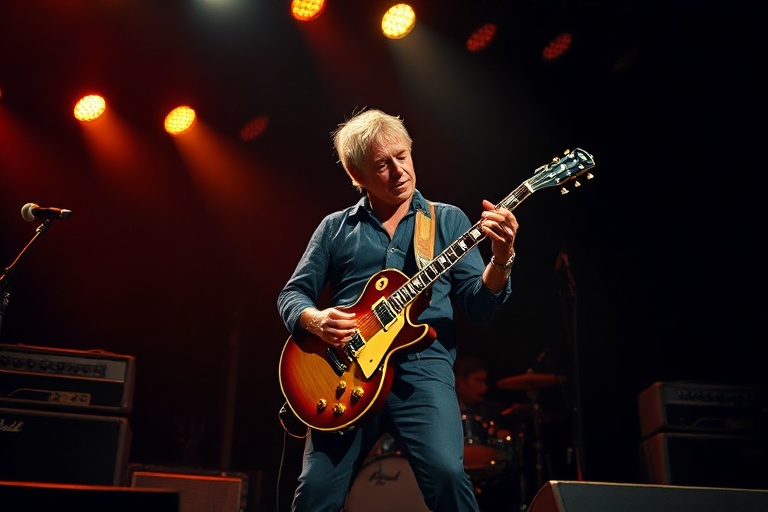
- Live Performance: Known for her electrifying stage presence, she commands attention with a mix of vulnerability and intensity.
The Future: What’s Next for Ashley McBryde
As McBryde continues to evolve, so too does her audience. With multiple Grammy nominations, a growing international following, and a reputation as one of the most original voices in music, her next steps will be closely watched.
Rumors of a new album have circulated, and fans speculate about collaborations with artists like Tyler Childers or even non-country acts like Phoebe Bridgers. Whatever she chooses, one thing is certain: McBryde will not be boxed in. She will continue to write her own rules, sing her own truths, and challenge anyone who tries to tell her how to sound.
In an industry often criticized for chasing trends, Ashley McBryde stands as a reminder of what happens when an artist trusts her instincts. She is not just a country star. She is a storyteller, a rebel, and a voice for a generation that refuses to be silenced.
Conclusion: The Enduring Power of Authentic Voice
Ashley McBryde’s journey from Arkansas dive bars to global stages is more than a success story—it’s a testament to the power of authenticity in an era of curated personas. In a music industry where image often overshadows substance, McBryde has built a career on the opposite principle: raw, unfiltered truth.
She represents a new kind of outlaw—not one who rides against the law, but one who refuses to be defined by it. Whether she’s singing about heartbreak, redemption, or the quiet dignity of survival, McBryde invites listeners into a world that feels real, messy, and utterly human.
As country music continues to evolve, artists like McBryde ensure it never loses its soul. And in a world that often feels fragmented, her music offers something rare: a voice that doesn’t just speak to an audience, but speaks for one.
For anyone seeking proof that great art doesn’t need a genre label, Ashley McBryde is living evidence.