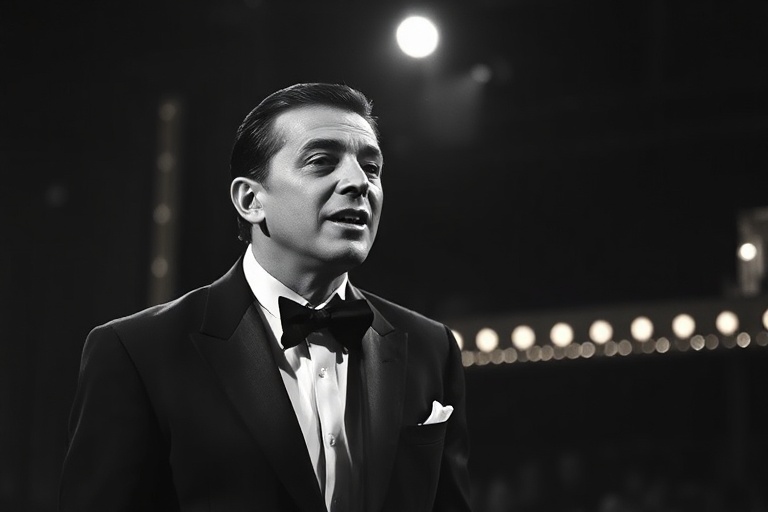
Frank Sinatra remains one of the most iconic figures in American music history, a man whose voice and charisma transcended generations. Born on December 12, 1915, in Hoboken, New Jersey, Sinatra rose from modest beginnings to become a global superstar whose influence extended far beyond the recording studio. His career spanned over six decades, during which he shaped the sound of popular music, redefined the role of the male vocalist, and left an indelible mark on American culture.
The Rise of a Legend
Sinatra’s early life was marked by struggle and perseverance. The only child of Italian immigrants, he grew up in a working-class neighborhood where music was both an escape and a calling. By the age of 13, he was singing in local clubs, and by his late teens, he was performing professionally. His big break came in 1939 when he joined the Harry James Orchestra, though it was his work with Tommy Dorsey’s band that truly launched his career. By 1942, Sinatra had begun his solo career, but his initial success was not immediate. It wasn’t until the mid-1940s, fueled by his swoon-worthy good looks and a legion of devoted fans—dubbed “bobby soxers”—that he became a household name.
His breakthrough album, Songs for Young Lovers (1954), showcased his technical mastery and emotional depth, proving he was more than just a heartthrob. Sinatra’s ability to convey vulnerability and strength in his performances set him apart from his peers. His phrasing, often described as “melodic storytelling,” gave new life to classic American songs, making them resonate with audiences in ways they never had before.
For those interested in the evolution of American music, our music category offers deeper insights into the artists who shaped the 20th century.
The Art of the Performer
Sinatra was not merely a singer; he was a performer who understood the power of presence. His live shows were legendary, blending impeccable musicianship with an effortless charm that made every performance feel intimate, even in the largest venues. He had a knack for connecting with audiences, often improvising lyrics or engaging in playful banter that kept crowds on the edge of their seats.
His collaboration with the Count Basie Orchestra in the 1960s produced some of his most celebrated live recordings, including Sinatra at the Sands (1966). These performances highlighted his ability to blend jazz, swing, and pop into a seamless, sophisticated sound. Sinatra’s band arrangements were meticulously crafted, with each instrument serving the song rather than overshadowing it. This approach influenced generations of musicians, from jazz legends like Tony Bennett to modern pop stars who prioritize musicality over spectacle.
Sinatra’s influence extended to the visual realm as well. His signature look—a tuxedo, a cigarette in hand, and a glass of whiskey nearby—became synonymous with cool sophistication. He understood that performance was as much about image as it was about sound, a lesson that continues to resonate in today’s music industry.
Beyond the Music: Sinatra’s Cultural Impact
Sinatra’s impact on American culture cannot be overstated. He was a trailblazer in breaking racial barriers in entertainment, famously insisting on integrated audiences and bands during an era of segregation. His support for civil rights activists, including his close friendship with Sammy Davis Jr., demonstrated his commitment to social justice long before it became a mainstream cause.
Sinatra’s political engagements were equally notable. A staunch Democrat in his early years, he later became a vocal supporter of Republican causes, particularly under the Nixon administration. His relationships with powerful figures, from presidents to mobsters, often blurred the lines between art and realpolitik. Though his ties to the latter have been the subject of much speculation, Sinatra himself dismissed the rumors, framing his connections as part of the era’s cultural landscape.
His influence also extended to film. Sinatra won an Academy Award for his role in From Here to Eternity (1953), proving his range as an actor. His performances in movies like The Man With the Golden Arm (1955) and Ocean’s Eleven (1960) showcased his versatility and charisma on the silver screen. For fans of classic Hollywood, our entertainment category features more on the icons who shaped the film industry.
The Legacy of Ol’ Blue Eyes
Sinatra’s career was not without its challenges. The 1970s and 1980s saw him facing personal struggles, including health issues and the loss of loved ones. Yet, he remained a vital force in music, releasing critically acclaimed albums like Ol’ Blue Eyes Is Back (1973) and continuing to perform well into his 70s. His final public performance came in 1995, just months before his death on May 14, 1998, at the age of 82.
Today, Sinatra’s legacy endures in countless ways. His recordings continue to sell millions of copies, and his songs have been covered by artists ranging from Ella Fitzgerald to Kanye West. His influence can be heard in the phrasing of modern crooners like Michael Bublé and Harry Connick Jr., who cite him as a primary inspiration. Even in the digital age, where music trends shift rapidly, Sinatra’s work remains a touchstone for authenticity and craftsmanship.
Sinatra’s life and career offer valuable lessons about perseverance, reinvention, and the power of art to transcend time. He was more than a singer; he was a cultural architect whose work helped define the American century. Whether through his music, his films, or his unapologetic persona, Sinatra left an imprint that few have matched.
For those looking to explore the intersection of music and culture further, our culture section offers a wealth of content on the artists and movements that have shaped our world.
Frank Sinatra’s voice may have faded, but his spirit lives on in every note sung with passion and every performance that dares to be more than just entertainment. He was, and remains, the ultimate entertainer—a man who turned music into magic and left the world a little richer for it.