astana
Nestled along the banks of the Ishim River in northern Kazakhstan, Astana stands as a testament to the country’s rapid transformation from Soviet republic to sovereign nation. Since Kazakhstan declared independence in 1991, Astana—now renamed Nur-Sultan in 2019 before reverting to Astana in 2022—has evolved into a gleaming metropolis that blends futuristic architecture with deep-rooted Central Asian traditions. This capital city represents more than just a political center; it embodies Kazakhstan’s ambition to carve out a distinct identity on the global stage while preserving its rich cultural heritage.
The Birth of a New Capital
The decision to move Kazakhstan’s capital from Almaty to a sparsely populated steppe location in 1997 was met with skepticism. President Nursultan Nazarbayev envisioned a city that would symbolize progress and break free from the constraints of the former capital, which was hemmed in by mountains and prone to earthquakes. Astana, meaning “capital” in Kazakh, was carefully planned as a modernist utopia—a blank canvas where futuristic skyscrapers, wide boulevards, and avant-garde structures could rise from the flat, open landscape.
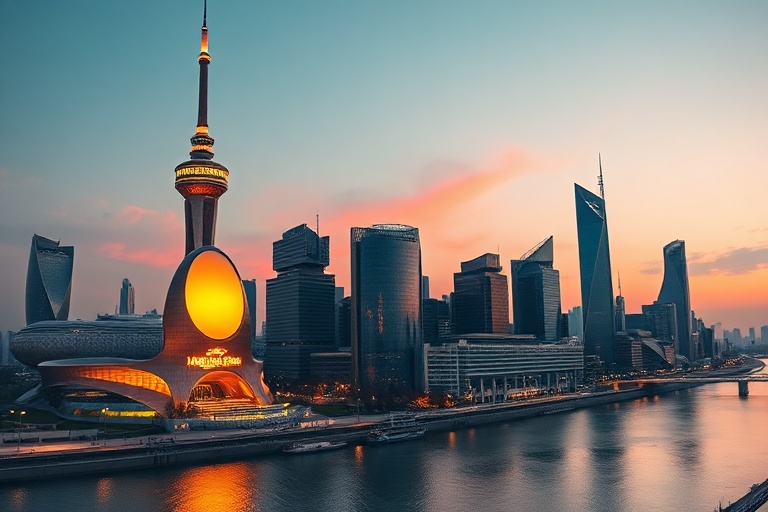
The city’s master plan was designed by Japanese architect Kisho Kurokawa, who envisioned a “city of the future” with a radial layout centered around the Baiterek Tower, a 105-meter-tall monument symbolizing the mythical tree of life. The government spared no expense in developing Astana, investing billions to transform it into a global hub for culture, business, and diplomacy. Today, the skyline is dominated by the Bayterek Tower, the Khan Shatyr Entertainment Center—a massive tent-like structure—and the futuristic Palace of Peace and Reconciliation, which houses a pyramid-shaped opera house and a museum dedicated to the world’s religions.
Architectural Marvels and Urban Planning
Astana’s skyline is a striking contrast of glass, steel, and geometric forms that challenge conventional urban design. The Travel section of Dave’s Locker often highlights Astana as a must-visit destination for architecture enthusiasts. Among its most iconic structures is the Khan Shatyr, designed by British architect Norman Foster. This 150-meter-high tent-shaped mall is not just a shopping center but a climate-controlled oasis where visitors can stroll through indoor parks, ride an amusement park, and even ski on real snow during winter.
The Nurzhol Bridge, another architectural gem, spans the Ishim River with a futuristic design resembling a giant bird in flight. Its sleek, white structure has become a symbol of Astana’s modernity. Meanwhile, the Khan Palace, a replica of the 19th-century residence of Kazakh khans, serves as a reminder of the country’s historical roots amid the modern surroundings.
- Bayterek Tower: A 105-meter observation tower with a golden egg at its peak, symbolizing growth and prosperity. Visitors can place their hands on a golden imprint of the President’s hand.
- Palace of Peace and Reconciliation: A pyramid-shaped building designed by Foster + Partners, hosting interfaith conferences and cultural events.
- EXPO 2017 Legacy: The site of the 2017 International Exposition, now repurposed as a technology and innovation hub with green energy initiatives.
- Ak Orda Presidential Palace: The official workplace of the President, with its golden dome and turquoise roof reflecting traditional Kazakh motifs.
A Cultural Crossroads
Beyond its architectural splendor, Astana serves as a cultural melting pot where Kazakh, Russian, and international influences converge. The city hosts a variety of festivals, including the annual Astana International Ballet and Contemporary Music Festival, which attracts artists from around the world. The National Museum of Kazakhstan, one of the largest in Central Asia, offers a deep dive into the country’s history, from ancient nomadic cultures to its Soviet past and post-independence achievements.
Theaters, concert halls, and art galleries dot the cityscape. The Astana Opera, located within the Palace of Peace and Reconciliation, has gained international acclaim for its productions. Meanwhile, the Khan Shatyr’s indoor beach and entertainment complex provides a stark contrast to the city’s more formal cultural institutions, reflecting Astana’s dual role as both a serious political capital and a vibrant urban playground.
Economic and Political Significance
Astana’s development has been closely tied to Kazakhstan’s economic ambitions. The city is home to the Astana International Financial Centre (AIFC), launched in 2018 to position Kazakhstan as a financial hub for Central Asia. With its own legal system based on English common law and tax incentives for businesses, the AIFC aims to attract foreign investment and foster innovation. The center has already seen significant growth, with over 1,000 companies registered within its first few years of operation.
Politically, Astana has played a crucial role in Kazakhstan’s diplomatic efforts. The city has hosted numerous high-profile summits, including the Organization for Security and Co-operation in Europe (OSCE) summit in 2010 and the Shanghai Cooperation Organization (SCO) summits. Astana’s neutral stance and modern infrastructure make it an ideal location for international negotiations, further solidifying its reputation as a bridge between East and West.
The city’s strategic location also makes it a key player in Kazakhstan’s trade and logistics networks. Situated at the crossroads of major transportation routes, Astana is connected by rail, road, and air to Europe, China, and the broader Eurasian region. The development of the Nurly Zhol (“Path to the Future”) infrastructure program has further enhanced Astana’s connectivity, with new highways, railways, and airports improving access to and from the capital.
Life in Astana: Challenges and Opportunities
Despite its rapid development, Astana is not without its challenges. The city’s extreme climate—with temperatures ranging from -40°C (-40°F) in winter to 35°C (95°F) in summer—poses unique difficulties for urban planning and daily life. Heating systems must work overtime during the harsh winters, while air conditioning is a necessity in the summer months. The government has invested in modern infrastructure to mitigate these challenges, including underground heating systems and energy-efficient buildings.
Another challenge is the city’s rapid expansion, which has led to concerns about urban sprawl and the preservation of green spaces. While Astana boasts wide boulevards and public parks, critics argue that the city’s growth has sometimes come at the expense of its natural surroundings. Efforts are underway to balance development with sustainability, including the creation of new parks and the promotion of eco-friendly initiatives.
The Human Side of Astana
For residents, Astana offers a unique blend of opportunities and lifestyle choices. The city attracts young professionals, entrepreneurs, and expatriates drawn to its economic potential and cosmopolitan atmosphere. International schools, Western-style supermarkets, and a thriving café culture cater to the needs of the expat community, while traditional Kazakh restaurants and markets provide a taste of local culture.
The city’s population has grown exponentially since the late 1990s, with estimates placing it at over 1.3 million people. This diversity is reflected in the city’s culinary scene, where Kazakh, Russian, Uzbek, and Korean cuisines coexist alongside international dining options. The Green Bazaar, a bustling market in the heart of the city, is a must-visit for anyone looking to experience the vibrant local culture.
Yet, despite its modernity, Astana retains a connection to its nomadic roots. The annual Nauryz festival, celebrated in March, marks the Persian New Year and is a time for traditional games, music, and feasts. The festival showcases Kazakh customs and hospitality, offering a glimpse into the country’s cultural heritage amidst the urban landscape.
Astana’s Future: A City on the Rise
As Astana continues to evolve, its leaders are focused on ensuring sustainable growth and enhancing the quality of life for its residents. The city’s development plan, Astana Vision 2050, outlines ambitious goals, including the expansion of public transportation, the creation of new residential areas, and the promotion of green technologies. The government is also investing in education and healthcare to support the city’s growing population.
One of the most exciting projects on the horizon is the development of the Expo City Astana, a new district built on the site of EXPO 2017. This area is slated to become a global center for technology, innovation, and sustainable development, with plans for smart city initiatives, research centers, and eco-friendly housing. The project reflects Astana’s commitment to positioning itself as a leader in the Fourth Industrial Revolution.
For visitors and residents alike, Astana remains a city of contrasts—a place where the past and future coexist in striking harmony. Its futuristic skyline and bustling streets tell the story of a nation that is determined to redefine itself on the world stage. Whether exploring its architectural marvels, immersing oneself in its cultural scene, or experiencing its dynamic urban life, Astana offers a journey unlike any other.
“Astana is not just a city; it is a statement—a testament to Kazakhstan’s resilience, ambition, and vision for the future.”
As the city continues to grow and adapt, it will undoubtedly remain a focal point for those seeking to understand Kazakhstan’s journey from a Soviet republic to a sovereign nation at the heart of Eurasia.
For more insights into global cities and cultural trends, explore the Travel and Culture sections of Dave’s Locker.