Astana: Kazakhstan’s Bold Vision for a Modern Capital
Nestled along the Ishim River in northern Kazakhstan, Astana has transformed from a modest provincial town into one of the world’s most ambitious urban projects. Since becoming the capital in 1997, the city has redefined itself through striking architecture, strategic economic policies, and a vision of modernity that blends Central Asian heritage with futuristic design. Its evolution reflects Kazakhstan’s broader ambitions on the global stage—balancing tradition with innovation while asserting its presence in international affairs.
The Rise of a Purpose-Built Capital
Astana’s rebirth as a capital was not accidental. After gaining independence from the Soviet Union in 1991, Kazakhstan needed a new center of governance that symbolized sovereignty and progress. President Nursultan Nazarbayev chose Akmola (as it was then called) for its central location and relatively low population density. Renamed Astana in 1998, and later Nur-Sultan in 2019 (before reverting to Astana in 2022), the city was designed to embody Kazakhstan’s aspirations.
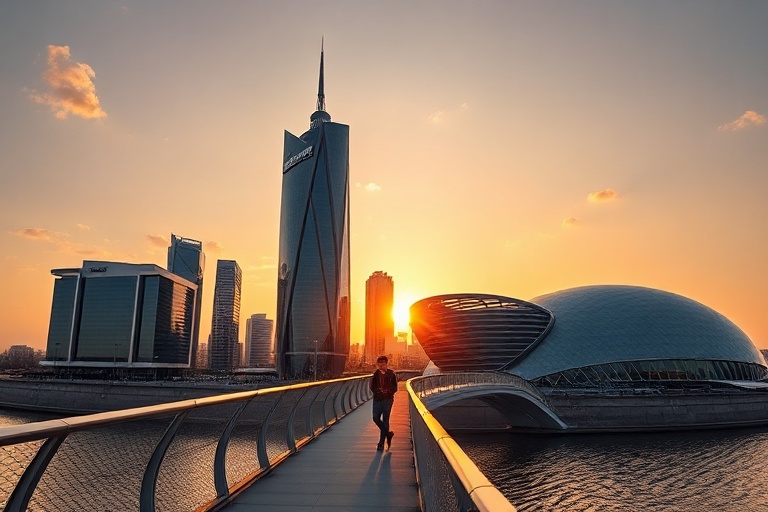
The master plan, overseen by architects and urban planners from around the world, prioritized wide boulevards, green spaces, and futuristic structures. Landmarks like the Bayterek Tower—with its golden egg symbolizing rebirth—and the Khan Shatyr Entertainment Center, designed to resemble a giant yurt, showcase this fusion of tradition and modernity. These elements were not merely aesthetic choices; they were strategic moves to attract investment, tourism, and global attention.
The city’s rapid development has drawn comparisons to other purpose-built capitals such as Brasília, Canberra, and Abu Dhabi. Yet Astana’s approach is uniquely Kazakh: it merges nomadic symbolism with Soviet-era infrastructure and 21st-century innovation. The result is a skyline that feels both familiar and alien, a visual testament to a nation carving its own path.
Key Milestones in Astana’s Transformation
- 1997: Astana officially becomes Kazakhstan’s capital, replacing Almaty.
- 1998: The city is renamed Astana (Kazakh for “capital”).
- 2006: The launch of EXPO 2017, a major international exhibition focused on future energy, solidifies Astana’s global profile.
- 2019: The city is temporarily renamed Nur-Sultan in honor of the former president.
- 2022: The name reverts to Astana following political reforms.
- 2023: Astana hosts the Astana International Forum, reinforcing its role as a diplomatic hub.
Astana as a Diplomatic and Economic Hub
Beyond its architectural marvels, Astana has positioned itself as a key player in regional and global diplomacy. The city hosts major international summits, including the Eurasian Economic Union meetings and the Congress of Leaders of World and Traditional Religions. Its neutral stance and multilingual workforce make it an ideal mediator in conflicts involving Russia, China, and the West—a role that has grown increasingly vital amid geopolitical tensions.
Economically, Astana serves as a magnet for foreign direct investment. The Astana International Financial Centre (AIFC), established in 2018, operates under English common law and offers tax incentives to international businesses. It has become a gateway for Kazakh companies seeking global markets, particularly in fintech, energy, and logistics. The AIFC’s Astana Finance Street, with its sleek skyscrapers and digital infrastructure, mirrors Dubai’s financial district, signaling Kazakhstan’s ambition to become a regional economic powerhouse.
The city’s economic strategy extends to special economic zones (SEZs) and industrial clusters. The Astana Technopark, for instance, supports startups in IT, biotechnology, and green energy. Meanwhile, the Nurly Zhol (“Path to the Future”) infrastructure program has improved transport links, connecting Astana to China via rail and to Europe via air cargo routes. These initiatives underscore a broader shift: Kazakhstan is no longer just an energy exporter but a hub for innovation and trade.
Cultural Identity and Urban Challenges
Despite its modern veneer, Astana grapples with questions of identity. The city’s population is a mosaic of ethnic Kazakhs, Russians, Koreans, and other groups, yet debates persist over what it means to be Kazakh in a city that often feels more cosmopolitan than traditional. Critics argue that the rapid development has come at the cost of social equity, with rising living costs pricing out long-time residents. The contrast between gleaming skyscrapers and Soviet-era apartment blocks in the outskirts highlights the uneven pace of progress.
Environmental concerns also loom large. Astana’s extreme climate—scorching summers and sub-zero winters—demands innovative urban solutions. The city has invested in green energy projects, such as solar farms and electric public transport, but air pollution and water scarcity remain pressing issues. Urban planners are now focusing on sustainable design, including vertical gardens and energy-efficient buildings, to mitigate these challenges.
Culturally, Astana is a stage for Kazakhstan’s soft power. The Kazakh language, once marginalized under Soviet rule, is now prominently displayed alongside Russian and English. The city’s museums, such as the National Museum of Kazakhstan, blend history with interactive exhibits to educate both locals and visitors. Meanwhile, events like the Astana Opera and the Eurasia Film Festival celebrate Kazakh artistry while attracting international audiences.
The Future of Astana: What Lies Ahead
Astana’s trajectory suggests it will continue to evolve as both a symbol and a driver of Kazakhstan’s ambitions. The government’s “Kazakhstan 2050” strategy envisions the country among the top 30 global economies by mid-century, with Astana as its flagship. Upcoming projects include expanding the metro system, developing smart city technologies, and further diversifying the economy beyond oil and gas.
Yet the city’s future is not without risks. Geopolitical tensions, climate change, and economic volatility could disrupt its growth. Astana’s leaders will need to balance ambition with inclusivity, ensuring that development benefits all citizens—not just the elite. The city’s ability to adapt will determine whether it remains a model of progress or becomes another cautionary tale of unsustainable urbanization.
One thing is clear: Astana has already rewritten the rules for what a capital city can be. By merging tradition with innovation, it offers a blueprint for nations seeking to assert their identity on the world stage. Whether this blueprint is sustainable remains to be seen—but for now, Astana stands as a testament to the power of vision.
For those interested in exploring more about Kazakhstan’s cultural and economic landscape, visit our Travel and Culture sections for deeper insights.