Astana: Kazakhstan’s Capital Bridging East and West
Nestled along the banks of the Ishim River in northern Kazakhstan, Astana has transformed from a modest provincial outpost into a gleaming symbol of modernity and ambition. Since becoming the capital in 1997—replacing Almaty—Astanahas evolved into a cosmopolitan hub, blending futuristic architecture, rich cultural diversity, and strategic geopolitical positioning. This city of nearly one million residents stands as a testament to Kazakhstan’s vision for the 21st century: a nation poised between Europe and Asia, tradition and innovation, energy and diplomacy.
The Rise of a Purpose-Built Capital
Astana’s rebirth as a capital was not accidental. In the late 1990s, then-President Nursultan Nazarbayev envisioned a new administrative center that would symbolize Kazakhstan’s sovereignty and forward-looking identity. The relocation from Almaty, a city nestled in the Tian Shan mountains, to the flat steppe of Akmola (later renamed Astana, and now Nur-Sultan from 2019 to 2022 before reverting) was a bold move. It signaled a break from the past and a commitment to building a future-oriented national identity.
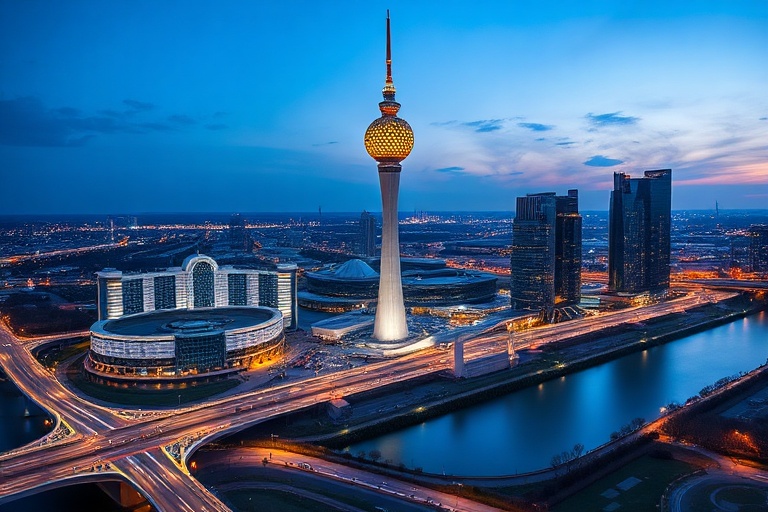
The city’s master plan, designed by Japanese architect Kisho Kurokawa, emphasized circular and triangular motifs—shapes believed to promote harmony and progress. Over the past quarter-century, Astana has become a showcase of contemporary urban design, featuring landmarks like the Bayterek Tower, with its golden sun atop a slender stem, and the Khan Shatyr Entertainment Center, a colossal tent-like structure designed by Norman Foster.
Astana’s growth reflects Kazakhstan’s broader economic strategy. The city has attracted billions in foreign investment, particularly in sectors like finance, technology, and renewable energy. Its strategic location along major trade corridors—part of China’s Belt and Road Initiative and connecting Europe to Central Asia—has made it a key node in regional connectivity.
A Multicultural Crossroads in the Heart of Eurasia
Astanais a living mosaic of cultures. The city is home to Kazakhs, Russians, Ukrainians, Uzbeks, Tatars, and many other ethnic groups, each contributing to its vibrant social fabric. This diversity is reflected in the urban landscape: from Russian Orthodox churches and mosques to synagogues and Buddhist temples, Astana embodies a spirit of interfaith tolerance and multicultural coexistence.
Kazakhstan’s official language is Kazakh, and Russian serves as a lingua franca, but English is increasingly common in business and education. The government has promoted trilingual education policies, and Astana’s universities attract students from across Central Asia and beyond. This linguistic openness supports the city’s role as a diplomatic and educational hub, hosting international conferences, including the Congress of Leaders of World and Traditional Religions, held periodically since 2003.
The culinary scene mirrors this diversity. Restaurants in Astana serve everything from beshbarmak (a traditional Kazakh noodle dish) and plov (a Central Asian rice dish) to sushi bars, Italian trattorias, and halal steakhouses. The city’s food markets, like the modern Khan Shatyr bazaar, offer a sensory journey through flavors from Turkey, Korea, China, and beyond.
Diplomacy, Energy, and the New Silk Road
Astana has positioned itself as a neutral ground for international dialogue. It hosted the Astana Process, a series of talks aimed at resolving the Syrian conflict, beginning in 2017. These negotiations brought together Turkey, Russia, Iran, and Syrian opposition groups, underscoring Astana’s growing role as a mediator in regional crises.
The city is also central to Kazakhstan’s energy strategy. As the world’s largest landlocked country and a major producer of oil, gas, and uranium, Kazakhstan uses Astana as a platform to negotiate energy deals with China, the European Union, and global corporations. The Kazakhstan Pavilion at Expo 2017, themed “Future Energy,” highlighted the nation’s commitment to sustainable development and green technology, positioning Astana as a leader in the energy transition.
Moreover, Astana is a key participant in the Belt and Road Initiative (BRI), China’s ambitious infrastructure project. The Khorgos Gateway, a dry port on the Kazakh-Chinese border, facilitates the flow of goods between Asia and Europe via rail—a journey that takes just 15 days, compared to 45 by sea. This corridor has turned Astana into a logistics nerve center, linking global supply chains across continents.
Key Aspects of Astana’s Global Role
- Geopolitical Hub: Hosts major international summits, including the Shanghai Cooperation Organization (SCO) and Organization for Security and Co-operation in Europe (OSCE).
- Economic Gateway: Strategically located on trade routes connecting China to Europe, with direct rail links and modern logistics infrastructure.
- Cultural Connector: Celebrates ethnic and religious diversity, hosting festivals like the Eurasia Film Festival and the Astana Ballet.
- Innovation Center: Focuses on green energy, smart city technologies, and digital governance, with projects like Nurly Zhol (Bright Path) economic policy.
- Diplomatic Mediator: Serves as a neutral venue for peace talks, particularly in the Astana Process for Syria.
Sustainability and the Future of Astana
Despite its rapid growth, Astana faces challenges. The city’s extreme climate—temperatures can drop to -40°C (-40°F) in winter and rise above 35°C (95°F) in summer—demands innovative solutions in urban planning and energy efficiency. The government has invested in green buildings, renewable energy projects, and public transport, including a modern metro system inaugurated in 2011.
Astana’s urban expansion has also raised concerns about sustainability and social equity. While the skyline dazzles with futuristic towers, affordable housing remains a pressing issue. The city continues to grapple with balancing its identity as a global showcase with the needs of its growing population.
Looking ahead, Astana is positioning itself as a smart city. Initiatives like digital ID systems, e-governance platforms, and smart traffic management aim to enhance livability and efficiency. The city’s bid to host major international events—such as Expo 2030—reflects its ambition to remain a visible player on the world stage.
As Kazakhstan strengthens its ties with both Eastern and Western blocs, Astana serves as both symbol and engine of this pivot. It is not just a capital, but a laboratory of 21st-century nation-building—where tradition and modernity coexist, where diplomacy and commerce intersect, and where the future of Eurasia is being written one skyscraper and trade deal at a time.
Conclusion
Astana stands as a reminder that a capital city can be more than a seat of government—it can be a vision. From its master-planned streets to its role in global peace talks, from its multicultural festivals to its energy corridors, Astana embodies Kazakhstan’s aspiration to be a bridge between worlds. In an era of division, this city offers a model of connectivity, ambition, and resilience. Whether through steel and glass architecture or through dialogue and trade, Astana is building a future where geography is not a barrier, but a bridge.
As the world grows more polarized, cities like Astana remind us that progress often lies at the crossroads—where cultures meet, where conflicts are mediated, and where the next chapter of global history is being drafted.
For those interested in the intersection of geopolitics and urban development, News and Analysis sections on Dave’s Locker offer deeper insights into how cities shape—and are shaped by—global trends.