Arsenal Kit Evolution: Tradition and Innovation in Football Uniforms
The Arsenal football club, founded in 1886, has long been associated with a distinctive red and white kit that reflects its identity as “The Gunners.” Over the decades, the club’s kits have evolved from simple wool jerseys to high-tech, sponsor-driven uniforms that blend heritage with innovation. Each season brings new designs, materials, and collaborations that tell a story of the club’s journey in English football.
Arsenal’s traditional home kit features a bold red body with white sleeves, a look that has remained largely consistent since the 1930s. This classic design pays homage to the club’s early years, when Herbert Chapman introduced the iconic white sleeves in 1933 to distinguish Arsenal’s players from their opponents. The change was subtle yet impactful, creating a visual identity that fans instantly recognize worldwide.
The Historical Significance of Arsenal’s Kit Colors
Arsenal’s red and white colors are deeply rooted in the club’s history and philosophy. The red is said to symbolize the fiery spirit of the players, while the white sleeves represent purity and focus. This combination has become synonymous with the club’s playing style, which often emphasizes attacking football and technical prowess.
Interestingly, Arsenal’s original kit in 1886 featured a dark red, almost maroon, color. It wasn’t until the early 20th century that the club transitioned to the brighter red we know today. The shift coincided with the club’s rise in the English football league, as Arsenal sought to establish itself as a dominant force. The white sleeves were added later, inspired by Chapman’s innovative approach to team branding.
For fans, the kit represents more than just clothing—it embodies the club’s values and traditions. Wearing the Arsenal shirt is a way to connect with the team’s past while supporting its future. This emotional connection is why the club’s kits are often seen as a symbol of loyalty and pride.
Modern Innovations in Arsenal’s Kit Design
In recent years, Arsenal’s kits have embraced cutting-edge technology and contemporary aesthetics. The club’s partnership with Adidas, which began in 2019, has led to kits that prioritize performance, comfort, and style. The 2023-24 home kit, for example, features a lightweight, breathable fabric that enhances player movement while maintaining the classic red and white color scheme.
The away kits have also seen significant evolution. The 2022-23 away kit, designed in collaboration with Adidas, introduced a futuristic black and gold design that paid tribute to Arsenal’s 1971 Double-winning season. This bold choice reflected the club’s willingness to experiment with its visual identity while honoring its history. The away kit for the 2023-24 season featured a striking blue and black pattern, inspired by the architecture of the Emirates Stadium.
Sustainability has also become a key focus in Arsenal’s modern kit design. The club has committed to using recycled materials in its kits, reducing waste and environmental impact. For instance, the 2023-24 third kit incorporates 100% recycled polyester, aligning with Arsenal’s broader sustainability goals. This shift reflects a growing trend in sportswear, where clubs are adopting eco-friendly practices without compromising on performance.
Key Features of Arsenal’s Modern Kits
- Performance Fabrics: Lightweight, moisture-wicking materials that enhance player comfort and mobility.
- Heritage Touches: Subtle nods to the club’s history, such as retro-inspired designs or vintage color schemes.
- Sustainability: Use of recycled materials and eco-friendly manufacturing processes.
- Fan Engagement: Limited-edition and retro-inspired kits that resonate with supporters.
The Role of Sponsorships in Arsenal’s Kit Evolution
Sponsorships have played a crucial role in shaping Arsenal’s kits since the late 1980s. The club’s first shirt sponsor was JVC, which appeared on the kit from 1982 to 1999. This partnership marked the beginning of a new era for Arsenal, as commercial deals became a vital revenue stream for the club. Over the years, Arsenal has had several notable sponsors, including Sega, O2, and, most recently, Emirates.
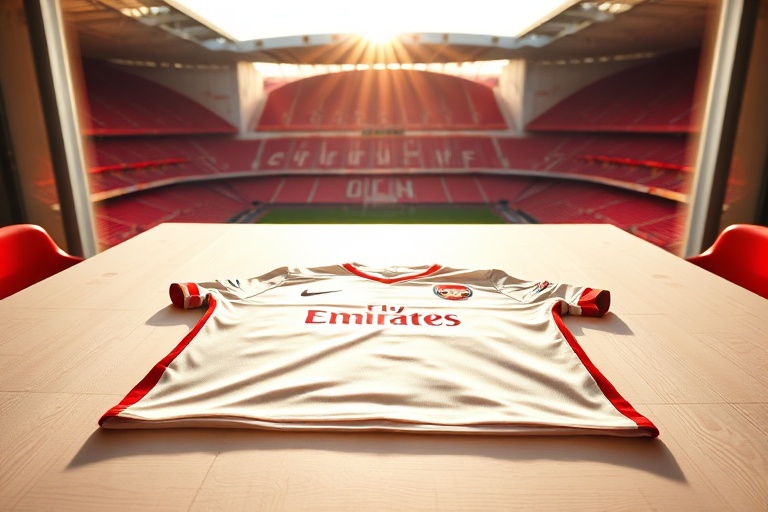
The Emirates sponsorship, which began in 2006, is one of the longest-running and most lucrative partnerships in English football. The deal not only provides financial support but also reinforces Arsenal’s global brand. The Emirates logo, prominently displayed on the chest of the kit, has become a familiar sight for fans worldwide.
Sponsorships have also influenced the design of Arsenal’s kits. Clubs often work closely with sponsors to ensure that the kit’s aesthetic aligns with both the sponsor’s branding and the club’s identity. For example, the O2 sponsorship in the mid-2000s coincided with a period of transition for Arsenal, as the club moved to the Emirates Stadium. The kits from this era reflected a blend of modernity and tradition, mirroring the club’s evolution.
Fan Reactions and the Culture of Collecting
Arsenal’s kits are more than just uniforms—they are collector’s items that hold sentimental value for fans. The club’s official store, both online and at the Emirates Stadium, sees high demand for new releases, especially during the summer months. Limited-edition kits, such as the retro-inspired designs or special anniversary editions, often sell out quickly, driving up demand in the secondary market.
Fan reactions to new kits can be polarizing. While some supporters embrace bold, modern designs, others prefer kits that closely resemble the traditional red and white. For example, the 2021-22 home kit, which featured a gradient red pattern, received mixed reviews from fans. Some praised its innovative design, while others felt it strayed too far from the classic look. This diversity of opinion highlights the emotional connection fans have with the club’s kits.
The culture of collecting Arsenal kits has grown significantly in recent years, thanks to the rise of online marketplaces and fan communities. Websites like Dave’s Locker offer a platform for fans to buy, sell, and trade kits, making it easier to find rare or vintage pieces. Collectors often seek out kits from specific eras, such as the 1970s or 1990s, which are now considered prized possessions.
Looking Ahead: The Future of Arsenal’s Kits
As Arsenal continues to evolve, so too will its kits. The club’s partnership with Adidas is set to run until at least 2025, promising more innovative designs and high-performance fabrics in the coming years. Fans can expect to see further integration of technology, such as smart fabrics that monitor player performance, as well as a continued focus on sustainability.
One potential direction for Arsenal’s kits is a greater emphasis on retro designs. The club has shown a willingness to revisit its past, as seen with the 2022-23 away kit inspired by the 1971 Double-winning season. This trend could continue, with fans eagerly anticipating kits that pay homage to iconic moments in Arsenal’s history.
Another area to watch is the global appeal of Arsenal’s kits. The club has a massive international fanbase, and its kits are often seen as a way to connect with supporters worldwide. Future designs may incorporate cultural influences or collaborations with global artists to create truly unique pieces.
Whatever the future holds, one thing is certain: Arsenal’s kits will continue to reflect the club’s identity, values, and ambitions. For fans, wearing the shirt is a way to be part of the club’s story, whether they’re watching a match at the Emirates Stadium or cheering from thousands of miles away.
The Arsenal kit is more than just clothing—it’s a symbol of tradition, innovation, and passion. As the club moves forward, its kits will remain a powerful representation of what it means to be a Gunner.