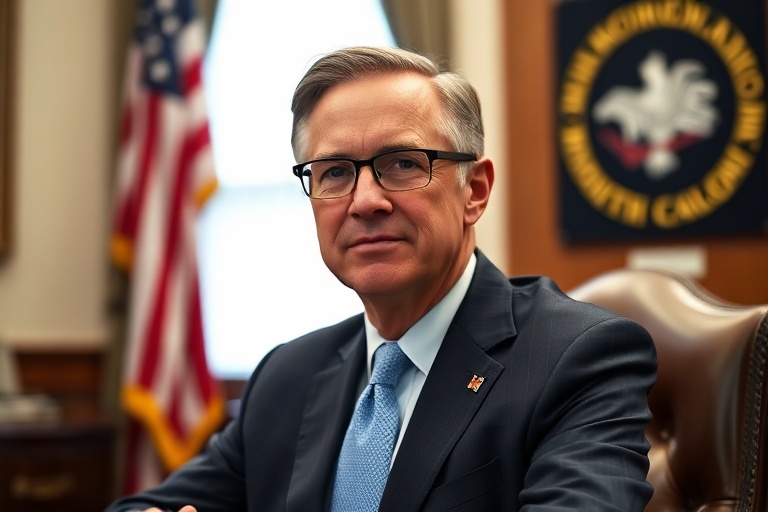
South Carolina’s political landscape has been shaped by leaders who balance tradition with adaptation. Among them, Governor Henry McMaster stands out as a figure who has navigated the state through significant transitions while maintaining a distinct approach to governance. His career spans decades of public service, from the halls of the U.S. Attorney’s office to the governor’s mansion in Columbia. Now in his second term, McMaster’s tenure reflects both the continuity of conservative leadership and the challenges of addressing modern crises.
Early Career and Rise to Prominence
Henry McMaster’s political journey began long before he took office as governor. Born in 1947 in Columbia, he graduated from the University of South Carolina and later earned his law degree from the University of South Carolina School of Law. His early career included roles as a prosecutor, where he gained recognition for his work in high-profile cases, including the investigation of the Carolina Coach Company bombing in 1969.
McMaster’s entry into politics came in 1981 when he was appointed U.S. Attorney for South Carolina by President Ronald Reagan. During his tenure, he focused on combating public corruption and drug trafficking, earning bipartisan respect. His work in this role laid the groundwork for his future political ambitions, demonstrating a commitment to law and order that would become a hallmark of his career.
In 1993, McMaster was elected to the South Carolina House of Representatives, where he served until 2003. His legislative record reflected his conservative principles, with a focus on limited government and fiscal responsibility. However, it was his role as Lieutenant Governor, a position he held from 2015 to 2017, that solidified his standing within the state’s Republican Party.
Governorship: Policy and Political Challenges
McMaster ascended to the governorship in January 2017 following the resignation of Nikki Haley, who was appointed as U.S. Ambassador to the United Nations. Initially serving out the remainder of Haley’s term, he won a full term in 2018 and again in 2022, each time reinforcing his base while appealing to a broad cross-section of South Carolina voters. His leadership style has often emphasized economic growth, infrastructure development, and a cautious approach to social issues.
One of McMaster’s most significant challenges during his tenure has been the COVID-19 pandemic. South Carolina, like many states, faced difficult decisions regarding public health measures, economic shutdowns, and vaccine distribution. McMaster’s response was characterized by a gradual, data-driven approach, balancing public health concerns with the need to reopen businesses and schools. This strategy drew both praise and criticism, reflecting the broader national debate over pandemic management.
Economically, McMaster has prioritized attracting new businesses to South Carolina, touting the state’s low taxes, skilled workforce, and business-friendly environment. His administration has played a key role in landing major investments, such as the expansion of Boeing’s operations in North Charleston and the arrival of new manufacturing plants. These efforts have contributed to South Carolina’s reputation as a hub for advanced industries, particularly in aerospace and automotive manufacturing.
Key Policy Areas Under McMaster’s Leadership
- Economic Development: McMaster has focused on luring businesses to South Carolina through tax incentives and infrastructure improvements. His administration has worked to streamline regulations, making it easier for companies to operate in the state.
- Education Reform: While not a central theme of his agenda, McMaster has supported efforts to expand vocational training and workforce development programs, aligning education with the needs of local industries.
- Criminal Justice: Building on his background as a prosecutor, McMaster has emphasized law enforcement funding and support for victims of crime, while also advocating for reforms in bail and sentencing laws.
- Environmental Stewardship: South Carolina’s coastal economy relies heavily on environmental conservation. McMaster has balanced industrial growth with protections for the state’s natural resources, particularly in the face of climate-related challenges.
Broader Implications for South Carolina and Beyond
McMaster’s tenure as governor offers a case study in how conservative leadership can adapt to changing circumstances without abandoning core principles. His approach to governance—pragmatic yet principled—has allowed him to maintain popularity in a state that has trended increasingly Republican at the federal level while remaining competitive in local elections.
For South Carolina, McMaster’s leadership has underscored the importance of economic diversification. The state’s reliance on traditional industries like agriculture and textiles has given way to a more diversified economy, with strengths in manufacturing, aerospace, and technology. This shift has not only created jobs but also positioned South Carolina as a player in the national conversation about industrial policy.
Nationally, McMaster’s career reflects the evolution of the Republican Party in the South. Once dominated by figures who emphasized social issues, the party has increasingly focused on economic growth and limited government. McMaster’s ability to navigate this transition while maintaining his base suggests a model for future Republican leaders in the region.
Looking Ahead: The Future of McMaster’s Legacy
As Henry McMaster approaches the latter stages of his political career, the question of his legacy looms large. Will he be remembered primarily as a steady hand during turbulent times, or will his policies have a lasting impact on South Carolina’s economic and political trajectory? The answers may depend on how the state evolves in the coming years.
One thing is clear: McMaster’s leadership has been defined by a commitment to stability in an era of rapid change. Whether through his handling of the pandemic, his economic development strategies, or his approach to law enforcement, he has consistently prioritized practical solutions over ideological purity. This pragmatism may well be his most enduring contribution to South Carolina’s political landscape.
For voters and political observers, McMaster’s tenure offers valuable lessons about the balance between tradition and progress. His ability to adapt while staying true to his conservative roots provides a blueprint for leaders facing similar challenges elsewhere. As South Carolina continues to grow and change, the principles he has championed will likely remain influential for years to come.
To explore more about South Carolina’s political landscape, visit our Politics and Economy category pages for deeper analysis and insights.