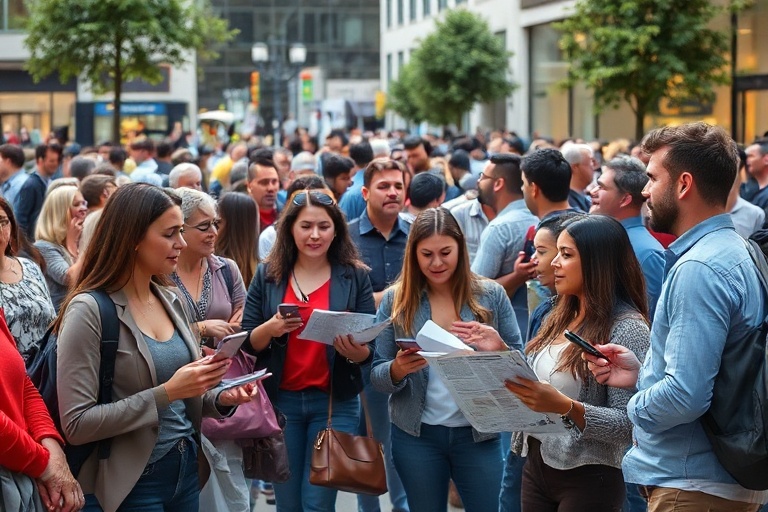
The idea of a “national conversation” has become more than just political rhetoric. In an increasingly polarized world, these shared dialogues represent both a challenge and an opportunity. They reflect the collective consciousness of a country while also highlighting its deepest divisions. Understanding how these conversations emerge, evolve, and impact society requires examining their mechanisms, influences, and consequences.
The Evolution of Public Discourse
Public discourse has transformed dramatically over the past century. Early 20th-century national conversations were largely confined to newspapers, radio broadcasts, and face-to-face debates. Today, social media platforms have democratized participation while simultaneously fragmenting the conversation into countless echo chambers. The speed at which ideas spread has accelerated, but the depth of engagement has often suffered as a result.
The shift from traditional media to digital platforms has introduced new dynamics. Algorithms prioritize engagement over substance, often amplifying polarizing voices while suppressing nuanced perspectives. This has led to what some scholars call “outrage discourse,” where public debates become more about performative outrage than meaningful exchange. Yet, these platforms have also given marginalized voices unprecedented access to the national conversation, challenging long-held power structures.
Key Factors Shaping Modern Dialogues
- Technology: Social media algorithms, viral trends, and digital activism have redefined how conversations begin and spread.
- Polarization: Political and cultural divides have made consensus increasingly difficult to achieve.
- Media Fragmentation: The decline of traditional gatekeepers has led to a splintering of public attention across multiple platforms.
- Identity Politics: Discussions around race, gender, and sexuality have become central to national conversations, often sparking both progress and backlash.
The Role of Institutions in Shaping Conversations
While social media dominates much of today’s discourse, institutions still play a crucial role in shaping national conversations. Government bodies, educational systems, religious organizations, and cultural institutions all contribute to the narratives that define public debate. Their influence can be seen in how historical events are remembered, how current issues are framed, and what future directions are proposed.
Take, for example, the way monuments and memorials have become flashpoints in national conversations about history and identity. Debates over Confederate statues or colonial-era figures reveal how institutions can either reinforce existing power structures or become sites of resistance and reinterpretation. Similarly, the curriculum in public schools often determines which historical narratives become dominant in the national consciousness.
Corporations have also entered this space, with brands increasingly taking public stances on social and political issues. This phenomenon, sometimes called “woke capitalism,” blurs the line between commerce and activism. While some consumers appreciate these stands, others view them as opportunistic or performative. The result is a complex landscape where economic interests intersect with moral and political considerations.
The Psychological Dimensions of Collective Dialogue
Understanding national conversations requires examining not just what is being said, but why people engage with these discussions in the first place. Psychological factors play a significant role in determining how individuals participate in and respond to public dialogues. The need for social validation, the fear of social exclusion, and the desire for cognitive consistency all influence how people engage with contentious issues.
Research in social psychology has shown that people are more likely to share content that aligns with their existing beliefs, a phenomenon known as “confirmation bias.” This tendency reinforces echo chambers and makes bridging ideological divides particularly challenging. The emotional tone of national conversations often reflects this polarization, with discussions devolving into name-calling and tribalistic thinking rather than substantive debate.
Moreover, the anonymity provided by digital platforms can lead to disinhibition, where people feel free to express opinions they would never voice in face-to-face interactions. This has both positive and negative consequences. On one hand, it has allowed whistleblowers and victims of injustice to share their stories safely. On the other, it has enabled harassment, misinformation, and the spread of harmful ideologies.
Moving Forward: The Future of National Dialogues
The future of national conversations will likely be shaped by several emerging trends. Artificial intelligence, for instance, is already being used to moderate content and identify misinformation, but it also has the potential to deepen divides by creating hyper-personalized information ecosystems. The rise of deepfake technology further complicates the landscape, making it increasingly difficult to distinguish fact from fiction in public debates.
Yet, there are reasons for optimism. Grassroots movements continue to demonstrate the power of collective action to shift national narratives. Initiatives that prioritize media literacy and critical thinking can help individuals navigate the complex information landscape more effectively. And as younger generations, who are more diverse and digitally native, enter positions of influence, they may reshape the tone and substance of public discourse.
Ultimately, the health of a democracy depends on its ability to foster meaningful, respectful dialogue across differences. This requires not just technological solutions, but a commitment to civic education, institutional transparency, and a shared belief in the value of constructive engagement. The national conversation is not a monologue, but a polyphony—and learning to listen across the divides may be our greatest challenge and opportunity.
For further reading on related topics, explore our Trending and Analysis categories.
© 2023 Dave’s Locker. All rights reserved.