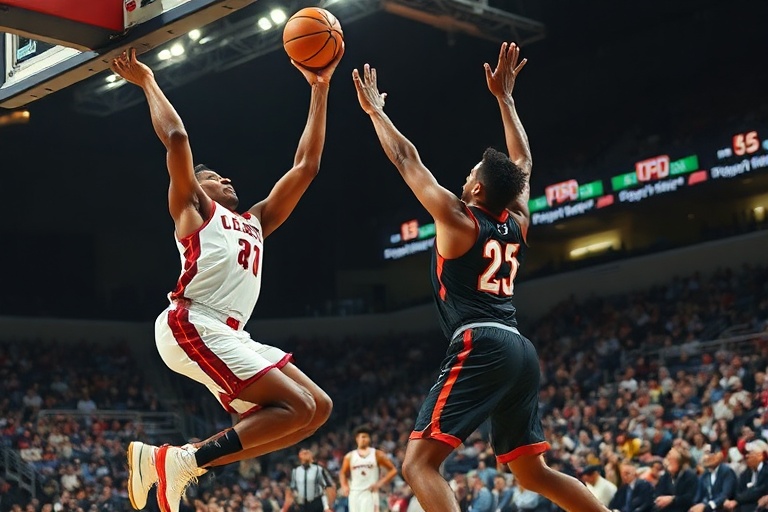
Basketball is a sport defined by its players. From the flashy dunks of the NBA to the gritty, hardwood battles of local leagues, the athletes themselves shape the game’s identity. Their skills, sacrifices, and stories create the drama that keeps fans coming back every season. Whether dominating the paint, orchestrating plays from the perimeter, or locking down opponents on defense, basketball players are the driving force behind every thrilling moment.
But what makes a great basketball player? Is it raw athleticism, relentless work ethic, or an unshakable mental game? The answer varies, but one thing is certain: the best players leave a lasting legacy. They redefine what’s possible on the court and inspire generations to push their limits. Let’s explore the different facets of basketball players—their roles, their evolution, and the impact they have beyond the game.
The Evolution of Basketball Players: From Streetball to Superstars
The game of basketball has undergone dramatic changes since its invention in 1891. Early players were more focused on fundamentals than flair, but as the sport grew, so did the demands on its athletes. In the 1950s and 60s, players like Bill Russell and Wilt Chamberlain redefined dominance with their size and tenacity. The 1980s brought a new era of showmanship, with Magic Johnson and Larry Bird popularizing the fast break and the three-point shot.
Today’s game is faster, more athletic, and more global than ever before. Players like Stephen Curry and Luka Dončić have expanded the boundaries of what’s possible, blending skill with innovation. The rise of international talent, from Dirk Nowitzki to Giannis Antetokounmpo, has also reshaped the league’s landscape. Basketball players are no longer just athletes; they’re global icons and cultural influencers.
Key Milestones in Player Evolution
- 1930s-40s: Introduction of the jump shot and the first African American players breaking racial barriers.
- 1980s: The Showtime Lakers and the Bird-Magic rivalry brought style and charisma to the forefront.
- 2000s: The rise of the “positionless” player, with guards like Allen Iverson and Kevin Durant changing traditional roles.
- 2020s: The three-point revolution and the emphasis on versatility and analytics-driven play.
Roles on the Court: Understanding Player Positions and Responsibilities
Basketball players are often categorized by their positions, each with distinct responsibilities. The traditional roles—point guard, shooting guard, small forward, power forward, and center—have evolved, but they still provide a framework for understanding the game. The point guard, often called the “floor general,” is the coach on the floor, directing the offense and controlling the tempo. Players like Chris Paul and Nikola Jokić have redefined this role, blending playmaking with scoring.
The shooting guard is typically the team’s best scorer, tasked with hitting perimeter shots and creating their own offense. Michael Jordan and Kobe Bryant set the standard for this position, while modern players like Devin Booker and Donovan Mitchell continue to push its boundaries. Small forwards are often the most versatile, contributing in scoring, rebounding, and defense. LeBron James and Kawhi Leonard exemplify this hybrid role.
Power forwards and centers used to be synonymous with physical dominance, but today’s game demands more versatility. Players like Anthony Davis and Joel Embiid operate as stretch bigs, capable of shooting from beyond the arc while still dominating the paint. The center position has also evolved, with players like Rudy Gobert focusing on rim protection and rebounding rather than traditional post moves.
Positional Breakdown: What Defines Each Role
- Point Guard: Playmaking, ball-handling, and court vision. Must be able to run the offense and distribute the ball effectively.
- Shooting Guard: Primary scorer from the perimeter. Must have a reliable jump shot and the ability to create their own offense.
- Small Forward: The Swiss Army knife of the team. Excels in scoring, rebounding, and defense, often guarding multiple positions.
- Power Forward: A hybrid between a forward and a center. Must be able to score in the post, shoot from mid-range, and defend multiple positions.
- Center: Traditionally the tallest player, responsible for rebounding, shot-blocking, and scoring in the paint. Modern centers often stretch the floor with three-point shooting.
The Mental Game: What Separates Good Players from Great Ones
While physical skills are essential, basketball is as much a mental game as it is a physical one. Great players possess an unshakable confidence, a relentless work ethic, and the ability to perform under pressure. Players like Tim Duncan and Kobe Bryant were known for their mental toughness, often outworking opponents in practice and maintaining focus in high-stakes moments.
The mental aspect of the game also includes basketball IQ—the ability to read defenses, anticipate plays, and make split-second decisions. Players like Chris Paul and Jokić are celebrated for their court vision and understanding of the game’s flow. Meanwhile, defensive players like Kawhi Leonard and Marcus Smart rely on anticipation and positioning rather than sheer athleticism.
Off the court, mental resilience is just as important. The grind of an NBA season, with its travel, media scrutiny, and constant competition, can take a toll. Players who manage their mental health and maintain a balanced lifestyle often have longer, more successful careers. The rise of sports psychologists and mental health resources in recent years reflects a growing recognition of the importance of the mind in sports.
Beyond the Court: The Impact of Basketball Players
Basketball players wield influence far beyond the hardwood. They are role models, activists, and entrepreneurs, using their platforms to drive change and inspire others. LeBron James, for example, has become a vocal advocate for social justice, using his wealth and influence to support education and community programs through initiatives like the I PROMISE School.
Players also shape culture through their personal brands. Michael Jordan’s Air Jordan sneakers became a global phenomenon, transcending sports to become a fashion staple. Today, players like Stephen Curry and Giannis Antetokounmpo have their own signature lines, further blurring the lines between athlete and entrepreneur. Social media has amplified their reach, allowing them to connect directly with fans and build personal brands that extend far beyond their playing careers.
The impact of basketball players is also felt in grassroots communities. Many athletes invest in youth programs, basketball camps, and local initiatives to give back to the communities that shaped them. Programs like the NBA Cares and the Jr. NBA initiative provide resources and opportunities for young players, ensuring the sport’s growth and accessibility.
Basketball players are more than just athletes; they are cultural icons, community leaders, and global ambassadors for the game. Their influence extends from the court to the boardroom, from the classroom to the streets, making them some of the most impactful figures in sports today.
Conclusion: The Future of Basketball Players
The game of basketball continues to evolve, and so too will the players who define it. With advances in training, technology, and analytics, the next generation of athletes will push the boundaries of what’s possible on the court. The rise of international talent, the increasing emphasis on versatility, and the growing importance of mental health all point to an exciting future for the sport.
One thing is certain: basketball players will remain at the heart of the game. Their skill, passion, and dedication ensure that the sport will continue to captivate audiences around the world. As the game changes, so too will the players, but their role as the backbone of basketball will never fade.
For those looking to stay updated on the latest trends and stories in basketball, Dave’s Locker Sports offers in-depth coverage and analysis of the game’s biggest moments.