<!DOCTYPE html>
<html lang="en">
<head>
    <meta charset="UTF-8">
    <meta name="viewport" content="width=device-width, initial-scale=1.0">
    <title>Star Wars: The Rise of Skywalker - A Global Look at the Saga's Finale</title>
</head>
<body>
    <article>
        <h1>Star Wars: The Rise of Skywalker – A Global Look at the Saga’s Finale</h1>

        <p>When <em>Star Wars: The Rise of Skywalker</em> premiered in December 2019, it didn’t just mark the end of a trilogy—it concluded a cinematic odyssey that had spanned more than four decades. The film’s release was met with a mix of anticipation and skepticism, as audiences and critics alike wondered how the final chapter of the Skywalker saga would honor its legacy while pushing the franchise into uncharted territory. From its production challenges to its cultural impact, <em>The Rise of Skywalker</em> offers a fascinating case study in how blockbuster filmmaking intersects with global expectations.</p>

        <p>The film’s journey began long before its theatrical debut. After the divisive reception of <em>The Last Jedi</em> in 2017, expectations for the concluding chapter were sky-high—and, for many, fraught with uncertainty. Director J.J. Abrams returned to the helm, tasked with weaving together three trilogies while delivering a satisfying conclusion to Rey’s story. The result is a film that embraces nostalgia while attempting to innovate, a balance that resonates differently across global audiences.</p>

        <h2>A Global Phenomenon: How Star Wars Connects Cultures</h2>

        <p><em>Star Wars</em> has always been more than just a film franchise; it’s a cultural touchstone that transcends borders. In Japan, where samurai films heavily influence the series, <em>The Rise of Skywalker</em> was embraced as a modern myth, blending Western and Eastern storytelling traditions. Meanwhile, in Europe, fans dissected the film’s political undertones, drawing parallels between the First Order’s rise and real-world authoritarian movements. The franchise’s ability to adapt to local sensibilities while maintaining a universal core has been key to its longevity.</p>

        <p>The film’s global appeal is evident in its box office performance. While domestic markets contributed significantly to its $1.077 billion worldwide gross, international markets—particularly China, Germany, and the UK—played an equally vital role. In China, where <em>Star Wars</em> had struggled to gain traction in previous years, <em>The Rise of Skywalker</em> performed surprisingly well, thanks in part to aggressive marketing campaigns and a renewed interest in sci-fi blockbusters.</p>

        <p>This global resonance isn’t accidental. Lucasfilm has long prioritized international marketing strategies, tailoring trailers and promotional content to highlight elements that resonate with local audiences. For example, in Latin America, the film’s themes of rebellion and hope were emphasized, aligning with the region’s history of political upheaval. Such strategies ensure that <em>Star Wars</em> remains a unifying force in an increasingly fragmented world.</p>

        <h2>The Production Behind the Magic: Challenges and Innovations</h2>

        <p>The making of <em>The Rise of Skywalker</em> was far from smooth. Reports of script revisions, reshoots, and behind-the-scenes tensions surfaced long before the film’s release. Abrams himself admitted that the tight production schedule—just over a year between <em>The Last Jedi</em> and the final film—created significant pressure. Yet, these challenges also led to unexpected innovations. The film’s climactic battle on the ruins of the Death Star, for instance, was shot using a mix of practical effects and CGI, a nod to the original trilogy’s techniques while embracing modern technology.</p>

        <p>One of the most talked-about aspects of the film was its use of digital de-aging technology to bring back actors like Ian McDiarmid (Palpatine) and Carrie Fisher (Leia Organa) posthumously. While the results were met with mixed reactions, they underscored the franchise’s willingness to push boundaries—even when it risks alienating purists. This experimentation reflects a broader trend in Hollywood, where legacy characters are being revived in increasingly creative (and sometimes controversial) ways.</p>

        <p>The film’s soundtrack, composed by John Williams, also played a crucial role in its reception. Williams, who has scored every <em>Star Wars</em> film, returned to craft a score that blends familiar themes with new motifs. The result is a soundtrack that feels both nostalgic and fresh, a fitting accompaniment to the film’s emotional highs and lows. Williams’ work on <em>The Rise of Skywalker</em> earned him another Oscar nomination, proving that even after decades, his music remains a cornerstone of the franchise’s identity.</p>

        <h3>Key Moments in The Rise of Skywalker</h3>

        <ul>
            <li><strong>Rey’s Identity Crisis:</strong> The film’s central conflict revolves around Rey’s struggle to define herself beyond her lineage. Her journey culminates in a powerful moment where she rejects the Skywalker name, choosing instead to forge her own path. This choice resonated with audiences who had debated Rey’s parentage for years.</li>
            <li><strong>The Return of Palpatine:</strong> The revelation of Emperor Palpatine’s survival sent shockwaves through the fandom. While some praised the bold storytelling, others criticized it as a retcon that undermined <em>The Last Jedi</em>. Regardless, it sparked renewed interest in the prequel trilogy and the broader lore of the galaxy.</li>
            <li><strong>Kylo Ren’s Redemption:</strong> Adam Driver’s performance as Kylo Ren reached its emotional peak in <em>The Rise of Skywalker</em>, as he ultimately sacrifices himself to save Rey. This arc provided a satisfying conclusion to his character’s arc, blending his destructive tendencies with a capacity for redemption.</li>
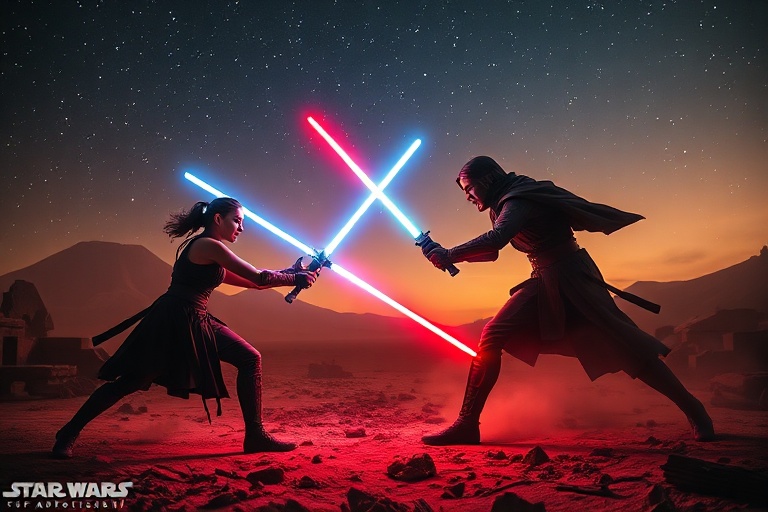
            <li><strong>The Final Battle:</strong> The climactic battle on Exegol brought together nearly every major character from the sequel trilogy, delivering a spectacle that felt both epic and personal. The use of classic <em>Star Wars</em> tropes, like X-wing assaults and lightsaber duels, provided a sense of closure for longtime fans.</li>
        </ul>

        <h2>Cultural Impact: What The Rise of Skywalker Means for the Franchise</h2>

        <p><em>The Rise of Skywalker</em> arrived at a pivotal moment for the <em>Star Wars</em> franchise. Disney’s acquisition of Lucasfilm in 2012 had ushered in a new era of expansion, with films, TV shows, books, and games all contributing to an ever-growing canon. Yet, the sequel trilogy’s divisive reception raised questions about the future of the franchise. Should Disney double down on nostalgia, or take bold risks with new stories? <em>The Rise of Skywalker</em> attempted to answer this question by embracing both approaches.</p>

        <p>The film’s mixed reception highlights a broader tension in modern blockbuster filmmaking: the challenge of balancing legacy with innovation. While some fans praised the film for delivering a fast-paced, emotional conclusion, others criticized it for its reliance on fan service and convoluted plot points. This divide isn’t unique to <em>Star Wars</em>—it’s a reflection of how audiences now engage with franchises, demanding both respect for the past and fresh ideas for the future.</p>

        <p>Beyond its cinematic impact, <em>The Rise of Skywalker</em> also played a role in shaping the franchise’s broader cultural footprint. The film’s release coincided with a surge in <em>Star Wars</em>-themed merchandise, from high-end collectibles to everyday apparel. This commercial success underscored the franchise’s enduring appeal, even as it faced criticism for over-saturation. Meanwhile, the film’s themes of hope and redemption continued to resonate in a world grappling with political and social upheaval.</p>

        <p>For younger audiences, particularly those who grew up with the sequel trilogy, <em>The Rise of Skywalker</em> represents a formative cinematic experience. The film’s diverse cast and progressive storytelling—such as Rey’s status as a scavenger-turned-hero—offered representation that many had long sought in the franchise. This inclusivity has helped <em>Star Wars</em> remain relevant in an era where representation in media is increasingly scrutinized.</p>

        <h2>The Future of Star Wars: What Comes Next?</h2>

        <p>With <em>The Rise of Skywalker</em> serving as the official conclusion to the Skywalker saga, the question on everyone’s mind is: what’s next for <em>Star Wars</em>? Disney has signaled a shift toward standalone stories, with films like <em>Rogue Squadron</em> and <em>The Mandalorian & Grogu</em> exploring new corners of the galaxy. This approach allows the franchise to experiment without the constraints of a continuous narrative, though it risks alienating fans who crave deeper continuity.</p>

        <p>Television has also become a key battleground for <em>Star Wars</em>’ future. Series like <em>The Mandalorian</em> and <em>Andor</em> have redefined what <em>Star Wars</em> can be on the small screen, blending serialized storytelling with the franchise’s signature spectacle. These shows have introduced new characters and expanded the lore in ways that films rarely can, proving that <em>Star Wars</em> is no longer confined to the silver screen.</p>

        <p>Yet, the legacy of the sequel trilogy—and <em>The Rise of Skywalker</em> in particular—will continue to shape the franchise’s direction. The mixed reception of these films has forced Lucasfilm to reckon with the expectations of its fanbase, a challenge that will define the next decade of <em>Star Wars</em>. Whether through bold new stories or a return to familiar characters, one thing is certain: the galaxy far, far away will remain a cultural force for years to come.</p>

        <p>The end of the Skywalker saga may have arrived, but the story of <em>Star Wars</em> is far from over. As new generations of fans discover the franchise, and as filmmakers continue to innovate, <em>Star Wars</em> will endure—not just as a relic of the past, but as a living, evolving myth.</p>

        <h3>Final Thoughts</h3>

        <p><em>The Rise of Skywalker</em> is a film that defies easy categorization. It’s a celebration of <em>Star Wars</em>’ past, a flawed but ambitious conclusion to the sequel trilogy, and a testament to the franchise’s global appeal. While it may not have satisfied every fan, its cultural impact is undeniable. As we look to the future of <em>Star Wars</em>, one thing is clear: the Force will be with us, always.</p>
    </article>

    <footer>
        <p>For more on the evolution of blockbuster franchises, explore our <a href="/category/entertainment/">Entertainment</a> section. If you're interested in how global audiences shape pop culture, don’t miss our <a href="/category/culture/">Culture</a>