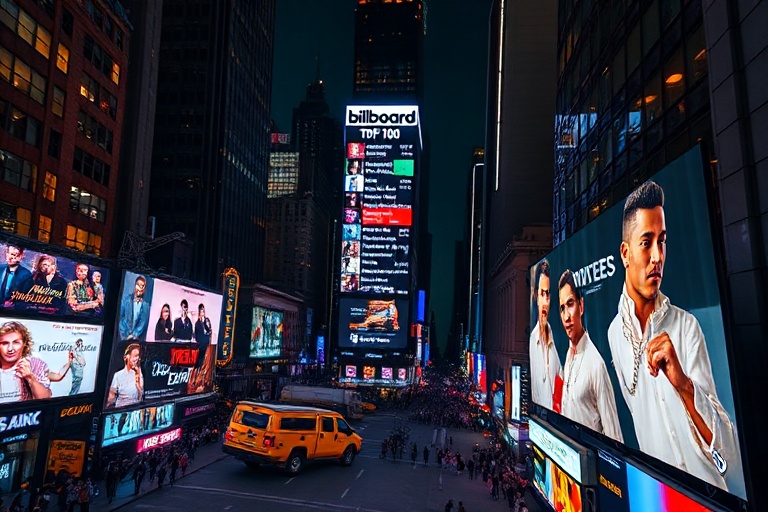
Billboard Top 100: How the Chart Shapes Music’s Future
The Billboard Top 100 remains one of the most influential metrics in the global music industry. Updated weekly, this chart ranks the most popular songs based on streaming, radio airplay, and physical/digital sales. More than just a ranking, it reflects cultural trends, consumer behavior, and even economic shifts. For artists, labels, and fans alike, securing a spot on the Top 100 can mean financial success, industry validation, and long-term relevance.
The Evolution of the Billboard Top 100
The Billboard Hot 100, as it was originally called, debuted in 1958. At the time, it relied solely on record sales and radio play. Today, its methodology has expanded to include streaming data from platforms like Spotify and Apple Music, as well as digital downloads. This evolution mirrors the broader transformation of the music industry, where digital consumption has overtaken physical formats.
The chart’s adaptability has kept it relevant for over six decades. In the 1980s, MTV’s rise made music videos a key factor in rankings. By the 2010s, streaming reshaped the landscape entirely. Songs like Luis Fonsi’s “Despacito” and Billie Eilish’s “Bad Guy” dominated not just through sales but through billions of streams, proving that engagement now matters as much as traditional metrics.
Key Milestones in Billboard Top 100 History
- 1960s: The Beatles and Motown artists like The Supremes redefined chart dominance.
- 1980s: Michael Jackson’s “Thriller” set records, spending 37 weeks at No. 1.
- 2000s: Hip-hop and R&B artists like Eminem and Beyoncé became chart staples.
- 2010s: Streaming propelled artists like Drake and Post Malone to historic runs.
How the Chart Impacts Artists and the Industry
A high-ranking position on the Billboard Top 100 can launch an artist’s career into the mainstream. For emerging musicians, even a single-week entry can lead to record deals, tour opportunities, and brand partnerships. Established stars, meanwhile, rely on consistent chart performance to maintain relevance in an oversaturated market.
Labels often use chart performance as a barometer for marketing strategies. A song that stalls in the mid-tier rankings may receive additional promotion, such as radio push or influencer collaborations. Conversely, a track that rockets to the top can trigger viral moments, meme culture, and even political or social commentary.
The chart’s influence extends beyond music. Brands frequently tie promotions to Billboard rankings, and streaming platforms adjust algorithms based on trending songs. Even film and TV producers track the Top 100 to identify potential soundtrack hits or cultural touchpoints.
The Future of the Billboard Top 100
The next decade will likely bring further changes to how the Billboard Top 100 operates. Artificial intelligence and data analytics are already shaping how songs are promoted and consumed. Some industry experts speculate that social media engagement could eventually factor into rankings, blurring the line between streaming metrics and viral trends.
Another looming question is whether the chart can remain a fair representation of popularity in an era of fragmented listening habits. With millions of songs released annually, the Top 100 only captures a fraction of what’s truly popular. Some argue for a more inclusive ranking system, while others believe the current model’s exclusivity adds to its prestige.
Challenges Facing the Billboard Top 100
- Data Transparency: Critics argue that Billboard’s methodology lacks full disclosure, leaving room for manipulation.
- Over-Saturation: With so much content, breaking into the Top 100 is harder than ever, even for high-quality music.
- Streaming Fraud: Fake streams can artificially inflate rankings, undermining the chart’s credibility.
- Globalization: Non-English songs now dominate the chart, raising questions about cultural representation.
Why the Billboard Top 100 Still Matters
Despite its flaws, the Billboard Top 100 remains a vital tool for understanding the music industry. It provides a snapshot of what resonates with audiences at any given moment. For historians, it serves as an archive of cultural shifts—from the rise of rock ‘n’ roll to the explosion of TikTok-driven hits.
Artists who achieve longevity often point to their Billboard success as a turning point. The chart doesn’t just reflect popularity; it shapes careers. A No. 1 hit can fund a decade-long tour, while a surprise drop into the Top 10 can revive a fading star’s career.
For fans, the Billboard Top 100 offers a shared language. Whether debating the merits of a new hit or reminiscing about a classic, the chart provides a common reference point. In an age of hyper-personalized playlists, it reminds us that music can still be a unifying force.
As the industry continues to evolve, the Billboard Top 100 will need to adapt or risk becoming obsolete. Yet its enduring legacy suggests that, for now, it remains an essential part of music’s ecosystem. The next time you see a song climb the charts, remember: it’s not just a number. It’s a story of art, commerce, and culture colliding.
For more on music trends and industry insights, explore Dave’s Locker Music and Entertainment sections.