Catherine, Princess of Wales: A Modern Royal’s Quiet Influence
Catherine, Princess of Wales, has spent over two decades carefully crafting an image that blends tradition with quiet modernity. Since marrying Prince William in 2011, she has evolved from a shy newlywed into one of the most influential figures in the British monarchy. Her role extends far beyond ceremonial duties. Catherine represents a generation of royals who balance public service with personal authenticity, reshaping perceptions of what it means to be a modern princess.
Born Catherine Elizabeth Middleton on January 9, 1982, in Reading, England, she grew up in a middle-class family before attending the University of St Andrews, where she met William. Their 2011 wedding drew global audiences, but it was Catherine’s journey afterward—marked by motherhood, mental health advocacy, and cultural diplomacy—that transformed her into a symbol of stability and progress within the royal institution.
The Evolution of a Modern Princess
Catherine’s early years as a royal were defined by careful observation and measured engagement. Initially, she avoided the spotlight, focusing on supporting William’s military career and later their growing family. However, as she matured into her role, she began to embrace public speaking, using her platform to address issues close to her heart.
Her 2016 speech at the United for Global Mental Health event marked a turning point. Speaking openly about her own struggles with anxiety and the pressures of royal life, she humanized the monarchy in a way few before her had. This willingness to share personal challenges resonated deeply, especially with younger audiences who value transparency.
By 2022, Catherine had become a central figure in reshaping the royal family’s image. That year, she and William launched the Royal Foundation’s Early Years program, focusing on childhood development and parental mental health. The initiative reflected her belief that foundational support during early years could alter life trajectories—a philosophy rooted in both personal experience and academic research.
Cultural Diplomacy and Global Influence
Unlike her predecessors, Catherine’s influence extends beyond the Commonwealth. She has become a bridge between British institutions and global audiences, particularly in regions where the monarchy’s relevance is often questioned. Her 2019 tour of Pakistan, for instance, was not just a diplomatic visit but a cultural exchange. Dressed in locally crafted garments and engaging with women in rural communities, she demonstrated an understanding of soft power that few royals have mastered.
Her 2023 visit to Boston, Massachusetts, further underscored her ability to connect across cultures. There, she participated in events highlighting women’s leadership in STEM fields, aligning with her advocacy for girls’ education. These appearances are carefully curated to position her as a modernizer within the monarchy, someone who understands that influence requires more than tradition—it demands relevance.
Catherine’s global appeal is also tied to her fashion choices, which have become a form of cultural diplomacy. Unlike Princess Diana’s bold, sometimes controversial styles, Catherine favors classic silhouettes with subtle nods to local cultures. Her 2022 Earthshot Prize awards in Boston, where she wore a dress made from recycled materials, sent a powerful message about sustainability—a cause she champions alongside William and Prince Harry.
Motherhood and Public Perception
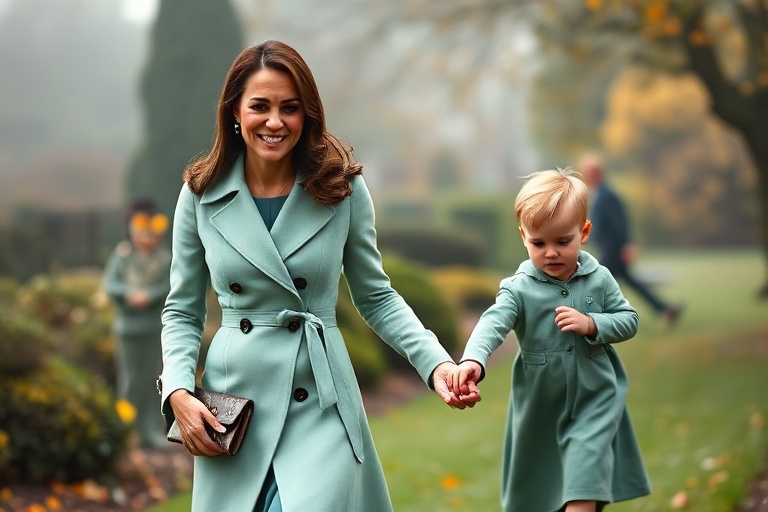
Catherine’s identity as a mother has significantly shaped her public image. From the moment Prince George, Princess Charlotte, and Prince Louis were born, she made deliberate choices to prioritize their privacy while also normalizing discussions around parenting challenges. Her 2020 photo of the family walking to church during the pandemic—unfiltered and candid—became one of the most-shared images of the year.
This approach has redefined royal motherhood. Unlike previous generations, Catherine does not shy away from showing vulnerability. In a 2021 interview, she spoke about the isolation of new motherhood, a topic rarely addressed by senior royals. Such openness has endeared her to parents worldwide, particularly women who see her as both a role model and a relatable figure.
Her parenting philosophy also extends to her work. The Royal Foundation’s Shaping Us campaign, launched in 2023, focuses on the critical first five years of a child’s life. By framing early childhood development as a societal priority, she positions herself not just as a royal figurehead but as an advocate for systemic change.
Challenges and Criticisms
Despite her popularity, Catherine has not been immune to scrutiny. As the future queen consort, expectations are high, and the British tabloid culture often amplifies perceived missteps. Her absence from the 2022 Platinum Jubilee celebrations due to a severe bout of hyperemesis gravidarum during her pregnancy with Louis sparked speculation. Yet, her decision to prioritize her health over public duties was widely praised for its honesty.
There have also been criticisms regarding her family’s involvement in charitable work. Some argue that the royal family’s philanthropic efforts, while well-intentioned, often lack measurable impact. Catherine has addressed this indirectly by emphasizing evidence-based initiatives, such as her focus on longitudinal studies in early childhood development.
Another challenge is the monarchy’s evolving role in a post-Charles III era. With King Charles III’s health concerns and Prince William’s readiness to take on more duties, Catherine’s position as a leading modernizer becomes even more critical. How she navigates the balance between tradition and progress will shape the monarchy’s future for decades.
The Future of a Modern Monarchy
Catherine’s influence lies in her ability to redefine what royalty can be in the 21st century. She is not a revolutionary like Diana, nor is she as outspoken as Meghan Markle. Instead, she embodies a quieter revolution—one rooted in empathy, evidence, and adaptability. Her work in mental health, early childhood development, and cultural diplomacy suggests a long-term strategy to ensure the monarchy remains relevant.
As she steps into a more prominent role alongside Prince William, her priorities will likely expand. Climate change, education reform, and global health could all become central to her advocacy. Her ability to listen rather than lecture sets her apart from many public figures today.
In an era where institutions face constant skepticism, Catherine’s approach offers a compelling counterpoint. She does not demand blind loyalty; instead, she invites engagement. Whether through her public speeches, her fashion choices, or her family’s public appearances, she consistently reinforces the idea that royalty can be both aspirational and approachable.
The Princess of Wales is not just a figurehead of tradition—she is a testament to the monarchy’s capacity for evolution. Her story is still being written, but one thing is clear: she is shaping a legacy that extends far beyond the palaces of London.