éderson
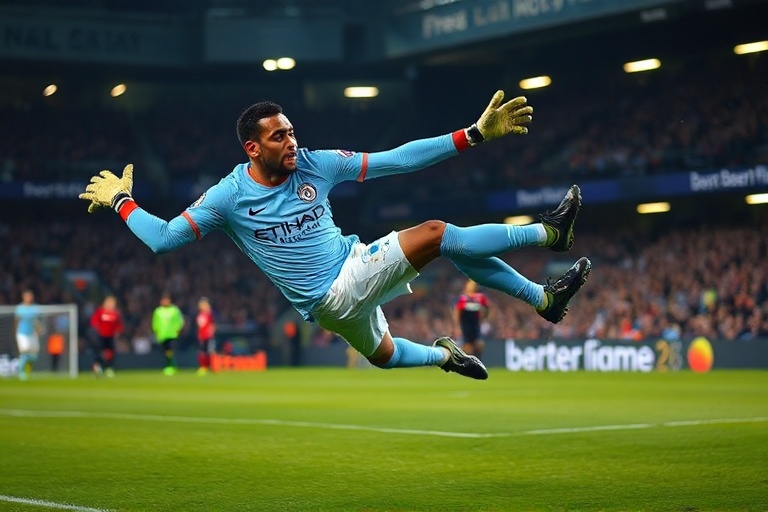
Éderson Santana de Moraes, known simply as Éderson, stands as one of Brazil’s most technically gifted goalkeepers in recent memory. Born on January 17, 1993, in Londrina, Paraná, he has carved a unique path in football, blending traditional shot-stopping with the skills of an outfield player. His rise from Brazil’s lower divisions to the global stage reflects a rare combination of ambition, adaptability, and audacity.
Unlike conventional goalkeepers, Éderson’s playing style has consistently drawn comparisons to outfield players. This unconventional approach has made him a polarizing yet fascinating figure in modern football. Clubs and fans alike debate whether his skills elevate the position or complicate the game’s traditional structure. What remains clear is that Éderson has redefined what it means to be a goalkeeper in the 21st century.
The Rise of a Different Kind of Keeper
Éderson’s journey began in the youth ranks of Londrina before moving to São Paulo’s youth academy in 2009. However, it was at Benfica in Portugal where he truly began to turn heads. Signed in 2015, he spent two seasons developing under the guidance of experienced coaches while appearing regularly for the reserves. His breakthrough came during the 2016–17 season when he was loaned to Rio Ave, where he made 32 Primeira Liga appearances, showcasing his ability to play with his feet as much as with his hands.
His performances caught the attention of European scouts, particularly those at Manchester City, who signed him in 2017 as a long-term replacement for Claudio Bravo. The move was bold. Éderson was not the cheapest goalkeeper, nor the most experienced at the time. But Pep Guardiola, a manager known for his tactical innovation, saw potential in the Brazilian’s composure on the ball and his willingness to play out from the back—a hallmark of modern football systems.
- Key traits developed early: Ball distribution, positioning, and comfort with high-line play.
- First major test: Adapting to the physicality and tempo of the Premier League.
- Tactical fit: Guardiola’s system demanded a goalkeeper who could act as an 11th outfield player—Éderson fit perfectly.
In his first season at City, Éderson played a pivotal role in the club’s record-breaking 100-point Premier League season. His ability to play long, accurate passes over 60 yards became a tactical weapon, allowing City to bypass midfield pressure and launch attacks directly from goal kicks. This style was not just a tactical preference—it was a necessity under Guardiola’s philosophy.
Playing with the Feet: A Double-Edged Sword
Éderson’s greatest strength—and sometimes his most scrutinized trait—is his footwork. In an era where goalkeepers are increasingly expected to contribute to buildup play, few have embraced the role with such confidence. His distribution is reminiscent of a deep-lying playmaker. He regularly steps out of his penalty area to receive the ball, often under pressure, and plays first-time passes or lofted diagonals to wingers or fullbacks.
This confidence stems from technical training that mirrors outfield players. During his time at Benfica, he worked extensively with goalkeeping coaches who emphasized ball control and decision-making under pressure. At Manchester City, Guardiola and his staff further refined this skill, integrating Éderson into possession-based drills that mirrored midfield patterns.
However, this style is not without risk. Éderson has made high-profile errors, including a costly miscontrol against Crystal Palace in 2019 that led to a goal. Critics argue that such risks undermine the traditional role of the goalkeeper. Yet, supporters point to the bigger picture: his errors are infrequent, and his contributions to build-up play have directly led to dozens of goals over the years.
In fact, Éderson has been involved in more open-play passes leading to goals than any other goalkeeper in the Premier League since his arrival. That statistic underscores the value he brings beyond shot-stopping. In modern football, where possession and control define success, a goalkeeper’s ability to function as a playmaker is no longer a novelty—it’s a requirement.
From Brazil to the World: Representing a New Generation
Éderson made his senior debut for Brazil in 2017, though his path to the national team was not immediate. Competing with established names like Alisson and Weverton initially limited his appearances. Yet, his inclusion in the 2019 Copa América squad signaled a shift. While he served as backup to Alisson, his presence on the bench highlighted Brazil’s trust in his abilities.
More importantly, Éderson represents a generational shift in Brazilian football. Traditionally, Brazilian goalkeepers were celebrated for reflexes and athleticism rather than technique. Players like Rogério Ceni (known for his free-kick goals) broke the mold, but Éderson has taken it further. He embodies the modern Brazilian footballer: technically gifted, mentally strong, and adaptable to tactical systems.
His leadership qualities have also been noted. Despite being relatively reserved off the pitch, Éderson commands respect through his professionalism and consistency. In interviews, he often emphasizes the importance of humility and continuous learning—traits that resonate in Brazil’s culture of self-improvement.
The Future: Legacy and Influence
As Éderson approaches his 32nd birthday, questions about his long-term future arise. Manchester City remains committed to him as Alisson’s long-term successor, though younger talents like Stefan Ortega have emerged. Yet, Éderson’s influence extends beyond club football. He has inspired a new wave of Brazilian goalkeepers to prioritize technical development and versatility.
His impact can be seen in youth academies across Brazil and Europe, where goalkeepers now train with both gloves and boots. Clubs scout for the next Éderson—someone who can start attacks with a touch of a button. This evolution reflects broader changes in football, where the goalkeeper is no longer a defensive anchor but a creative fulcrum.
Looking ahead, Éderson’s legacy will likely be defined by how well he adapts as the game continues to evolve. Will he remain a pioneer, or will the next generation surpass him? What is certain is that his career has already changed the conversation around the goalkeeper’s role.
As football continues to embrace innovation, Éderson stands as a symbol of progress. He is not just a goalkeeper who plays with his feet—he is a goalkeeper who redefined what it means to play football.
For aspiring players and fans alike, his story serves as a reminder that tradition and innovation can coexist, even in the most sacred positions on the pitch.
To explore more about the evolution of goalkeeping in modern football, visit our Sports section. For deeper tactical analysis, check our Analysis category.