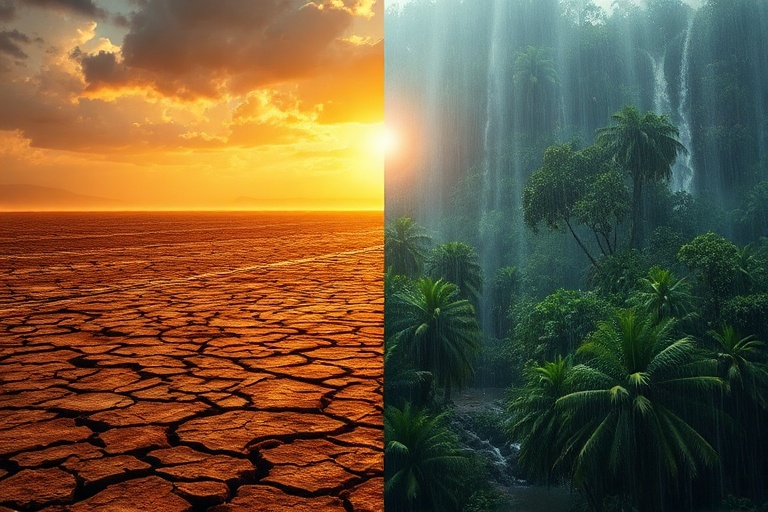
El Niño represents one of the most significant natural climate phenomena on Earth, capable of reshaping weather patterns across continents. This periodic warming of the central and eastern tropical Pacific Ocean disrupts atmospheric circulation, leading to cascading effects on global temperatures, precipitation, and extreme weather events. While scientists have studied El Niño for decades, its increasing intensity and frequency in recent years have raised concerns about its evolving role in a warming climate.
The term “El Niño,” which means “the little boy” in Spanish, originated among Peruvian fishermen in the 17th century. They noticed that warm ocean currents often appeared around Christmas, disrupting their fishing patterns. Today, meteorologists define El Niño as a phase of the El Niño-Southern Oscillation (ENSO) cycle, characterized by sea surface temperatures in the equatorial Pacific that are at least 0.5°C above average for three consecutive months.
How El Niño Develops and Its Key Characteristics
El Niño events typically form when trade winds that normally blow from east to west across the Pacific weaken or reverse direction. This relaxation of winds reduces the upwelling of cold, nutrient-rich water along the South American coast, allowing warm water to spread eastward. The resulting temperature anomalies in the Pacific can persist for 9 to 12 months, though some events last up to two years.
During strong El Niño events, sea surface temperatures in the central and eastern Pacific can rise 2°C to 4°C above normal. This warming alters atmospheric pressure patterns, most notably weakening the Walker Circulation—a large-scale air flow that typically moves warm air westward and cool air eastward. The Southern Oscillation Index (SOI), which measures the difference in air pressure between Tahiti and Darwin, Australia, becomes strongly negative during El Niño, reflecting this shift.
Not all El Niño events are identical. Researchers have identified two primary types:
- Eastern Pacific El Niño: Characterized by pronounced warming in the far eastern Pacific, closer to South America. These events tend to have more direct impacts on the Americas, including heavy rainfall in Peru and drought in northern Brazil.
- Central Pacific El Niño: Also known as “Modoki” (Japanese for “similar but different”), this variant features warming concentrated in the central Pacific. Its effects are often felt more strongly in North America, particularly in the southern United States.
Global Weather Disruptions Linked to El Niño
The far-reaching consequences of El Niño stem from its ability to alter jet streams—the fast-moving air currents that steer weather systems. During El Niño winters, the subtropical jet stream over the Pacific intensifies and shifts southward, bringing wetter conditions to the southern United States and northern Mexico. Conversely, the northern U.S. and Canada often experience milder, drier winters.
In other parts of the world, El Niño’s influence is equally dramatic. Southeast Asia and Australia typically face severe droughts and heightened wildfire risks due to reduced rainfall. For example, the 2015-2016 El Niño contributed to devastating fires in Indonesia that blanketed the region in haze for months. Meanwhile, eastern Africa often sees increased rainfall and flooding during El Niño years, as seen in the catastrophic floods in Kenya and Somalia in 2018.
El Niño also affects marine ecosystems. The warming of surface waters reduces the upwelling of nutrient-rich water, which can lead to declines in fish populations, particularly anchovies and sardines off the coast of Peru. This collapse has economic repercussions for fisheries, a primary industry in the region. Coral reefs are another casualty, as the combination of warmer waters and altered currents increases the likelihood of bleaching events.
El Niño’s Role in Climate Change and Future Projections
While El Niño is a natural cycle, its interaction with human-induced climate change is a growing area of concern. Studies suggest that as global temperatures rise, El Niño events may become more frequent and intense. Research published in the journal Nature Climate Change indicates that extreme El Niño events could double in frequency this century if current warming trends continue.
One of the most pressing questions is whether climate change will alter the typical patterns of El Niño. Some models predict that the central Pacific may warm more rapidly than the eastern Pacific, potentially shifting El Niño’s center of action eastward. This shift could intensify its impacts on North America while reducing its influence on South America.
Another critical factor is the ocean’s ability to absorb heat. As the planet warms, the Pacific Ocean may store more heat in its upper layers, providing additional fuel for El Niño events. This feedback loop could exacerbate extreme weather events globally, from hurricanes in the Pacific to heatwaves in Europe.
Governments and organizations are beginning to integrate El Niño forecasts into long-term planning. The National Oceanic and Atmospheric Administration (NOAA) provides seasonal outlooks that help communities prepare for potential disruptions. In agriculture, for instance, farmers in drought-prone regions may adjust crop choices or irrigation strategies based on early warnings. Similarly, water resource managers in flood-prone areas can implement mitigation measures to reduce risks.
Case Studies: Notable El Niño Events and Their Aftermath
Throughout history, certain El Niño events have stood out for their severity and global impact. The 1997-1998 El Niño, often referred to as the “El Niño of the century,” caused an estimated $35 billion in damages worldwide. In California, relentless storms led to flooding and landslides, while Indonesia suffered one of its worst droughts in decades. The event also contributed to the strongest hurricane season on record in the Atlantic.
More recently, the 2015-2016 El Niño matched the intensity of the 1997-1998 event, with widespread consequences. In Ethiopia, drought conditions triggered a food security crisis affecting over 10 million people. In the Pacific, Hurricane Patricia became the strongest tropical cyclone ever recorded in the Western Hemisphere. The event also coincided with a significant coral bleaching event, with over 90% of the Great Barrier Reef affected.
These case studies highlight the need for improved forecasting and adaptive strategies. While scientists have made significant strides in predicting El Niño events up to six months in advance, uncertainties remain, particularly regarding the intensity and duration of events.
Preparing for El Niño: Strategies for Resilience
Mitigating the impacts of El Niño requires a multi-faceted approach that combines scientific research, policy-making, and community engagement. One of the most effective tools is early warning systems, which provide critical information to governments and individuals. For example, the World Meteorological Organization (WMO) coordinates global efforts to monitor and disseminate El Niño forecasts.
In agriculture, resilience can be built through diversification and sustainable practices. Farmers in regions prone to drought may shift to drought-resistant crops or adopt precision irrigation techniques. In urban areas, infrastructure improvements—such as flood defenses and water storage systems—can reduce vulnerability to extreme weather.
Public awareness also plays a vital role. Educating communities about El Niño’s potential impacts empowers them to take proactive measures, such as preparing emergency kits or reinforcing homes in flood-prone areas. Schools and local organizations can serve as hubs for disseminating information and fostering preparedness.
The challenges posed by El Niño are formidable, but they are not insurmountable. By leveraging scientific advancements, fostering international cooperation, and prioritizing resilience, societies can better navigate the uncertainties of this powerful climate phenomenon.
Conclusion: A Call for Proactive Climate Action
El Niño is more than a distant meteorological event; it is a reminder of the interconnectedness of Earth’s climate systems. Its impacts ripple across continents, affecting economies, ecosystems, and human lives. As climate change intensifies, the frequency and severity of El Niño events may increase, posing new challenges for global resilience.
Addressing these challenges requires a commitment to reducing greenhouse gas emissions, investing in climate research, and implementing adaptive strategies. From policymakers to individuals, everyone has a role to play in building a more resilient future. By understanding El Niño and its far-reaching effects, we can take meaningful steps toward mitigating its impacts and safeguarding our planet for generations to come.