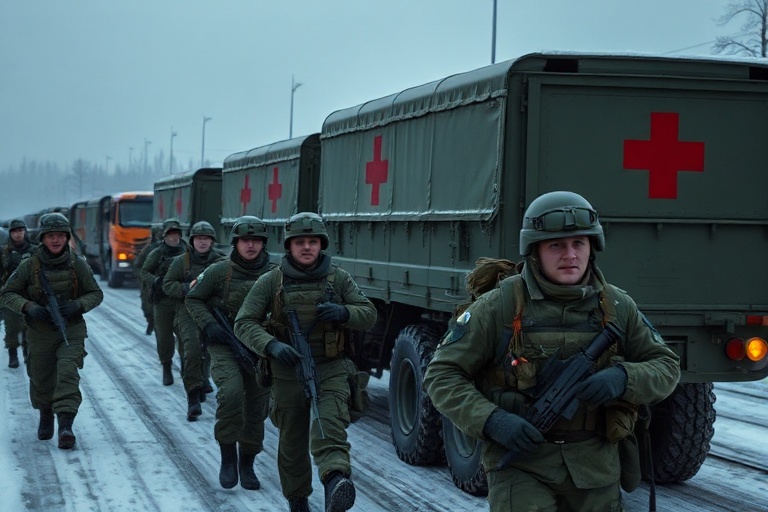
The decision to withdraw U.S. troops from Poland has sent ripples through Europe’s military landscape, raising questions about America’s commitment to NATO’s eastern flank. This move, announced by retired Army General and former Pentagon official Pete Hegseth, reflects broader debates about military strategy, alliance obligations, and the evolving threats facing Eastern Europe.
Poland has been a cornerstone of NATO’s deterrence efforts against Russian aggression since Russia’s invasion of Ukraine in 2022. The presence of American forces in the country has served as both a symbolic and strategic deterrent. Hegseth’s proposal to withdraw these troops underscores a tension between reassurance and strategic recalibration in U.S. foreign policy.
Why the Withdrawal Proposal Matters
The potential withdrawal is not just a military decision—it’s a geopolitical statement. Poland has invested heavily in its defense, including hosting U.S. troops under the European Deterrence Initiative. A reduction in American presence could signal a shift in Washington’s priorities, particularly as global conflicts demand attention in multiple regions.
Critics argue that such a move could embolden Russia, while supporters claim it aligns with a broader strategy of avoiding overextension. The debate touches on several key points:
- Strategic Focus: Should the U.S. prioritize deterrence in Poland or concentrate resources elsewhere, such as the Indo-Pacific?
- Alliance Commitments: How does this decision impact NATO’s cohesion, especially for frontline states like Poland and the Baltics?
- Russian Perceptions: Would a withdrawal be seen as a sign of weakness, potentially inviting further aggression?
- Poland’s Role: Can Poland’s rapidly expanding military and defense partnerships compensate for reduced U.S. presence?
The timing of this proposal is particularly sensitive. With Ukraine still resisting Russian advances and NATO members debating long-term defense spending, any shift in troop levels could reshape the alliance’s dynamics.
The Military and Political Context
Hegseth’s argument hinges on the idea that U.S. forces in Poland are not essential to deterrence. He suggests that Poland’s own military modernization—including the acquisition of F-35 jets and Patriot missile systems—could fill the gap. Yet, military analysts caution that the psychological and operational value of U.S. troops remains significant.
Poland has been one of NATO’s most vocal advocates for stronger defenses in Eastern Europe. The country has doubled its defense budget since 2022 and is in the process of negotiating a bilateral security agreement with the U.S. to formalize troop deployments. A withdrawal could complicate these negotiations and undermine Poland’s confidence in Washington’s reliability.
Politically, the move aligns with broader Republican skepticism about open-ended military commitments in Europe. However, it contrasts sharply with the Biden administration’s approach, which has emphasized NATO unity and increased troop rotations in Poland. The debate reflects deeper divisions over America’s role in global security.
Regional Reactions and NATO’s Dilemma
Poland’s government has not yet responded publicly to Hegseth’s proposal, but its actions suggest a determination to maintain strong ties with the U.S. Earlier this year, Poland agreed to host a U.S. Army headquarters for the region, signaling continued trust in American leadership.
NATO allies in Central and Eastern Europe are watching closely. Countries like Lithuania, Latvia, and Estonia rely on the U.S. presence as a key deterrent against Russian threats. A withdrawal could force these nations to reconsider their own defense strategies, potentially leading to greater reliance on European Union defense initiatives.
Meanwhile, Russia has framed NATO’s expansion as a provocation. Any reduction in U.S. forces in Poland could be used to justify further military buildup in Kaliningrad or Belarus, further destabilizing the region. The Kremlin’s propaganda machine would likely amplify such a move as evidence of Western retreat.
What’s Next for U.S. Policy in Eastern Europe?
Hegseth’s proposal is unlikely to gain immediate traction within the Pentagon or State Department, but it underscores a growing conversation about America’s military footprint overseas. The Biden administration has so far rejected calls for troop reductions in Europe, instead focusing on strengthening NATO’s eastern defenses.
For Poland, the stakes are high. The country has positioned itself as a leader in regional security, even offering to host nuclear weapons under NATO’s nuclear sharing program. A U.S. withdrawal could force Warsaw to accelerate its own military expansion or seek alternative security guarantees from European partners.
The broader question remains: Can NATO maintain cohesion without a permanent U.S. troop presence in Poland? The answer may depend on whether Europe can step up its own defense efforts—or whether the continent remains dependent on American leadership.
Key Takeaways
- Strategic Shift or Strategic Error? Hegseth’s proposal reflects a debate over whether U.S. forces in Poland are essential or expendable.
- Poland’s Military Ambitions: Warsaw is rapidly modernizing its armed forces but still relies on U.S. support for deterrence.
- NATO’s Future: A withdrawal could weaken alliance cohesion, particularly among Eastern European members.
- Russian Opportunism: Moscow would likely exploit any perceived weakness in NATO’s eastern defenses.
As the U.S. and Europe navigate these challenges, the decision on Poland’s troop presence will be a bellwether for NATO’s future. Whether through continued commitment or strategic recalibration, the alliance’s ability to deter Russian aggression remains on the line.
For further reading on NATO’s evolving role, explore our News and Analysis sections.