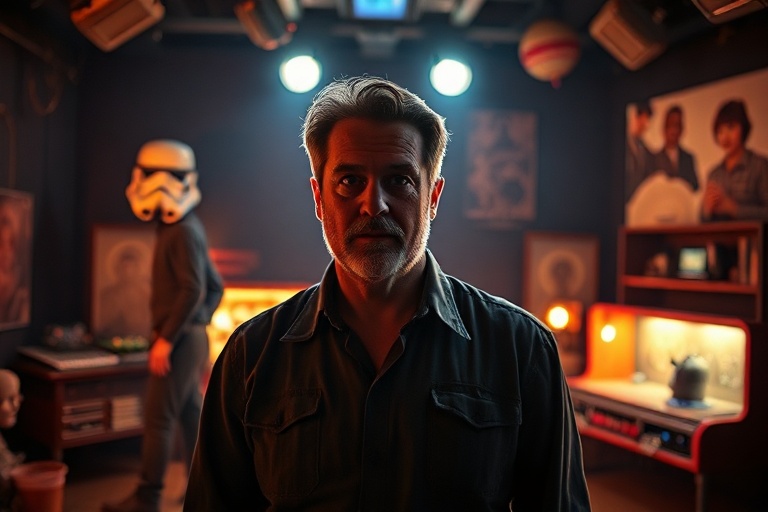
Few creators have shaped the Star Wars saga as profoundly as Dave Filoni. Over the past two decades, his work has evolved from a passionate fan’s tribute to a cornerstone of Lucasfilm’s legacy. Filoni’s journey—from the early days of The Clone Wars to his leadership in the live-action Ahsoka series—reflects a rare blend of artistic vision and deep respect for the franchise’s core themes. His contributions extend beyond storytelling; they redefine how Star Wars engages with its audience across generations.
From Animation to the Galaxy’s Biggest Stage
Filoni’s entry into the Star Wars universe began with The Clone Wars (2008), a project that almost didn’t happen. When George Lucas sought to revive the animated series after its initial cancellation, he turned to Filoni, a relative unknown at the time. The result was a seismic shift in how Star Wars was perceived in animation. Unlike the episodic, serialized approach of The Clone Wars’ predecessors, Filoni’s work introduced a cinematic scope, rich character arcs, and a narrative complexity that mirrored the best of live-action storytelling.
His influence didn’t stop at animation. Filoni’s transition to live-action with The Mandalorian (2019) marked another pivotal moment. As an executive producer and occasional director, he helped bridge the gap between the franchise’s animated and live-action eras. The show’s success—measured in both critical acclaim and cultural impact—demonstrated Filoni’s ability to adapt his storytelling instincts to a new medium. His involvement ensured continuity between projects, giving fans a cohesive experience rather than isolated stories.
The Filoni Touch: Storytelling That Resonates
What sets Filoni apart is his commitment to character-driven narratives. His stories often revolve around redemption, self-discovery, and the weight of legacy. Consider The Clone Wars’ arc of Anakin Skywalker, which laid the groundwork for his fall to the dark side. Or Ahsoka Tano’s journey in The Mandalorian and her titular series, where Filoni explores her struggle to reconcile her past with her future. These themes aren’t just Star Wars tropes; they’re universal human experiences, elevated by Filoni’s deft touch.
Filoni’s work also excels in world-building. The Star Wars universe is vast, but Filoni has a knack for making it feel lived-in. Whether it’s the bustling underworld of The Mandalorian’s Mos Eisley or the spiritual depth of Ahsoka’s trials on Malachor, his settings feel tactile and immersive. This attention to detail extends to the lore itself. Filoni has seamlessly integrated elements from the Legends continuity (now non-canon) into the official canon, creating a sense of continuity that long-time fans appreciate without alienating newcomers.
Key Elements of Filoni’s Storytelling Style
- Character Depth: Filoni’s protagonists are rarely one-dimensional. Even side characters like Captain Rex or Sabine Wren are given arcs that feel earned and meaningful.
- Moral Ambiguity: His stories often challenge the black-and-white morality of the original trilogy, presenting characters like Asajj Ventress or Baylan Skoll as morally complex figures.
- Visual Storytelling: Filoni’s background in animation shines through in his live-action work. Dynamic camera angles, deliberate pacing, and symbolic imagery are hallmarks of his direction.
- Canon Integration: He respects the franchise’s history while pushing it forward, ensuring that new stories feel both fresh and connected to the past.
Filoni’s Broader Impact on Star Wars
Filoni’s influence extends beyond individual projects. As a key figure in Lucasfilm’s creative leadership, he has helped shape the direction of the franchise in the post-Disney era. His role in developing the Star Wars canon—particularly through his work on the High Republic era and upcoming projects like The Acolyte—demonstrates his commitment to expanding the saga’s horizons. Filoni isn’t just preserving the legacy of Star Wars; he’s actively reinventing it for new audiences.
This leadership is evident in his collaborative approach. Filoni has worked closely with other creators, from Jon Favreau to Leslye Headland, ensuring that the Star Wars universe feels cohesive despite its many storytellers. His willingness to mentor younger writers and directors also speaks to his broader impact. By fostering new talent, Filoni is ensuring that the franchise’s future remains in capable hands.
The Future of Filoni’s Star Wars
As Filoni’s career continues to evolve, so too does his role in Star Wars. Upcoming projects, including Skeleton Crew and potential future Star Wars films, will further cement his legacy. But perhaps his most significant contribution lies in how he’s redefined what Star Wars can be. No longer is the franchise solely the domain of episodic adventures or nostalgia-driven nostalgia. Filoni’s work has shown that Star Wars can be a platform for ambitious, serialized storytelling that rivals the best of modern television.
Filoni’s influence also extends to the franchise’s cultural footprint. By embracing diversity in casting, themes, and storytelling perspectives, he has helped Star Wars reflect the world we live in today. Characters like Ahsoka Tano and Din Djarin are as much products of modern sensibilities as they are of the original saga’s ideals. This evolution ensures that Star Wars remains relevant, not just as a relic of the past, but as a living, breathing universe.
Why Filoni’s Work Matters Beyond Star Wars
Filoni’s success offers broader lessons for the entertainment industry. His ability to balance reverence for tradition with innovation is a masterclass in franchise management. In an era where reboots and sequels often prioritize nostalgia over creativity, Filoni’s work proves that there’s still room for meaningful storytelling within established universes. His approach—grounded in character, lore, and visual storytelling—serves as a blueprint for other creators looking to revitalize beloved franchises.
Moreover, Filoni’s career highlights the importance of mentorship and collaboration. In an industry often criticized for its gatekeeping, Filoni has consistently lifted others up, whether through direct collaboration or by championing new voices. This ethos not only enriches the Star Wars universe but also sets a positive example for the next generation of storytellers.
For fans, Filoni’s work represents the best of what Star Wars can be: a blend of adventure, heart, and deep lore. His projects remind us why we fell in love with the galaxy in the first place, while also pushing us to see it in new ways. As the Star Wars saga continues to expand, Filoni’s fingerprints will be all over it—and that’s a future worth getting excited about.
For more on the evolution of Star Wars storytelling, explore our Entertainment section. To dive deeper into the animated legacy of The Clone Wars, visit our Gaming category.