Ukraine’s military has spent the past two years refining its unmanned aerial capabilities, transforming what began as makeshift reconnaissance tools into precision strike platforms. These advancements have not only altered frontline tactics but have also forced adversaries to rethink electronic warfare countermeasures. The evolution reflects a broader shift in modern warfare, where commercial off-the-shelf technology meets military-grade innovation.
At the heart of this transformation lies a combination of necessity and ingenuity. With traditional artillery supplies constrained and frontlines stretching across vast territories, Ukrainian engineers have repurposed consumer drones, integrating them with military components. This hybrid approach has yielded cost-effective solutions that deliver measurable impact on the battlefield.
From Reconnaissance to Precision Strikes
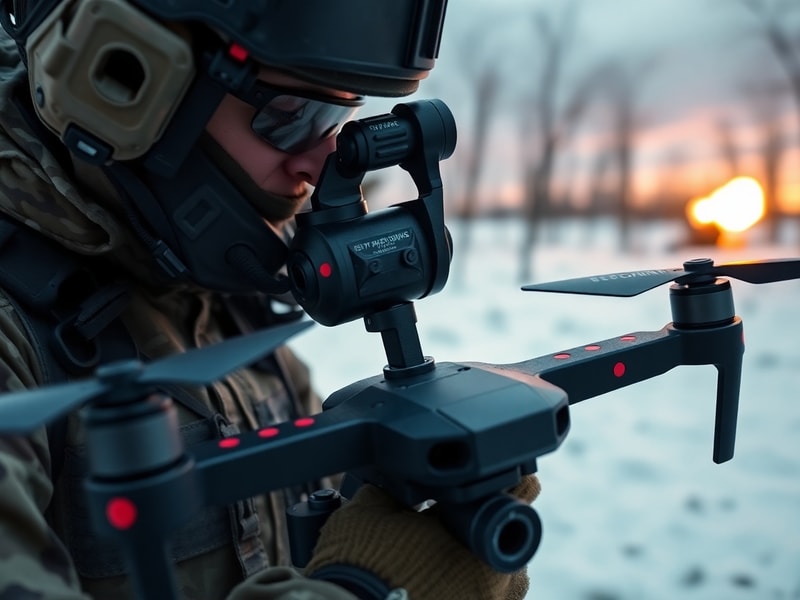
The earliest Ukrainian drones served primarily as eyes in the sky. Modified FPV (first-person view) quadcopters provided real-time imagery to artillery units, dramatically improving targeting accuracy. These systems were often assembled from commercially available parts, with payloads limited to small cameras or thermal imagers.
Today, the landscape has shifted entirely. Ukrainian forces now deploy drones capable of autonomous navigation, GPS-denied positioning, and even rudimentary AI-assisted target recognition. The Technology section at Dave’s Locker has documented several of these breakthroughs, including:
- Modified DJI Matrice 300 series drones fitted with Ukrainian-made warheads
- Long-range loitering munitions with 100+ kilometer operational ceilings
- Swarm drone systems tested in simulated urban combat scenarios
- Electronic warfare-resistant navigation systems using inertial guidance
One particularly notable development is the “Pchela” reconnaissance-to-strike platform, which begins missions as a passive observer before transitioning to an attack role when targets present themselves. This dual-use capability has forced Russian forces to maintain constant electronic surveillance, draining their jamming resources.
Electronic Warfare: The Invisible Battleground
As Ukrainian drones grew more sophisticated, so did the countermeasures deployed against them. The electronic warfare duel has become one of the most intense aspects of the conflict, with both sides iterating rapidly. Ukrainian forces have adopted several key strategies to maintain their drone advantage:
- Frequency Hopping: Modern Ukrainian drones employ spread-spectrum techniques that make them difficult to jam or spoof. These systems rapidly switch between frequencies, forcing electronic warfare operators to spread their resources thin.
- Directional Antennas: By focusing signal transmission and reception, Ukrainian operators can maintain control even when surrounded by enemy jamming equipment.
- AI-Assisted Evasion: Some platforms now incorporate basic machine learning to identify and avoid jamming patterns in real-time, a capability that was virtually nonexistent in 2022.
- Decoy Systems: Ukrainian forces deploy radar-transparent decoy drones to lure enemy electronic warfare systems into wasting their limited resources.
Russian forces have responded with their own innovations, including the “Krasukha” mobile electronic warfare complex and the “Murman” system, which combines radar jamming with drone detection. However, the Ukrainian approach has proven more adaptable, with field modifications often outpacing factory-designed countermeasures.
The Logistics of Drone Warfare
Behind every successful drone operation lies a complex supply chain that stretches from Kyiv workshops to frontline units. The Ukrainian drone ecosystem operates on several distinct levels:
- Commercial Sector: Local businesses repurpose consumer drones for military use, often selling directly to military units or volunteer battalions
- Government Programs: State-backed initiatives like the “Army of Drones” project coordinate large-scale production and distribution
- Crowdfunded Units: Volunteer organizations raise funds to purchase equipment for specific frontline units
- International Support: Western governments provide high-end components while maintaining plausible deniability
The logistics challenge extends beyond production into training and maintenance. Frontline units now include dedicated drone operators who undergo weeks of specialized training. Maintenance has become a critical bottleneck, with some units reporting that up to 40% of their drones are out of service at any given time due to battle damage or technical failures.
One unexpected consequence of this drone proliferation is the strain on Ukraine’s power grid. Charging stations for drones have become prime targets for Russian missile strikes, forcing units to establish distributed charging networks using portable solar panels and vehicle-mounted generators.
Broader Implications for Modern Warfare
The Ukrainian drone revolution extends far beyond the immediate conflict. Military strategists worldwide are closely monitoring these developments, recognizing that the lessons learned on the Dnipro front will shape future warfare. Several key implications have already emerged:
Democratization of Precision Strikes: The low cost of modern drone technology means that even relatively unsophisticated militaries can field precision strike capabilities. This development challenges traditional notions of air superiority, which have long been the domain of wealthy nations.
Tactical Flexibility: Drones enable military units to conduct operations with unprecedented speed and flexibility. Reconnaissance drones can spot targets in minutes, while strike drones can engage them before enemy forces can react. This has fundamentally altered the tempo of modern combat.
Civil-Military Integration: The blurring line between commercial and military technology has created new vulnerabilities. Critical infrastructure—from power grids to communication networks—is now exposed to drone attacks, forcing governments to rethink their defense strategies.
Ethical Considerations: The proliferation of drones raises important questions about accountability and proportionality. Who bears responsibility when a drone strike causes civilian casualties? How do we prevent autonomous systems from making life-and-death decisions without human oversight?
These questions are not theoretical. Ukrainian forces have already experimented with autonomous drone swarms, though human operators remain in the decision-making loop for now. The potential for AI-driven warfare is no longer science fiction but an imminent reality.
A Glimpse Into the Future
The next phase of Ukraine’s drone evolution will likely focus on three key areas: increased autonomy, improved survivability, and enhanced networking. Analysts at Dave’s Locker Analysis have identified several developments to watch:
- Drone swarms that can coordinate complex missions without direct human control
- AI-assisted target recognition that can distinguish between combatants and civilians
- Hybrid propulsion systems that combine electric and combustion engines for extended range
- Quantum encryption for secure communications that cannot be intercepted or jammed
Whatever form these advancements take, one thing is certain: the era of drone warfare has only just begun. The Ukrainian conflict has demonstrated that even a technologically inferior force can achieve decisive advantages through innovation and adaptability. The lessons learned here will echo through military academies and boardrooms for decades to come.
The drones of today are merely the first wave of a technological tsunami that will reshape warfare, intelligence gathering, and even domestic law enforcement. As these systems become smaller, cheaper, and more capable, the distinction between battlefield and civilian space will continue to blur. The question is no longer whether drones will dominate future conflicts, but how nations will adapt to a world where anyone with an internet connection can command an army of unmanned systems.
For Ukraine, the drone has become both weapon and symbol—a testament to the power of innovation in the face of overwhelming odds. As the conflict continues, these flying machines will likely determine not just the outcome of battles, but the very nature of modern warfare itself.