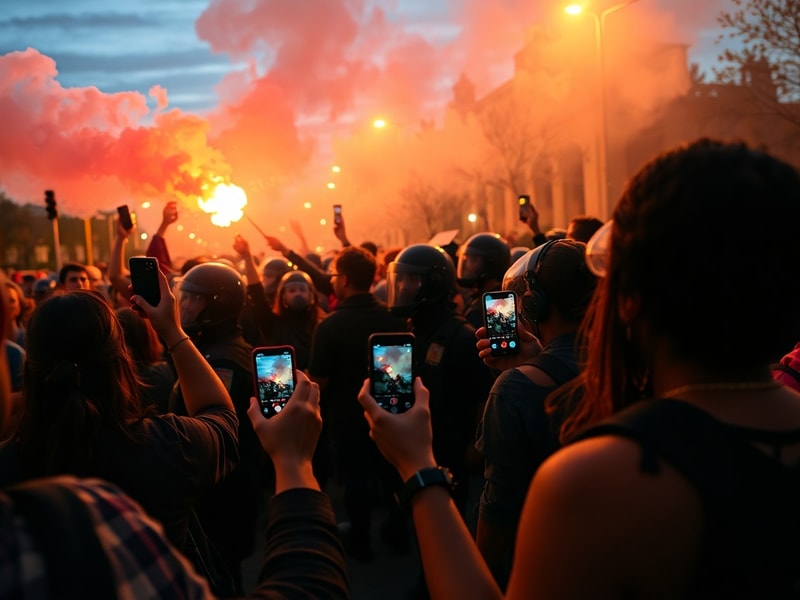
For years, power structures operated with minimal scrutiny. Decisions were made behind closed doors, misdeeds were buried, and accountability was often an afterthought. But today, the balance has shifted. Social media has become the megaphone for collective outrage, exposing injustices that once went unchallenged. This is the social reckoning—a moment where public sentiment no longer waits for official processes to demand change.
The reckoning manifests differently across industries. In entertainment, long-standing patterns of abuse have been exposed through viral testimonies. In corporate settings, employees are holding executives accountable for toxic cultures. Even in politics, viral moments have forced resignations and policy reversals. The common thread? A refusal to accept silence as compliance.
The Role of Social Media as the Modern Courtroom
Platforms like Twitter, TikTok, and Instagram have transformed into de facto courtrooms where evidence is crowdsourced, verdicts are crowdsourced, and sentences are crowdsourced. Unlike traditional legal systems, these digital spaces operate on speed and visibility. A single post can dismantle years of carefully constructed reputations within hours.
Consider the case of a mid-level manager in the tech industry who was dismissed after an employee shared a screenshot of an offensive internal chat. The evidence wasn’t leaked by a whistleblower—it was accidentally exposed by the manager himself. Within 24 hours, his employer faced a PR crisis that forced swift action. The legal system might have taken months, but public pressure demanded immediate consequences.
This shift raises important questions about due process. When does public judgment override institutional procedures? The answer varies, but the trend is clear: institutions that fail to act swiftly risk further reputational damage. The court of public opinion doesn’t wait for appeals.
When Virality Trumps Due Process
Not every viral moment leads to justice. Some accusations are exaggerated or outright false, amplified by the same platforms that champion accountability. The speed of social media often outpaces verification, leaving individuals and organizations vulnerable to irreversible damage before the truth emerges.
This dual-edged nature of digital accountability was evident in the 2020 “Cancel Rent” movement, where tenants publicly shamed landlords during the pandemic. While some cases involved legitimate grievances, others relied on misleading narratives that spread faster than corrections could. The result? A landscape where reputations are fragile, and the burden of proof has shifted from the accuser to the accused.
The Corporate Shift: From PR Spin to Genuine Reform
Corporations are learning that performative statements no longer suffice. Employees and consumers alike are scrutinizing actions, not just words. A company’s response to allegations—whether through internal investigations or public statements—is now dissected in real time.
Take the example of a major fashion brand that faced backlash over its supply chain practices. Instead of releasing a generic apology, the CEO held a live Q&A addressing specific concerns raised by workers’ rights advocates. The transparency contrasted sharply with competitors who issued vague commitments without details. Consumer trust hinged not on promises, but on demonstrable change.
This evolution is forcing corporations to adopt new playbooks. Many now employ dedicated crisis response teams that monitor social sentiment around the clock. Others are restructuring internal reporting systems to ensure grievances don’t fester until they explode online. The message is clear: silence is complicity, and half-measures will be called out.
The Employee Uprising
Workers are no longer waiting for HR to act. In 2023, over 1,500 Google employees staged a walkout to protest the company’s handling of sexual misconduct cases. The protest wasn’t just symbolic—it led to policy changes and the establishment of an employee-led council to oversee investigations. Similar movements have emerged at Amazon, Starbucks, and other Fortune 500 companies.
These aren’t isolated incidents. They represent a generational shift in workplace expectations. Younger employees, particularly Millennials and Gen Z, prioritize values over paychecks. They research companies’ track records on diversity, equity, and inclusion before accepting job offers. And if a company falls short, they’re quick to mobilize—whether through walkouts, social media campaigns, or coordinated boycotts.
The Political Fallout: When Public Pressure Overrides Policy
Politicians are discovering that their actions—and inactions—are subject to the same digital scrutiny. A single viral video can derail a career overnight. Consider the case of a state senator who resigned after a clip of him making derogatory remarks about constituents surfaced online. The clip wasn’t from a formal interview; it was from a private event captured by a bystander. Yet the outrage was immediate and unrelenting.
This phenomenon extends beyond individual politicians. Entire policies have been reversed due to social media backlash. In 2021, a school district in Texas abandoned a ban on certain books after parents flooded local officials’ inboxes with digital petitions. The district’s initial decision might have held under normal circumstances, but public sentiment made it politically untenable.
The Limits of Digital Activism
While social media amplifies voices, it also creates echo chambers where nuance is lost. Complex issues are reduced to slogans, and nuanced debates are replaced by performative outrage. The result? A public sphere that rewards simplicity over depth.
This was evident during the 2020 debates over police reform. While viral videos of police brutality sparked global protests, the conversation rarely progressed beyond broad calls for defunding or reform. Specific policy proposals—like body camera mandates or officer training reforms—often got lost in the noise. The reckoning demanded action, but the path forward remained unclear.
What’s Next for the Social Reckoning?
The social reckoning shows no signs of slowing down. As technology evolves, so too will the ways in which the public holds power to account. Artificial intelligence, deepfake technology, and decentralized platforms like blockchain-based social networks could further complicate the landscape. One thing is certain: the demand for transparency and accountability will only grow louder.
For institutions and individuals alike, the lesson is clear. The era of quiet complicity is over. Whether through social media, employee activism, or consumer pressure, the public is writing its own rules. The question now is how well everyone can adapt.
One potential path forward lies in proactive transparency. Organizations that voluntarily disclose information—whether about internal investigations, supply chain practices, or executive compensation—may find themselves better positioned to weather storms when they arise. The alternative is a world where every scandal is exposed by accident, and every crisis is a PR nightmare.
Building a Framework for Fair Accountability
To ensure the social reckoning doesn’t devolve into mob rule, new frameworks are needed. Some advocates are calling for independent oversight boards to review viral accusations before they spiral. Others propose media literacy programs to help the public distinguish between verified facts and misinformation. The goal isn’t to slow down accountability, but to ensure it’s fair and just.
The social reckoning isn’t just about punishment—it’s about recalibrating power. For decades, institutions operated with impunity. Today, they’re being forced to listen. The challenge now is to channel this energy into sustainable change, rather than fleeting outrage.
As we move forward, one thing remains certain: the public’s patience for silence is gone. The question is whether institutions will rise to the occasion—or continue to be dragged into the light.
For more on how public sentiment is shaping industries, explore our News and Culture sections.