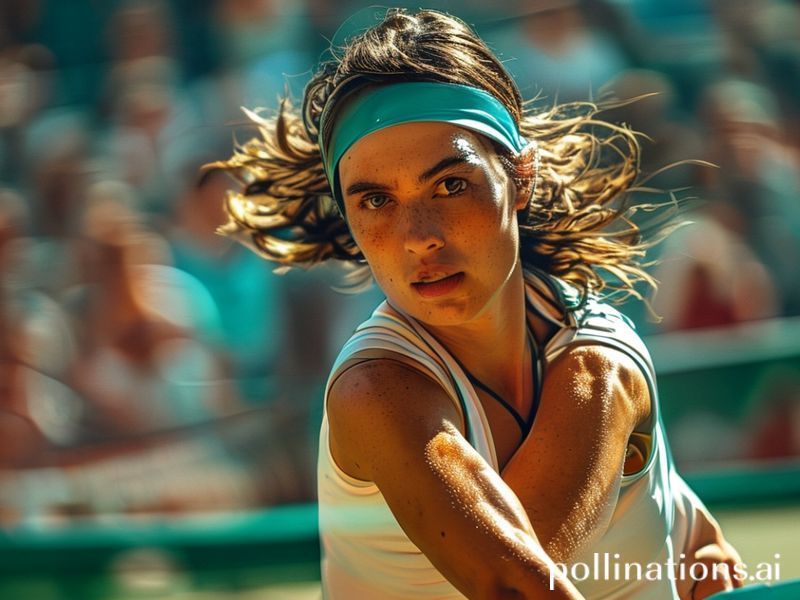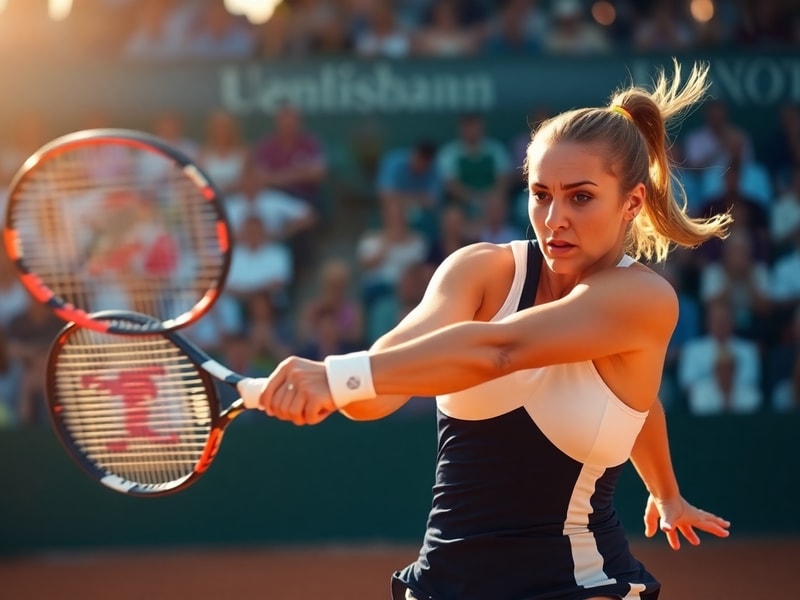
Karolína Plíšková has spent over a decade at the top of women’s tennis, carving out a reputation as one of the sport’s most formidable servers and aggressive baseliners. Born on March 21, 1992, in Louny, Czech Republic, she turned professional in 2009 and quickly rose through the ranks, peaking at World No. 2 in 2017. Known for her thunderous double-handed backhand and one of the most reliable serves in the game, Plíšková has become a defining figure in modern tennis—especially in an era dominated by power play.
Her journey is not just one of athletic prowess but of cultural significance within Central Europe, where tennis enjoys deep roots. While players like Petra Kvitová and Martina Navratilova have set high standards for Czech tennis, Plíšková’s consistency and longevity have cemented her place in the global conversation about the next generation of tennis legends. Her influence extends beyond match results; she represents a bridge between the fiery aggression of the 2010s and the evolving tactical depth of the 2020s.
The Rise of a Power Player
Plíšková’s breakthrough came in 2016, when she reached her first Grand Slam final at the US Open, defeating Serena Williams in the semifinals before falling to Angelique Kerber. That year, she ended the season ranked No. 6, her first top-10 finish. Her game, built on a 125 mph serve and a flat, penetrating backhand, was tailor-made for hard courts and fast surfaces—where power often dictates play.
Her style reflects broader trends in women’s tennis. The WTA has seen a shift toward athleticism and offensive play, with players emphasizing serve speed and groundstroke depth. Plíšková embodies this evolution. Unlike the all-court players of past decades, her strengths lie in dictating rallies from the first stroke. She doesn’t wait for errors; she creates them.
- Serve: A weapon. Her first-serve percentage and ace counts consistently rank among the WTA leaders.
- Backhand: Flat, powerful, and often unreturnable. One of the best in the game.
- Movement: Not the fastest, but her court coverage is underrated—she anticipates angles exceptionally well.
- Mental Toughness: Known for comebacks, especially in tight sets. Her resilience is a hallmark of her career.
Cultural Impact in Central Europe and Beyond
Plíšková’s success resonates deeply in the Czech Republic and Slovakia, where tennis is woven into the national identity. After the golden eras of Navratilova and Suková, Czech tennis saw a decline in the 2000s. Plíšková, along with Kvitová and Barbora Krejčíková, helped revive the country’s presence on the WTA tour. This trio symbolizes a cultural renaissance—one where young girls see relatable role models excelling on the biggest stages.
Her rivalry with Kvitová—both on and off the court—has been a focal point of Czech tennis for years. Where Kvitová’s game thrives on variety and net play, Plíšková’s is defined by relentless baseline pressure. Their matches are not just sporting events; they are national narratives, often drawing large viewership in Central Europe and sparking debates about the future of Czech tennis.
Beyond her homeland, Plíšková has become a global ambassador for the sport. She has participated in exhibition tours in Asia and the Middle East, bringing tennis to new audiences. Her presence in tournaments like the WTA Finals in Singapore and Shenzhen has helped grow the game in regions where tennis competes with football, basketball, and cricket for attention.
Challenges and Evolution in a Changing Game
Despite her consistency, Plíšková has faced challenges that reflect the broader shifts in women’s tennis. The rise of players like Ashleigh Barty, Naomi Osaka, and Iga Świątek—each with a more diversified skill set—has forced her to adapt. While she remains a top-20 player as of 2024, her inability to break through in major finals has been a point of scrutiny.
Injuries, particularly back issues, have intermittently disrupted her rhythm. At 32, she is no longer a teenager, but her fitness regimen and coaching team have kept her competitive. She has worked with multiple coaches over the years, including her brother, Jiří Plíšek, who has been a constant presence in her camp.
Her 2023 season was a microcosm of her career: flashes of brilliance interspersed with inconsistency. She reached the semifinals of Wimbledon, defeating Ons Jabeur and Madison Keys, before losing to eventual champion Markéta Vondroušová. That run reaffirmed her ability to peak at the right time—something that has defined her Grand Slam performances.
Key Moments in a Distinguished Career
- 2016 US Open Final: Her first major final, a breakthrough moment.
- 2017 WTA Finals Champion: Defeated Venus Williams in the final to claim her biggest title.
- 2020 Australian Open Semifinal: A deep run in Melbourne, proving her hard-court prowess.
- 2023 Wimbledon Semifinal: A vintage performance against younger rivals.
- Over 300 weeks in the Top 20: A testament to her longevity.
The Future: Legacy and Inspiration
As Plíšková approaches the later stages of her career, her legacy is already secure. She has won 16 WTA singles titles, spent over 300 weeks in the top 20, and reached two Grand Slam finals. She is one of the few players to have defeated both Serena Williams and Venus Williams in Grand Slam matches—a rare feat in modern tennis.
Her influence extends to coaching and mentorship. Younger players, including Czech talents like Linda Nosková and Brenda Fruhvirtová, look to her as a benchmark for professionalism and competitive fire. She also contributes to tennis development through her foundation, which supports youth sports in the Czech Republic.
Off the court, Plíšková has maintained a composed public persona, avoiding controversy and focusing on performance. She has been vocal about the importance of mental health in sports, an increasingly relevant topic in tennis.
Looking ahead, Plíšková’s goal remains a second Grand Slam title. While the odds are against her in an era of generational talents, her experience and skill set make her a perennial contender. More importantly, she serves as a bridge between the past and future of women’s tennis—connecting the power-based game of the 2010s with the tactical evolution of today.
For fans of tennis, especially in Central Europe, Karolína Plíšková is more than a player. She is a symbol of perseverance, power, and pride—a champion who has shaped the game and inspired the next generation.