How PGA Championship Tee Times Shape the Tournament’s Outcome
The PGA Championship, one of golf’s four major tournaments, relies heavily on its carefully crafted tee time schedule. Unlike other majors, the PGA is not tied to a single course, allowing flexibility in venue selection but demanding precision in player sequencing. Tee times determine not just who plays when, but also how the tournament unfolds under pressure, how television audiences engage, and even how players prepare mentally.
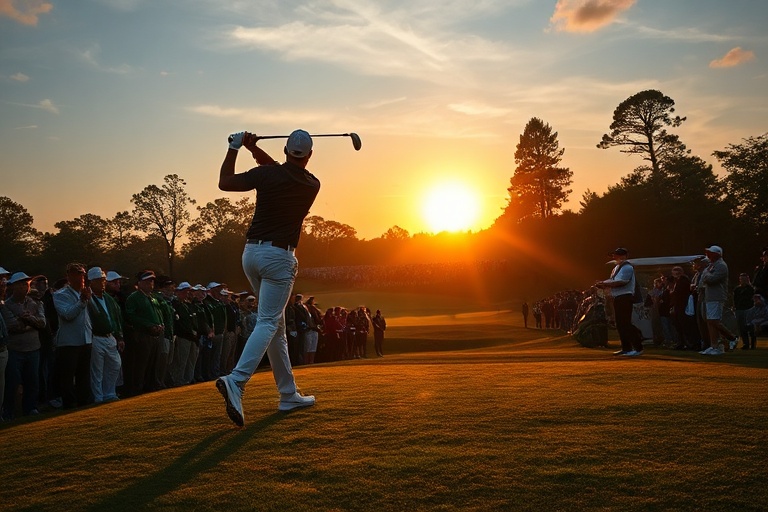
This year’s PGA Championship at Valhalla Golf Club in Louisville, Kentucky, followed a familiar structure: early rounds with staggered starts, later rounds with condensed groupings, and a final day that prioritized prime-time television exposure. But behind those decisions lies a complex interplay of logistics, tradition, and broadcasting strategy. Understanding how tee times are set reveals much about the modern PGA Championship—and why it matters beyond the fairways.
The Logic Behind Tee Time Assignments
Tee times at the PGA Championship are not randomly assigned. The PGA of America uses a multi-tiered system that balances competitive fairness, logistical efficiency, and viewer experience. The process begins with player seeding, where the top-ranked professionals receive the most advantageous spots to avoid early-round traffic jams and to set the tone for the tournament.
On Thursday and Friday, the field is divided into two waves: an early morning group and a mid-morning group. This split allows for optimal course conditions—cooler temperatures reduce wear on greens, and morning dew helps soften roughs for better play. The later wave often includes marquee players whose presence draws larger television audiences.
By Saturday and Sunday, the field consolidates into smaller groupings. The top 70 players (and ties) advance to weekend play, and their tee times are staggered in waves of threesomes or foursomes, spaced roughly 10 minutes apart. This ensures that the leaders don’t face excessive delays between holes, maintaining pace of play while keeping the final round competitive for both players and viewers.
But there’s more to it than just flow. Broadcasters like CBS and ESPN rely on strategic tee time placement to maximize ratings. High-profile players like Scottie Scheffler, Rory McIlroy, and Xander Schauffele are often scheduled for later starts on Saturday or Sunday, ensuring their rounds air during peak viewing hours. This isn’t just about star power—it’s about narrative. A Sunday afternoon pairing of the top two contenders creates a natural climax that casual fans can follow without needing a scorecard.
How Tee Times Influence Strategy and Performance
Golf is as much a mental game as a physical one, and tee times play a subtle but significant role in player psychology. A golfer teeing off at 7:30 AM faces different conditions than one starting at 2:30 PM. Morning rounds often feature softer greens, cooler air, and less wind—factors that benefit players with precise iron play. Conversely, afternoon starters must contend with firm fairways, stronger breezes, and the psychological weight of watching leaders post low scores before they even step onto the course.
Weather also complicates scheduling. At Valhalla, late May weather can swing from calm mornings to afternoon thunderstorms. The PGA’s rules committee monitors forecasts closely, sometimes shuffling tee times to avoid dangerous conditions. In 2023, a sudden storm on Saturday forced officials to delay the third round by three hours, reshuffling the entire weekend schedule. Such adjustments test players’ adaptability—a skill often as important as driving accuracy.
Player preferences add another layer. Some professionals, like Brooks Koepka, have spoken openly about preferring early starts to avoid distractions and maintain focus. Others, like Phil Mickelson, have thrived in later rounds where the pressure of the moment aligns with their competitive rhythm. These individual tendencies are factored into tee time decisions, though never at the expense of fairness or broadcast needs.
Key Factors in PGA Tee Time Decisions
- Player Rankings: Higher-ranked players receive preferred tee times to avoid early congestion and maintain competitive integrity.
- Television Scheduling: Networks prioritize marquee players and potential storylines for peak viewing hours (typically 1:00 PM – 6:00 PM ET).
- Course Conditions: Morning rounds benefit from cooler temps and softer greens; afternoon rounds test endurance and adaptability.
- Weather Forecasts: Sudden changes can force last-minute adjustments to protect player safety and course playability.
- Player Preferences: Some golfers perform better with early starts, while others thrive under late-round pressure.
Broader Implications: Why Tee Times Matter Beyond Golf
The PGA Championship’s tee time system is a microcosm of modern sports administration—balancing tradition with innovation, fairness with spectacle, and player needs with audience expectations. While golf purists may argue that tee times should be drawn by lot to eliminate bias, the reality is more nuanced. The PGA’s approach reflects the demands of a globalized audience, where a tournament in Kentucky can captivate millions across multiple continents.
This scheduling philosophy also has implications for smaller tours and even non-golf events. Lessons from the PGA—such as staggered starts to manage pace of play, strategic placement of star players, and real-time adjustments for weather—are being adopted by organizations like the LPGA and PGA Tour Champions. Even non-sports events, from marathons to esports tournaments, use similar models to optimize fan engagement and operational flow.
Moreover, the PGA’s flexibility in venue selection—Valhalla in 2024, Oak Hill in 2023, Whistling Straits in 2021—means tee time logistics must adapt to each course’s unique layout. A links course like Kiawah Island demands different pacing than a parkland venue like Valhalla. The ability to adjust tee time intervals based on hole length, doglegs, and green complexity showcases the PGA’s operational sophistication.
Looking Ahead: What’s Next for PGA Scheduling?
As golf evolves, so too will tee time strategies. The rise of streaming platforms like ESPN+ and the PGA Tour’s own app has created new demands for personalized viewing experiences. Fans now expect to follow their favorite players hole-by-hole, not just in broadcast windows. This could lead to more dynamic tee time scheduling, where players are grouped not just by ranking, but by fan interest and social media buzz.
Technology is also playing a role. Real-time analytics tools now allow officials to monitor pace of play with precision, adjusting tee times mid-round to prevent bottlenecks. Artificial intelligence could one day predict optimal tee time intervals based on historical data, player tendencies, and even weather patterns up to a week in advance.
Yet, for all the innovation, the core philosophy remains unchanged: tee times exist to serve the game’s integrity and its audience. Whether it’s the drama of a Sunday final pairing or the quiet focus of a morning wave, the schedule is the invisible hand guiding every swing, every putt, and every moment of tension at the PGA Championship.
As the tournament continues to grow in scale and influence, one thing is certain: tee times will remain at the heart of its story—not just as a logistical detail, but as a defining feature of what makes the PGA Championship unique.
For more insights into golf’s evolving landscape, visit our Sports and Analysis sections.